

Destination Wedding in Ireland: How to Plan It from Abroad
Planning a destination wedding in Ireland from abroad often begins with the easy part: finding a castle, country house or coastal venue you love. The harder questions arrive afterwards. How will your guests get there? Can you complete the legal paperwork in time? Which suppliers can you trust without meeting them in person, and what happens if rain, travel delays or an early winter sunset changes the plan?
The good news is that an Irish wedding does not need to feel complicated simply because you are organising it from another country. It does, however, help to make the decisions in the right order. Before you book around a beautiful set of venue photographs, you need to look at access, accommodation, ceremony options, realistic travel times and how the day itself will flow.
As an Ireland-based husband-and-wife photography and film team, we have seen how these choices affect much more than the schedule. They shape the atmosphere, the time you have with your guests and the photographs and film you take home.
This guide will walk you through the practical side of planning a destination wedding in Ireland, from legal requirements and venue selection to guest travel, weather, local suppliers and creating a wedding weekend that is worth the journey.
Planning your destination wedding in Ireland from abroad?
See how our photography and film coverage can be shaped around your venue, travel plans and the kind of wedding weekend you are creating.
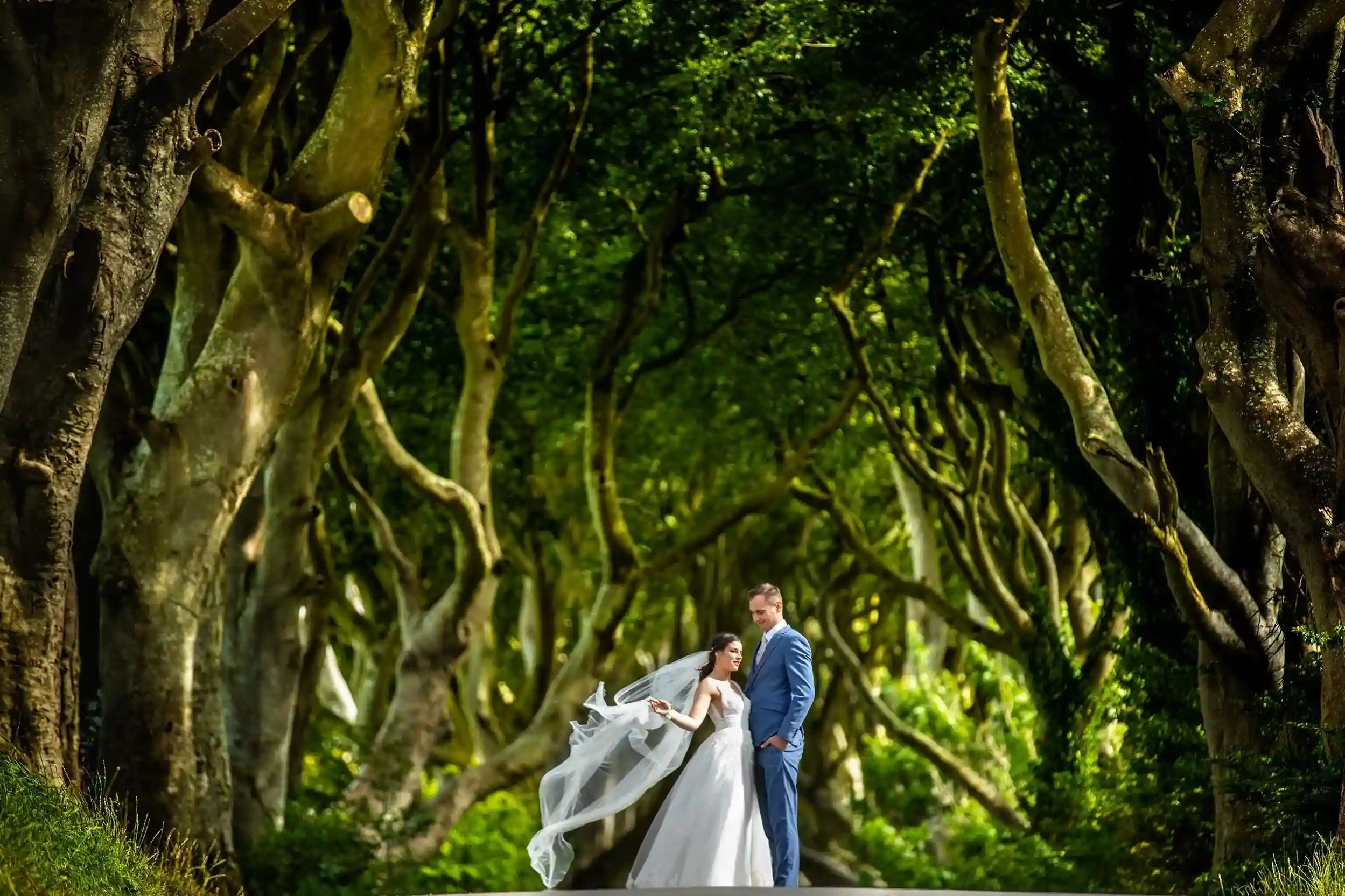
Why Choose Ireland for Your Destination Wedding?
A destination wedding asks a lot of the people closest to you. They need to book flights, arrange accommodation and set aside several days to travel. Ireland makes that journey feel like part of the celebration rather than simply the route to the wedding venue.
The country offers an unusual variety of settings within a relatively small area. You might choose a private country estate where everyone stays together, a centuries-old castle surrounded by woodland, an elegant Dublin hotel or a venue close to the Atlantic coast. Each creates a very different wedding, but all allow the location itself to become part of the experience rather than just a backdrop.
What often stays with overseas guests, however, is not only the scenery. It is the atmosphere around the wedding: conversations that continue long after dinner, live music that draws people onto the dance floor and the kind of warm, informal hospitality that helps two groups of families quickly feel comfortable together. Tourism Ireland also identifies local hospitality, music and the welcome given to travelling guests as important parts of an Irish wedding experience.
Because guests have already travelled, the celebration can naturally extend beyond one day. Welcome drinks, a relaxed gathering the evening before or a brunch the following morning give everyone more time together without placing every expectation on the wedding day itself. The result can feel less like a single formal event and more like a shared trip centred around your marriage.
That is what can make a destination wedding in Ireland worth the journey: not simply the photographs of a castle or coastline, but the chance to bring the people you love together somewhere that gives them a story of their own to take home.
How to Choose the Right Irish Wedding Venue
A venue can look perfect in photographs and still create problems for a couple planning from overseas. Before paying a deposit, look beyond the ceremony room, gardens and bedroom styling. Think through how your guests will arrive, where they will stay and how many separate journeys the wedding day will require.
A useful way to test any destination wedding venue in Ireland is to follow the same journey your guests will make. Start at the airport, continue to their accommodation, then trace the route to the ceremony, reception and back again at the end of the night. This often reveals practical issues that aren’t obvious during a virtual tour.
Check Airport Access and Guest Transfer Options
Ask where most of your guests are likely to land. Dublin Airport may be the easiest choice for international flights, but that doesn’t automatically make every venue near Dublin convenient. Travel times can increase quickly during weekday traffic, and a rural route that looks short on a map may involve slower roads than your guests expect.
For venues farther west or south, Shannon or Cork Airport may provide a better route for some travellers. It is worth checking actual flight options from the cities your guests will be leaving from, rather than choosing an airport based only on distance.
Also decide whether guests can travel together. A private coach or organised transfer is often easier than asking everyone to hire a car, particularly for older relatives, guests travelling with children or anyone unfamiliar with driving on the left. Ask the venue whether they regularly work with local bus, taxi or shuttle companies and how late those services operate.
Compare On-Site Accommodation with Nearby Hotels
“Accommodation available” can mean anything from ten bedrooms to enough space for almost the entire guest list. Confirm the exact number of rooms, how many people each room sleeps and whether the rooms are automatically reserved for your wedding.
If some guests need to stay elsewhere, check more than the distance between the venue and the hotel. Find out whether taxis are easy to book locally, whether the hotel accepts late arrivals and whether one shared transfer can collect several guests at the same time.
On-site accommodation can make the wedding feel more relaxed because guests don’t need to think about transport once they arrive. It also makes welcome drinks or a next-morning brunch easier to organise. However, a venue with fewer bedrooms can still work well when there is a reliable hotel nearby and transport is planned in advance.
If you are still comparing locations, our guide to castle wedding venues in Ireland can help you explore different settings and venue styles.
Reduce Wedding-Day Travel Between Locations
It is common for the couple to prepare in separate locations, travel to a church, stop somewhere for portraits and then continue to the reception. Each journey may seem manageable on its own, but together they can take a large part of the day.
Long transfers also leave less flexibility when preparations run late, traffic builds up or the weather gives you only a short dry window for photographs. From a photography and film point of view, time spent travelling is time that cannot be used to capture the atmosphere around your guests.
If one partner is preparing far from the venue, you may also need an earlier start, longer coverage or a second photographer. These are not reasons to reject a venue, but they should be understood before you finalise the timeline and supplier bookings.
A Quick Venue Logistics Check
Airport Access
Which airport offers the most practical flights for your guests, and how long will the transfer really take at the expected arrival time?
Guest Accommodation
How many guests can stay on-site, where will everyone else sleep, and how will they travel safely between the hotel and venue?
Wedding-Day Travel
How much time will be spent moving between preparations, the ceremony, portrait locations and the reception?
The strongest venue choice is not always the one with the most dramatic photographs. It is the one that gives you the setting you love without turning the wedding day into a sequence of transfers, delays and people waiting for transport.
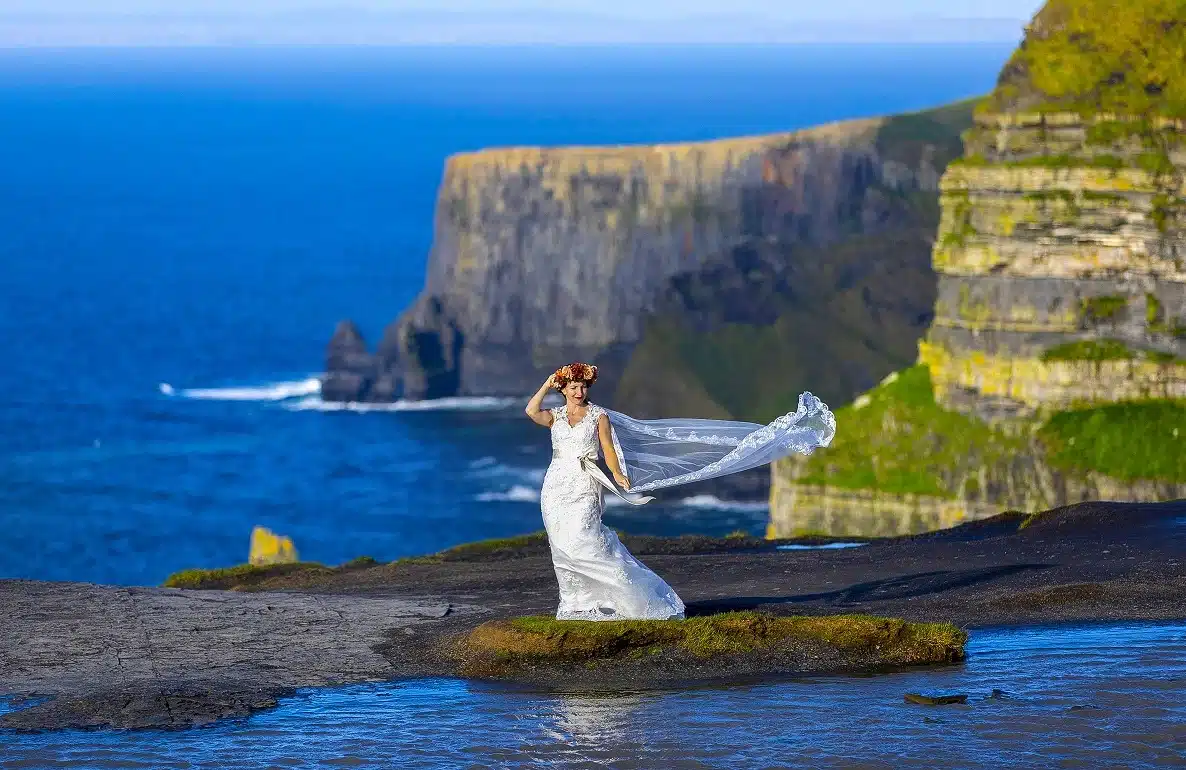
Legal Requirements for a Destination Wedding in Ireland
If you want your destination wedding in Ireland to create a legally recognised marriage, the paperwork needs to be treated as an early planning task. It is not something to leave until flights and accommodation have already been booked.
The requirements can vary depending on your citizenship, immigration status, previous marriages and the type of ceremony you choose. Always confirm the details directly with the Irish civil registration service rather than relying only on advice from a venue, planner or wedding blog.
How to Make Your Marriage Legal in Ireland
For a civil, religious or secular marriage in Ireland, you need a Marriage Registration Form. To receive it, you must attend a marriage notification appointment and give at least three months’ notice of your intention to marry.
The three-month notice period begins on the date of this appointment, not when you first contact the office. Waiting times can also vary, so the HSE recommends booking as early as possible rather than aiming for the minimum deadline.
Both of you normally need to attend the appointment. The current notification fee is €200, and if at least one of you is a foreign national, an additional interview with the registrar is required.
You will generally need valid photographic identification, birth certificates, recent proof of address and information about your ceremony, venue, witnesses and solemniser. Documents that are not in English or Irish need to be translated. A previous marriage, divorce, civil partnership or immigration matter may require additional paperwork.
Your ceremony must be performed by someone listed on the official Register of Solemnisers for the marriage to be legally valid in Ireland. This may be an HSE registrar or an approved member of a recognised religious or secular body.
Can You Arrange the Marriage Paperwork from Abroad?
Can You Arrange the Marriage Paperwork from Abroad?
Couples who do not live in Ireland can contact the relevant civil registration service about giving notice by post. The three-month notice period still applies, and both partners must meet the registrar at least five days before the ceremony to sign the required declaration and receive the Marriage Registration Form.
Ask the registrar responsible for your wedding area to confirm the exact procedure, required original documents, translations and any additional interview requirements before you finalise your travel dates.
Legal Wedding or Symbolic Ceremony in Ireland?
Some overseas couples complete the legal marriage in their home country and hold a symbolic ceremony in Ireland. This can reduce the amount of international paperwork and may give you more freedom when choosing the ceremony wording, location and celebrant.
A symbolic ceremony is not legally binding by itself, but it does not need to feel less meaningful. Your vows, readings, music and the moment shared with your guests can still form the emotional centre of the wedding day.
A legal Irish ceremony may be right for you when being officially married in Ireland is important and you can meet the notification and document requirements. A symbolic ceremony may be more practical when you want to complete the legal process at home or work with a celebrant who is not registered to solemnise marriages in Ireland.
This information is intended as general planning guidance, not legal advice. Always check the current requirements for your circumstances directly with the HSE civil registration service before making final arrangements.
How to Choose Wedding Suppliers from Abroad
Choosing wedding suppliers is often one of the hardest parts of planning from another country. You may be comparing businesses you have never met, working across different time zones and trying to judge an entire service from a website, a few reviews and carefully selected social media posts.
A strong local team can make the distance feel much less important, but “local” and “experienced” are not enough on their own. You need to understand how each supplier works, what is included and how they respond when plans change.
Do You Need a Destination Wedding Planner in Ireland?
Not every couple needs a full destination wedding planner in Ireland. A planner can be especially useful, however, when you are coordinating a large guest list, several venues, multiple days of events or suppliers based in different parts of the country.
They may help with venue research, supplier recommendations, budgets, contracts, transport, styling and the wedding-day timeline. They can also attend meetings locally when you cannot travel to Ireland yourself.
For a smaller wedding held entirely at one experienced venue, you may feel comfortable managing the planning directly with the venue team. Before deciding, think honestly about the amount of time you have, how many separate suppliers need to be coordinated and whether you want one person overseeing the entire plan.
Know the Difference Between a Planner and a Venue Coordinator
A venue coordinator and an independent wedding planner may sound similar, but their responsibilities are not always the same.
The venue coordinator usually looks after the parts of the wedding connected directly to the property. This may include bedrooms, food, table layouts, ceremony spaces, the venue staff and the timing of services included in your venue package.
An independent planner may have a wider role. They can coordinate outside suppliers, guest transport, styling, schedules, welcome events and practical details that continue beyond the venue itself.
There is no universal rule, and some venue coordinators offer far more support than others. Ask for a written explanation of what they will manage, what remains your responsibility and whether they will be present throughout the wedding day.
How to Check Irish Wedding Suppliers from Abroad
Do not make a decision based only on Instagram. Social media usually shows a small selection of the easiest or most visually impressive parts of a supplier’s work.
Look for recent reviews across more than one independent platform. Ask for a clear contract, a complete package breakdown, payment dates, cancellation terms and information about what happens if the supplier becomes ill or cannot attend.
For photography and film, ask to see complete weddings rather than only highlights. A full gallery or longer wedding film shows how the supplier works through an entire day, including morning preparations, darker ceremony spaces, family photographs, changing weather, reception lighting and the dance floor.
Our guide on how to choose a wedding photographer in Ireland explains more of the details worth checking before making a booking.
A video call is also valuable. It gives you a chance to see whether communication feels easy, whether the supplier listens properly and whether their working style suits the atmosphere you want for the wedding.
A simple way to compare suppliers is to use five checks:
- Proof: Can you see complete, consistent examples of their work?
- People: Is their communication clear, responsive and comfortable?
- Process: Do you understand what happens after booking and before the wedding?
- Paperwork: Are the price, package, payment terms and responsibilities clearly written?
- Plan B: What happens if there is illness, a delay, bad weather or a technical problem?
A beautiful portfolio may catch your attention first, but the process behind the work matters just as much when you are planning from overseas. The right suppliers should make their service easier to understand, not leave you relying on assumptions from a distance.
How Much Does a Destination Wedding in Ireland Cost?
Start with the Guest Count, Venue and Wedding Format
Guest numbers affect far more than the meal. They can change the venue you need, the number of bedrooms, transport capacity, ceremony seating, drinks, stationery and the size of the supplier team.A restaurant or private dining room may suit an intimate wedding, while a larger guest list may require a hotel, country house or exclusive-use estate. A full wedding weekend with welcome drinks and a day-two gathering will naturally cost more than one ceremony and reception, even when the main wedding-day package looks similar.When comparing venues, look at the complete package rather than only the price per person. Check room hire, minimum guest numbers, service charges, drinks, evening food, accommodation, ceremony fees and whether exclusive use carries a separate charge.Include the Extra Costs of Planning from Abroad
The wedding package is only one part of an overseas budget. Flights, additional accommodation and transfers can quietly become substantial expenses, particularly when you make one or two planning trips before the wedding.Wedding Budget
Venue, food, ceremony, entertainment, photography, film, flowers, styling and the suppliers working on the wedding itself.Couple Travel Budget
Flights, car hire, accommodation, planning visits, baggage, document costs and any international payment or currency exchange charges.Guest Hospitality Budget
Transfers, welcome drinks, a rehearsal dinner, morning-after brunch or any rooms and activities you decide to cover for your guests.Decide What You Will Pay for Your Guests
Guests normally expect to pay for their own flights and accommodation when attending a destination wedding. You are not required to fund the entire trip, but it should be clear from the invitation or wedding website what you are providing.Some couples cover organised transport between the hotel and venue. Others host welcome drinks, breakfast the following morning or accommodation for immediate family. There is no single correct arrangement. Choose the parts that make the journey easier without committing to costs that place the wedding under unnecessary financial pressure.Photography and film pricing can also change with the structure of the day. Separate preparation locations, long transfers, a second photographer, extended coverage or welcome and day-two events may affect the final quote. Our guide to wedding photography costs in Ireland explains the main pricing factors in more detail.A destination wedding is not automatically cheaper or more expensive than a wedding at home. A smaller guest list may reduce venue and catering costs, while flights, transport and a longer celebration may add them back elsewhere. A realistic comparison needs to include the entire trip, not only the venue package.Would You Like a Clear Price for Wedding Photography and Film in Ireland?
You can explore our photography and film options, see examples of our work, and create a personalised quote based on your wedding plans.Best Time of Year for a Wedding in Ireland
What Is the Weather Like for an Irish Wedding?
Met Éireann’s long-term climate records show that April and May are generally among Ireland’s driest months, while late autumn and winter tend to receive more rainfall. May and June also bring the highest average sunshine levels. These are useful patterns, but they cannot predict the weather on one particular wedding day.Spring
Longer days, fresh gardens and some of the year’s lower average rainfall. Temperatures can still change quickly, especially early in the season.Summer
Very long evenings and more flexibility for outdoor plans. It is also peak wedding season, and rain remains possible.Autumn
Rich colours and softer light, particularly around country estates. The days shorten quickly and wetter conditions become more likely later in the season.Winter
A strong indoor atmosphere and possible off-season advantages. Early darkness leaves much less time for outdoor photographs after the ceremony.Plan the Wedding Timeline Around Daylight
Daylight can affect the wedding more than temperature. Around mid-winter, sunset in Dublin is close to 4pm. In early summer, daylight can continue beyond 9pm.A 3pm winter ceremony may leave very little natural light for congratulations, family photographs and portraits. An earlier ceremony usually gives the day more breathing room. During summer, you can often leave some couple portraits until later in the evening instead of fitting everything into the drinks reception.The biggest mistake is not choosing a rainy month. It is building a timeline that works only in perfect weather. Leave enough flexibility to use a short dry spell, and avoid placing every outdoor photograph into one fixed twenty-minute window.Choose an Indoor Backup You Would Be Happy to Use
When a venue mentions a weather backup, ask to see the actual room. Check whether it fits the full guest list, has usable natural light and will also be needed for dinner or another part of the day.You should also know where welcome drinks, family photographs and couple portraits can happen if the grounds are wet. A covered entrance, bright hallway, conservatory or quiet reception room can be more useful than a large but windowless backup space.Irish weather does not need to control the wedding. A flexible timeline, a venue with genuine indoor options and a team used to working quickly in changing light will matter far more than a long-range forecast checked months in advance.Destination Wedding Photography and Videography in Ireland
Booking photography and film from another country involves more than finding a portfolio with a few images you love. You need to know how the team handles a complete wedding day, changing Irish weather, difficult indoor light and the moments that cannot be repeated.
Words such as candid, documentary and cinematic appear on many wedding websites, but they can describe very different styles. Look beyond the labels and examine what the finished work actually feels like from morning preparations through to the evening celebration.
Review Complete Wedding Galleries and Films
A photographer’s homepage and social media feed usually show a carefully selected collection of standout photographs. These images can help you understand the overall style, but they do not show whether the same quality continues through an entire wedding.
Ask to see full galleries from real weddings, ideally including conditions similar to your own plans. A complete gallery should show preparations, the ceremony, family photographs, portraits, candid moments, the reception room, speeches and the dance floor.
For videography, watch more than a short highlight trailer. A longer film will reveal how the story is structured, how natural the editing feels and whether the emotional moments have enough space to breathe.
Full Gallery
Shows whether the photography remains consistent throughout the entire day, not only during the couple portraits.
Complete Film
Reveals the storytelling, pacing and emotional flow beyond a short collection of cinematic highlights.
Sound Quality
Check whether vows, readings, speeches and the ceremony can be heard clearly without distracting background noise.
Real Conditions
Look for examples created in rain, darker churches, winter daylight and evening reception lighting.
Should You Book Photography and Film with the Same Team?
Booking photography and videography together can reduce the number of separate conversations, contracts and timelines you need to manage from abroad. A team that regularly works together should understand how to share space, coordinate portraits and cover the ceremony without competing for the same position.
It can also make the wedding day feel less like two separate productions. Photography and film can be planned around one timeline, with both sides working towards the same relaxed atmosphere.
This is only an advantage when both portfolios are equally strong. Review the photography and films separately, confirm who will attend the wedding and ask how responsibilities are divided between the team members.
Plan Coverage Around the Whole Wedding Story
For many overseas couples, the celebration begins before the wedding morning. Welcome drinks, a family dinner or a relaxed gathering the evening before may be the first time everyone has been together in years.
You do not need to document every part of the trip. Decide which moments genuinely belong to the story you want to keep. That might include a welcome dinner, preparations in two locations, the full ceremony and speeches, a day-two brunch or a short portrait session somewhere meaningful after the wedding.
Long transfers and separate preparation locations may also affect the number of hours or photographers required. Our wedding photography packages provide a starting point, but destination coverage should ultimately be planned around the real structure of your day rather than a standard timetable.
With photography and film, consistency matters more than a handful of dramatic images. The strongest choice is a team whose complete work, communication and approach still feel right after the first impression has passed.
Planning Your Irish Wedding Weekend from Abroad
Keep the Wedding Weekend Simple
A relaxed welcome gathering, the wedding itself and an informal farewell brunch are often enough. Welcome drinks give the two families time to meet before the ceremony, while a day-two gathering lets everyone talk properly after the pace of the wedding day has slowed down.Optional activities such as sightseeing, golf, spa treatments or a local pub visit can be useful for guests staying longer, but they do not need to become compulsory group events. People may also want time to recover from travelling, explore independently or spend time with relatives they rarely see.Give Overseas Guests Time and Clear Information
Send save-the-date information early enough for guests to arrange annual leave, flights and accommodation. For popular summer weekends, providing approximately 12 months’ notice can make the journey considerably easier to organise.A practical wedding website should include the nearest suitable airport, realistic transfer information, accommodation options, booking deadlines, dress guidance and a clear explanation of which events are included. It should also state what you are providing and which travel or accommodation costs guests need to cover themselves.Consider a Separate-Day Creative Photo or Film Session
For destination weddings, we particularly recommend considering a creative session on another day. The wedding schedule does not then need to accommodate a long journey to a second location, and you can spend more of the wedding day with your guests.A separate session also gives you the opportunity to choose another part of Ireland that feels special to you. This could be a dramatic coastal setting, historic streets, castle grounds, woodland or another location that would be difficult to reach within the wedding-day timeline.Why Plan the Creative Session for Another Day?
- You can choose a more distant or iconic location without keeping your guests waiting.
- The photography can feel calmer because there is no ceremony or dinner timeline behind you.
- There is more time for artistic portraits, different settings and less rushed movement.
- For wedding films, the session can include more carefully planned cinematic scenes and landscape footage.
- If the weather is unsuitable, there may be more flexibility than during the fixed wedding-day schedule.
A Realistic Destination Wedding Planning Timeline
12–18 Months Before
Set the approximate guest count and budget, choose the date and venue, decide between a legal or symbolic ceremony, and book key services such as planning, photography and film.9–12 Months Before
Send save-the-dates, create the wedding website, secure accommodation options and book the celebrant, entertainment, florist and guest transport where required.6–9 Months Before
Send invitations, plan the ceremony, menu and styling, confirm travel documents and begin deciding whether to include welcome, day-two or separate creative sessions.3–6 Months Before
Complete the legal arrangements, review contracts and payment schedules, build the wedding-day timeline and confirm photography, film and poor-weather plans.Final Month and Arrival
Confirm guest numbers, rooms, transfers and suppliers. Bring essential documents and clothing with you, allow time for travel delays and complete any final venue or registrar meetings.Common Mistakes When Planning a Wedding in Ireland from Abroad
Most destination wedding problems begin with a reasonable decision made without one piece of local information. Checking these points early can prevent unnecessary travel, extra costs and a wedding timeline that feels more rushed than expected.
Choosing the Venue Before Testing the Guest Journey
Why it causes problems: Guests may face difficult transfers, limited accommodation or the need to hire cars.
A better approach: Follow the full journey from the airport to the venue, accommodation and return transport before paying the deposit.
Waiting Too Long to Book the Important Parts
Why it causes problems: Popular venues and experienced suppliers may already be unavailable, especially for summer weekends.
A better approach: Secure the date, venue, ceremony plan and key suppliers early, ideally around 12–18 months ahead when possible.
Assuming the Venue Coordinator Manages Everything
Why it causes problems: Guest transport, outside suppliers and weekend events may remain uncoordinated.
A better approach: Ask for a written breakdown of what the venue manages and what remains the responsibility of you or your planner.
Giving Guests Too Little Information
Why it causes problems: Guests may book unsuitable flights, miss accommodation deadlines or misunderstand which costs they need to cover.
A better approach: Send information early and use a practical wedding website for travel, rooms, transfers and weekend plans.
Building a Timeline That Needs Perfect Weather
Why it causes problems: One shower, delay or earlier sunset can affect the ceremony, portraits and drinks reception.
A better approach: Choose a usable indoor alternative and leave several flexible opportunities for outdoor photographs.
Trying to Fit Every Photograph into the Wedding Day
Why it causes problems: Travelling to a distant coast, castle or city location can keep you away from your guests and place pressure on the reception timeline.
A better approach: Consider a separate-day creative photo or film session at another iconic Irish location.
Good planning does not remove every surprise from an Irish wedding. It gives you enough flexibility that a delay, a weather change or a travel issue does not take control of the day.
Final Thoughts on Planning Your Wedding in Ireland
Planning a destination wedding in Ireland from abroad becomes much easier when the decisions are made in the right order. Start with the guest journey and venue logistics, confirm the legal or symbolic ceremony route, and then build a local team that communicates clearly and understands the full structure of your plans.
Allow room in the budget for travel, transfers and the events surrounding the wedding itself. Choose the season with daylight and realistic indoor options in mind, rather than expecting any particular month to guarantee perfect weather.
Most importantly, do not let the schedule become so full that you spend the wedding moving between locations or worrying about the next deadline. Give yourselves time with the people who travelled to celebrate with you. When another Irish landscape or iconic location matters to your photographs and film, a separate-day creative session can provide that experience without taking you away from your guests.
An Irish destination wedding does not need to follow one fixed format. It may be an intimate ceremony by the coast, a castle celebration, a country house weekend or a relaxed gathering that brings families together from several countries. The strongest plan is the one that works practically for your guests while still feeling personal to both of you.
Ready to Plan Your Wedding Photography and Film in Ireland?
Tell us about your venue, date and plans, and explore photography and film options shaped around your destination wedding. You can also create an instant personalised quote through our dedicated enquiry page.
Frequently Asked Questions About Getting Married in Ireland
Start with the decisions that affect everything else: your approximate guest count, venue location, ceremony type and realistic budget. Once these are clear, book the key Irish suppliers, organise accommodation and transport, and give overseas guests enough notice to arrange flights. Keep one shared timeline for contracts, payments, legal appointments and travel details.
Yes. Foreign couples can legally marry in Ireland when they meet the required conditions. You need at least three months’ notice, a Marriage Registration Form and a ceremony performed by a registered solemniser. Couples living abroad can ask the relevant civil registration service about giving notice by post, but they must meet the registrar at least five days before the ceremony. The current notification fee is €200, and an additional interview may be required when one or both partners are foreign nationals.
The total depends on the guest count, venue, season and whether you are planning one wedding day or a longer celebration. Include the venue and suppliers, but also flights, accommodation, transport, planning visits and any welcome or day-two events. Our guide to wedding photography costs in Ireland explains the main photography pricing factors.
For a popular castle, country house or summer Saturday, beginning around 12–18 months ahead is sensible. Some venues and experienced suppliers are reserved even earlier. A shorter timeline may still work when you are flexible about the date, choose a weekday or plan an off-season wedding.
There is no season that guarantees dry weather. Spring brings growing gardens and longer days, summer provides late evenings, autumn offers richer colours, and winter suits atmospheric indoor celebrations. Met Éireann’s long-term averages show that April and May are generally among the drier months, while May and June receive the most sunshine on average.
For a symbolic ceremony, arriving several days early gives you time to recover from travelling, inspect your clothing and attend final venue meetings. A legal ceremony must be planned around the appointments required by your registrar. Avoid relying on a late flight the evening before the wedding, particularly when bringing important documents or clothing.
A planner can be particularly useful for a multi-day celebration, several venues, a large international guest list or many independent suppliers. A smaller wedding held entirely at one experienced venue may be manageable with the venue coordinator. Ask exactly what the coordinator covers before deciding that a separate planner is unnecessary.
No. Couples are not normally expected to pay for every guest’s flights and hotel room. You may decide to provide venue transport, welcome drinks, a morning-after brunch or rooms for close family members. Explain clearly on the invitation or wedding website what is included and what guests need to arrange themselves.
A combined photo-and-film team can simplify communication, contracts and timeline planning. A team that regularly works together should also coordinate positions and important moments without competing for space. This is only an advantage when both portfolios are strong, so review complete galleries and films separately before booking. You can also compare our wedding photography packages and coverage options.
Yes, and we particularly recommend considering it for a destination wedding. A separate session allows you to visit another iconic coastline, castle, woodland or city location without leaving your guests waiting on the wedding day. It also gives photography more time and allows carefully planned cinematic scenes to be created for your wedding film.
- Published:
- Modified: 27 Jul 2026