2026

Janos Fazekas
Documentary Style Wedding Photography Explained: Natural, Unposed Moments
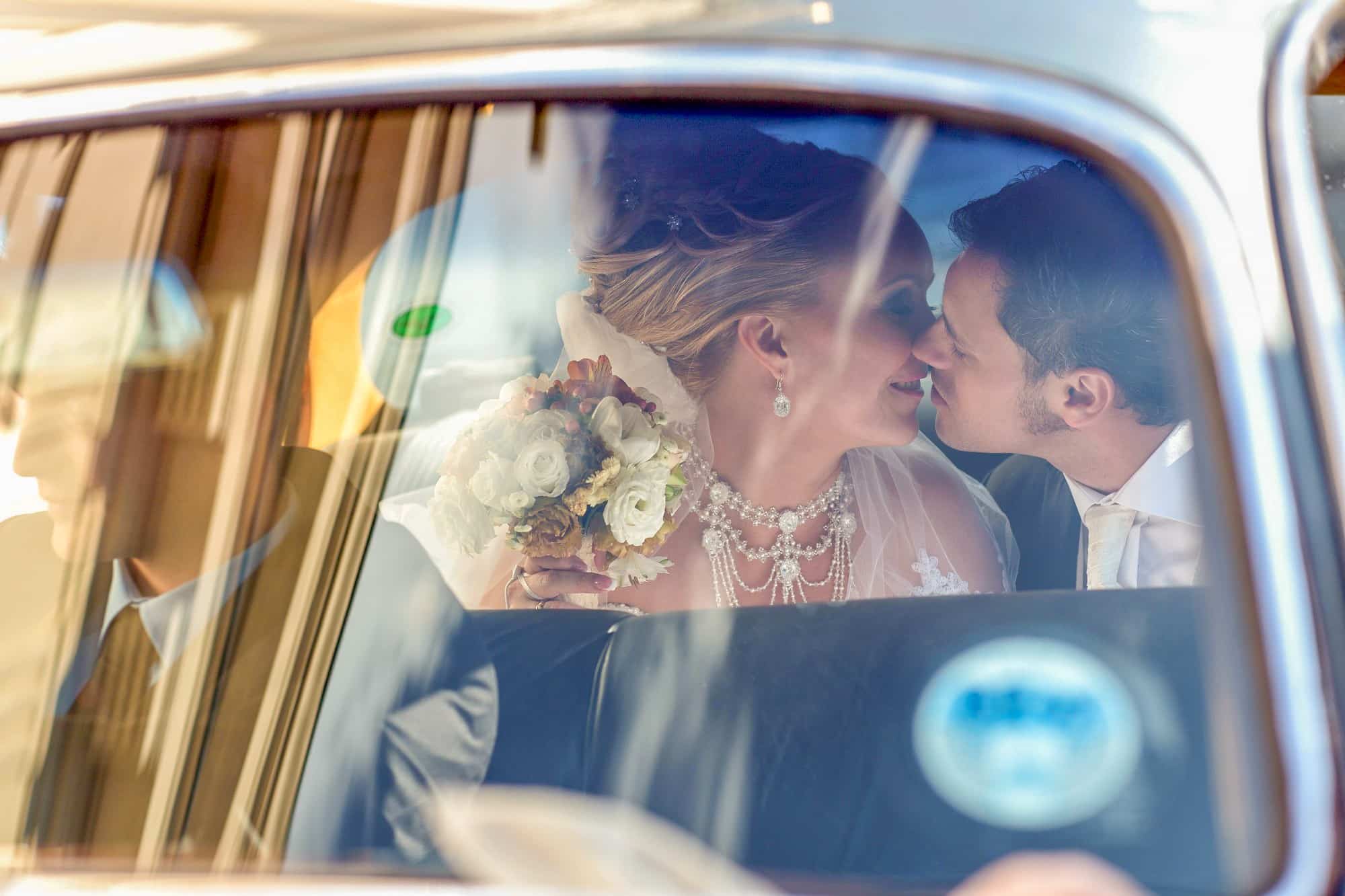
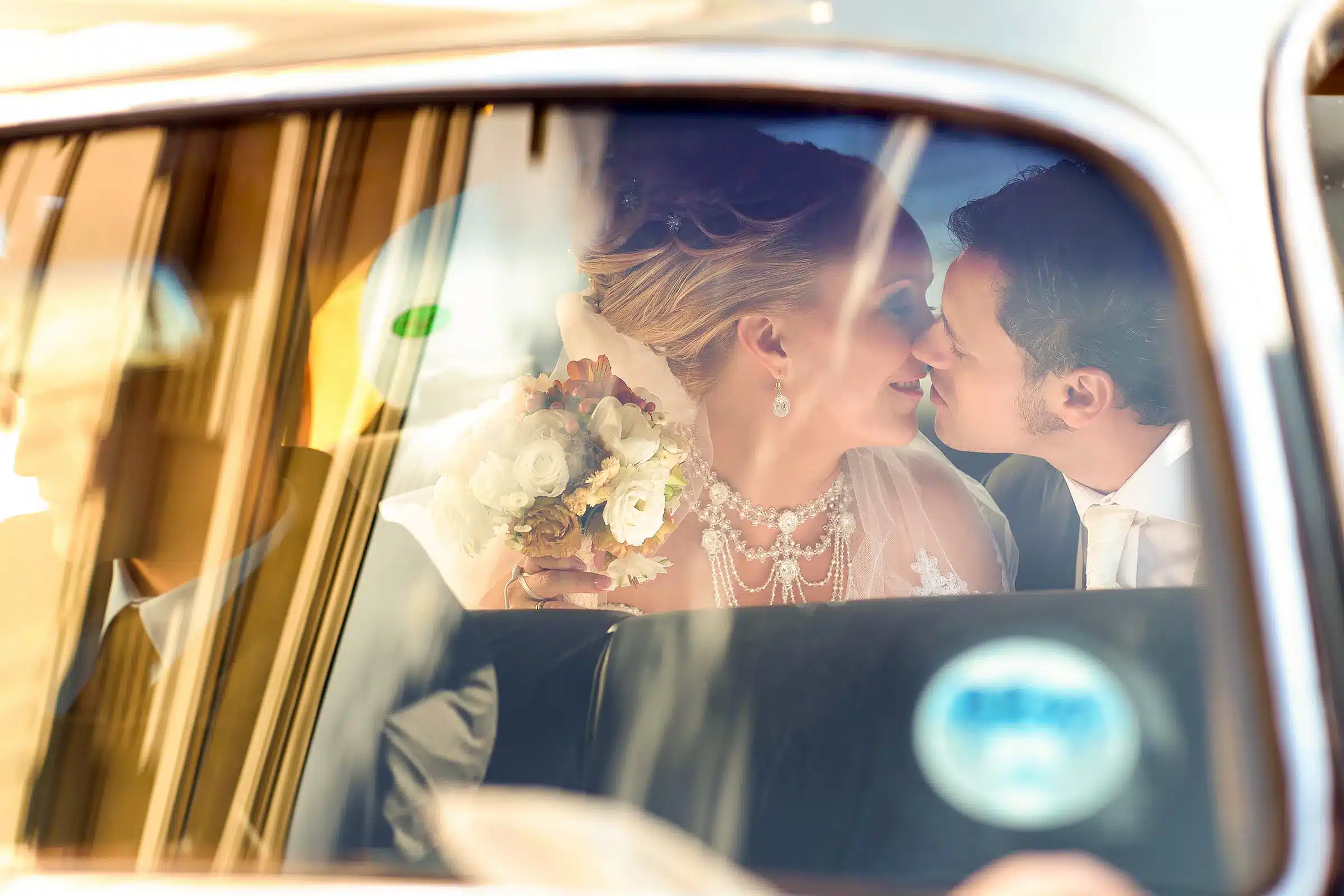
Documentary style wedding photography of a bride and groom leaning towards each other inside a wedding car, seen through the window

Documentary Style Wedding Photography Explained: Natural, Unposed Moments
After photographing weddings across Ireland, we’ve learned that some of the most meaningful images come from moments nobody planned. That’s what draws us to documentary style wedding photography: a nervous smile before the ceremony, a quiet squeeze of the hand, or laughter that catches everyone by surprise.

Rather than arranging every moment, we pay attention to what’s happening around us and photograph the day as it unfolds. We want you to recognise your wedding in those pictures, including the little things you might not have noticed at the time.

And yes, we still guide couples when it helps. Family group photographs and relaxed portraits have their place. We’ll explain how we combine those moments with a more natural, unposed approach, and what you can expect from us on your wedding day.

What Is Documentary Style Wedding Photography?

On This Page

We see documentary photography as a way of working, not simply a particular look or editing style. We follow real events, notice the connections between guests and make space for moments to unfold without asking anyone to repeat them for the camera.

You may also hear this approach called reportage wedding photography or wedding photojournalism. Photographers sometimes use these terms slightly differently, but they share a central idea: telling the story through what genuinely happens, rather than arranging a sequence of photographs. It’s not just about catching laughter. Quiet glances, nervous hands and small gestures can tell you just as much about the day.

We don’t think documentary photography means standing at the back and hoping for the best. It takes attention, patience and the judgement to know when to move closer and when to give people space. We want the photographs to feel recognisable to you, including the ordinary in-between moments you might not remember noticing at the time. Those details often help a whole wedding story feel complete.

How Documentary Wedding Photography Captures Natural, Unposed Moments

When we’re photographing a wedding, we’re not watching only the two of you. We notice who’s standing just outside a conversation, who looks towards the doorway when you arrive, and which friends always make each other laugh. Those little clues help us decide where to be before something happens.

Take the speeches. While everyone listens to the person holding the microphone, we’re also looking around the room. A parent might be trying not to cry, or two friends might exchange a look over a familiar story. We can’t predict every reaction, but we can be ready for it. Asking someone to do it again afterwards would never feel quite the same.

That readiness matters throughout the day. We’re making decisions about light, backgrounds and where to stand, sometimes moving quietly to find a clearer view. An unposed photograph still needs thoughtful composition. The difference is that we adjust ourselves to the moment rather than asking the moment to adjust to us.

Of course, our presence isn’t invisible, and sometimes people need a little guidance. But for most of the day, we want you to enjoy what’s happening without wondering where the camera is. You can see more of the moments we look for in our wedding photography portfolio.

Could This Approach Feel Right for Your Wedding?

Tell us a little about your plans and explore photography options for your day.
Explore Your Wedding Photography Options

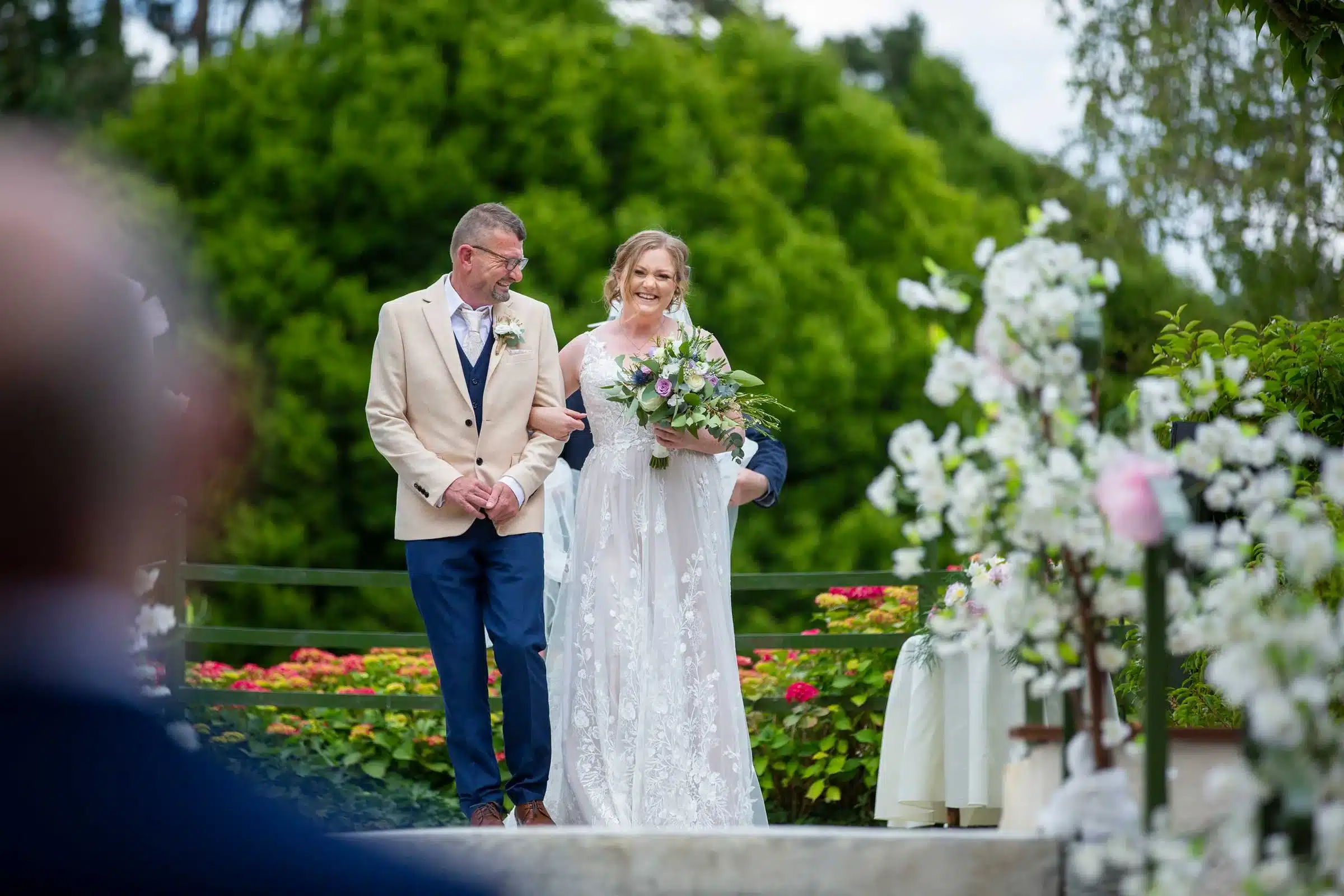
Documentary style wedding photography - Bride smiling as she walks down the aisle with her father during an outdoor wedding ceremony

Documentary Style Wedding Photography Throughout Your Wedding Day

A wedding doesn’t feel the same from morning to night, and we don’t photograph every part of it in the same way. The pace changes, people relax or become emotional, and sometimes the smallest moment connects two parts of the story. We want the finished gallery to reflect those changes, not just the big events on the timetable.

After more than 800 weddings, we’ve learned that the atmosphere can change quickly. A quiet morning becomes a nervous walk towards the ceremony; later, those same people are laughing around a table or dancing together. We want your photographs to carry you through those changes, not just tick off the timetable.

Getting Ready and the Ceremony

Getting ready rarely happens in a perfectly tidy room, and we wouldn’t ask everyone to stop for the camera. We photograph the dress, rings and finishing touches, but we’re watching the people around them too. It might be a friend fastening a button, someone hunting for a missing shoe or a parent quietly checking that everything is ready. These scenes say something about the morning that a photograph of the dress alone can’t.

The ceremony calls for a different kind of attention. We can’t ask you to repeat the moment you exchange vows, and sometimes the celebrant or venue limits where we can stand. So we plan our positions, pay attention to what’s coming next and know when staying still is better than moving for a different angle.

The Drinks Reception, Speeches and Dancing

Once the ceremony is over, conversations begin in every direction. People catch up, children wander between groups and someone always seems to be laughing at a story we haven’t heard. We try to photograph those connections without interrupting them.

Speeches briefly bring everyone together again. Then the dancing starts, the light changes and the pace picks up. We adapt our cameras and where we stand, but not the reason we’re there. When you look through the finished gallery, we want you to recognise the whole day, including the parts you didn’t get to see yourself.

Documentary vs Candid, Traditional and Editorial Wedding Photography

These labels often get used interchangeably, and we can see why. A photograph of your friends laughing during the drinks reception might be called candid or documentary. To us, candid describes the moment: it happened naturally, without anyone being asked to perform for the camera. Documentary style wedding photography describes how we work across the day, paying attention to how those moments connect.

Think of the few minutes after a ceremony. We might photograph a hug, someone waiting to congratulate you, and then the laughter as everyone gathers outside. None of it needs directing. Together, those photographs tell more of the story than one lovely reaction on its own.

Traditional wedding photography has a different job. When it’s time for family groups, people need to know where to stand and who should be in the picture. We step in, help everyone get organised and make sure those photographs happen without taking over the reception. We wouldn’t call that documentary, and we don’t think it has to be.

Editorial photography places more emphasis on deliberate styling and composition. We might choose a striking background, adjust where you stand or take time over a portrait with a fashion-inspired feel. There’s room for that too, when it’s what you want. The important thing is knowing when to guide and when to leave a moment alone.

Our guide to wedding photography styles explores these approaches in more detail. You don’t have to choose one label for every photograph of your day.
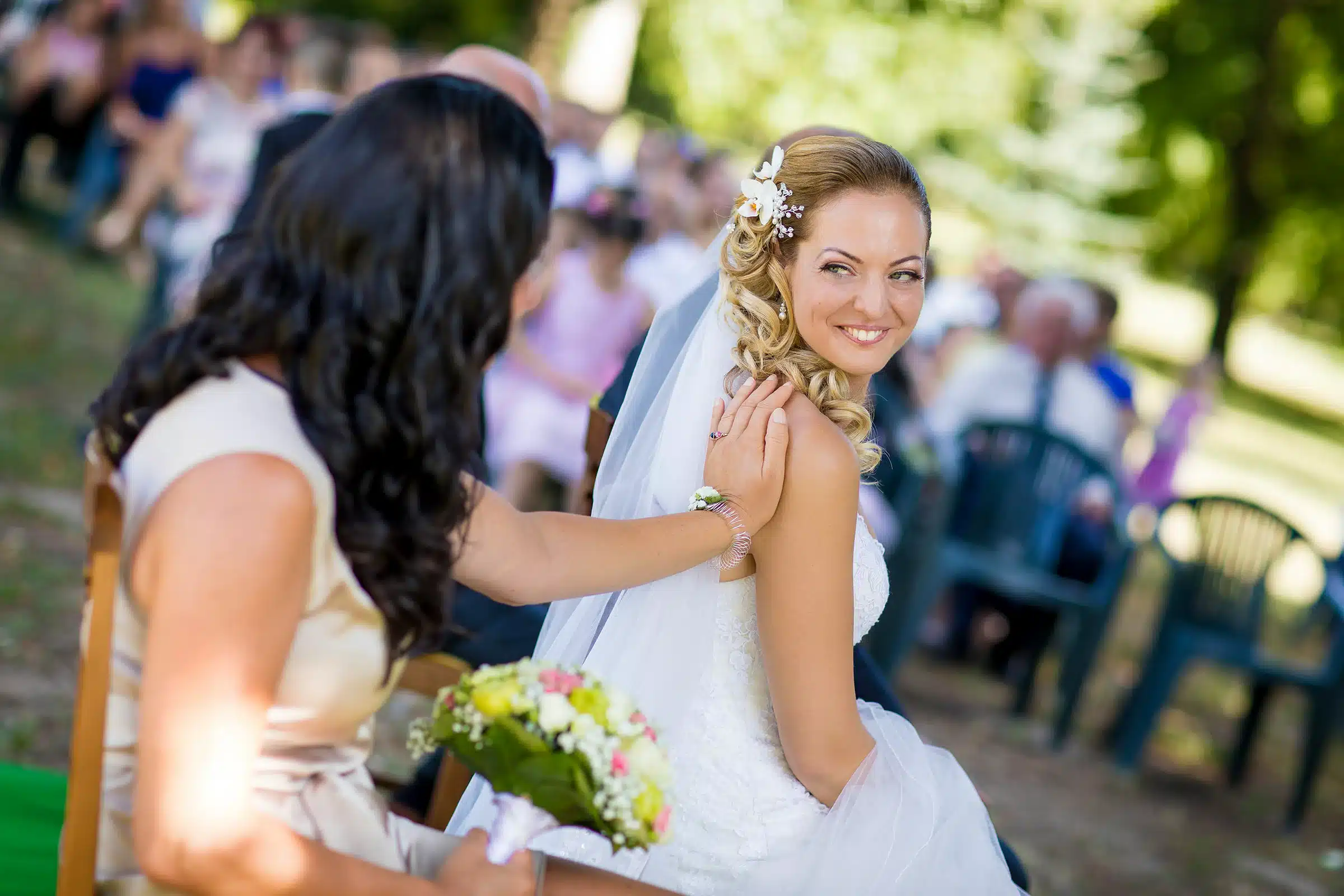
Smiling bride looking back at a woman resting her hand on the bride's shoulder during an outdoor wedding ceremony.

Can Documentary Style Wedding Photography Include Family Photos and Couple Portraits?

Absolutely. Documentary wedding photography doesn’t mean giving up beautiful family photographs or creative couple portraits. It means knowing when to step back and when a little direction makes the photograph better.

Family groups work better with a little planning. Before the wedding, we can agree on a list of the combinations you want. On the day, someone who knows the family can help gather people while we organise the photographs. It saves everyone waiting around for a missing cousin. We also keep an eye on the hugs and conversations happening between groups.

Couple portraits are different again. We look for good light, interesting backgrounds and angles that suit you and the setting. We’re happy to offer gentle direction when it makes a photograph stronger, whether that’s suggesting where to stand or taking a short walk together. We enjoy creating more artistic portraits too. They can be carefully composed without feeling stiff.

We discuss portrait time beforehand. Some couples prefer a short session and more time with guests; others want extra time for creative photographs. Both work alongside the unposed story of your wedding day.

Is Documentary Style Wedding Photography Right for You?

We often ask couples how they want their wedding day to feel. If you’re happiest catching up with friends, spending time with family and forgetting about the camera, a documentary approach may suit you. Not every conversation needs to become a photograph.

It helps if you love the little imperfections that make a day yours. Someone laughing with their eyes closed, a child wandering into the background or a sudden change of plans can become part of the story. We can’t promise particular reactions, and we’d rather photograph what’s real than recreate it.

But if you’ve saved dozens of carefully styled portraits and want most of your gallery to look that way, you may prefer a more directed approach. There’s nothing wrong with knowing what you want. It’s worth discussing before the wedding.

We’ve also worked with couples who feel awkward in front of a camera for different reasons. Some want us to step back; others relax once we offer a little direction. We make room for both. The question isn’t whether you know how to pose. It’s how you want to spend your day.
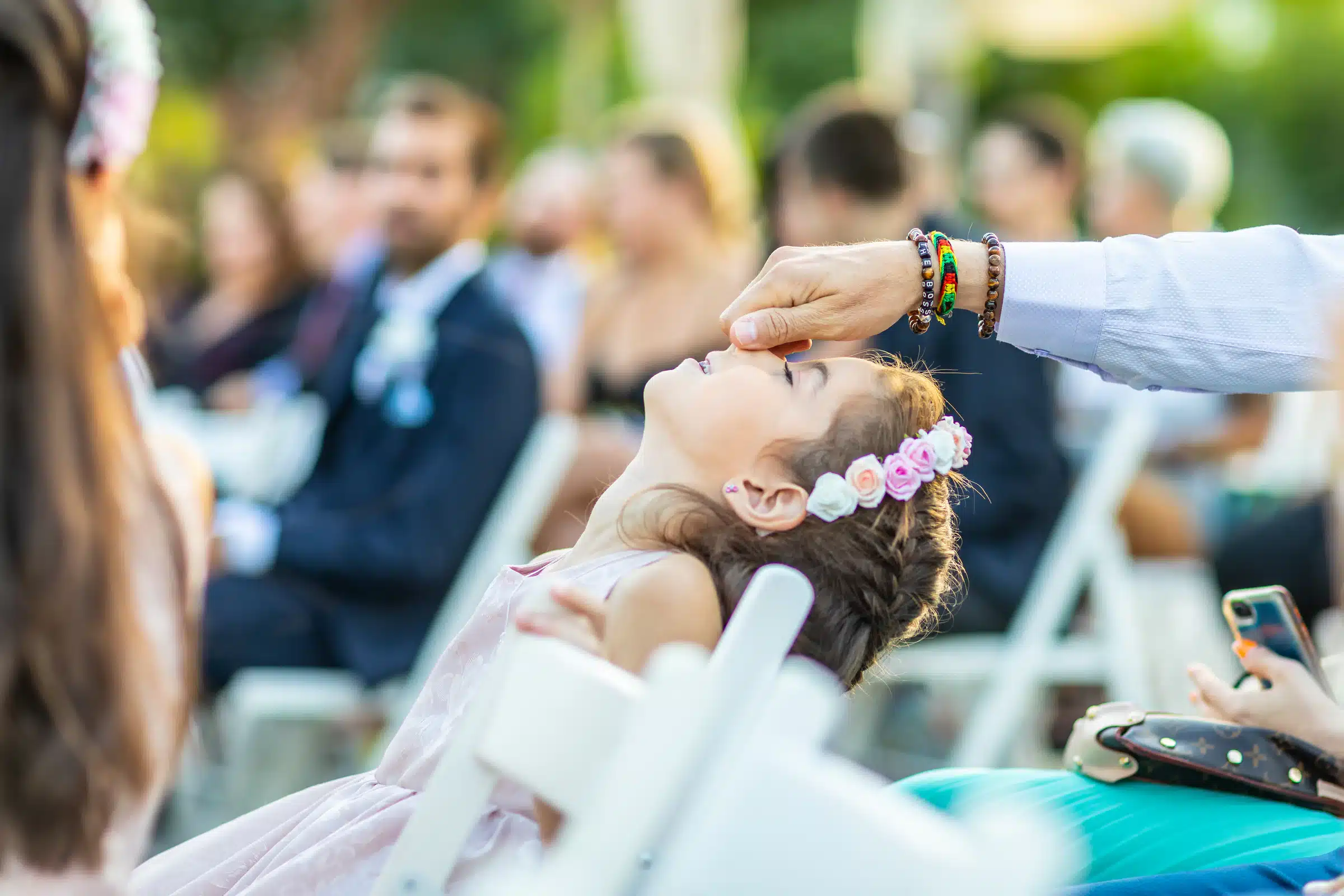
Young flower girl wearing a pink floral headband leaning back playfully as an adult touches her nose at an outdoor wedding.

Documentary Wedding Photography in Ireland: Working with Light, Weather and Timing

Irish weather doesn’t always follow the wedding schedule, and that’s something we’ve learned to work with. A shower might interrupt drinks outside and vanish minutes later. We keep photographing what’s happening around us.

On a wet afternoon, a covered entrance or a room with good window light may work better for portraits than the gardens we’d planned. If the rain eases, we can take a few photographs outside.

Winter brings another challenge: daylight fades early. We discuss the timing of family photographs and couple portraits beforehand, especially when the ceremony is late in the day. You can check Dublin’s sunrise and sunset times to see how much the available daylight changes through the year. That planning leaves us free to follow the rest as it unfolds.


Inside a dim church or reception room, we consider the light already there and whether extra lighting would help, without losing the atmosphere of the place. The important part is knowing when to use the light we have, when to change plans and when to let the moment happen.

How to Choose a Documentary Wedding Photographer

It’s easy to fall for a photographer’s favourite images. But a handful of beautiful photographs won’t show you how someone handles an entire wedding. If you’re considering documentary style wedding photography, we’d suggest looking through at least one full gallery, not just the highlights on a website.

Look beyond the portraits and the big moments. Are there photographs of guests chatting, people reacting during speeches and all the small things that happened between them? Does the story still feel complete when the light isn’t perfect or the setting isn’t spectacular?

Then ask how the photographer actually works. Will they give you space during the ceremony? How do they handle family groups and couple portraits? And what happens when plans change? Their answers should help you picture the day, rather than leave you guessing.

Finally, see how you feel talking to them. You’ll spend a lot of your wedding day around your photographer. Our questions to ask a wedding photographer can help you prepare for that conversation.

Want to Know How We’d Photograph Your Wedding?

Tell us about your plans, and we’ll help you explore an approach that feels right for your day.

Tell Us About Your Wedding

Frequently Asked Questions About Documentary Wedding Photography

Are documentary wedding photographs edited?

Yes. Capturing a moment naturally doesn’t mean leaving the image untouched. We edit photographs for a consistent finish while keeping the people and the moment recognisable.

Will all our photographs be in black and white?

No. Documentary describes how photographs are made, not their colour. Black and white can suit certain scenes, but it’s a creative choice rather than a requirement.

Can we request photographs of particular guests or traditions?

Definitely. Tell us about the people and customs that matter to you before the wedding. We can prepare to capture them, though we can’t promise a particular reaction.

Do we need a second photographer?

Not always. It depends on your plans, the locations and whether important moments happen simultaneously. We’ll discuss whether another photographer would add useful coverage.

How many photographs will we receive?

That depends on how long we’re photographing and what happens during the day. We can explain the expected delivery when we discuss your package.

Does documentary photography work for a small wedding?

Absolutely. Fewer guests don’t mean fewer meaningful connections. A small wedding can be full of quiet exchanges that deserve to be remembered.

Can documentary photography and wedding videography work together?

Yes. We offer both, and coordinating where we stand helps us capture events without getting in each other’s way or repeatedly interrupting you.
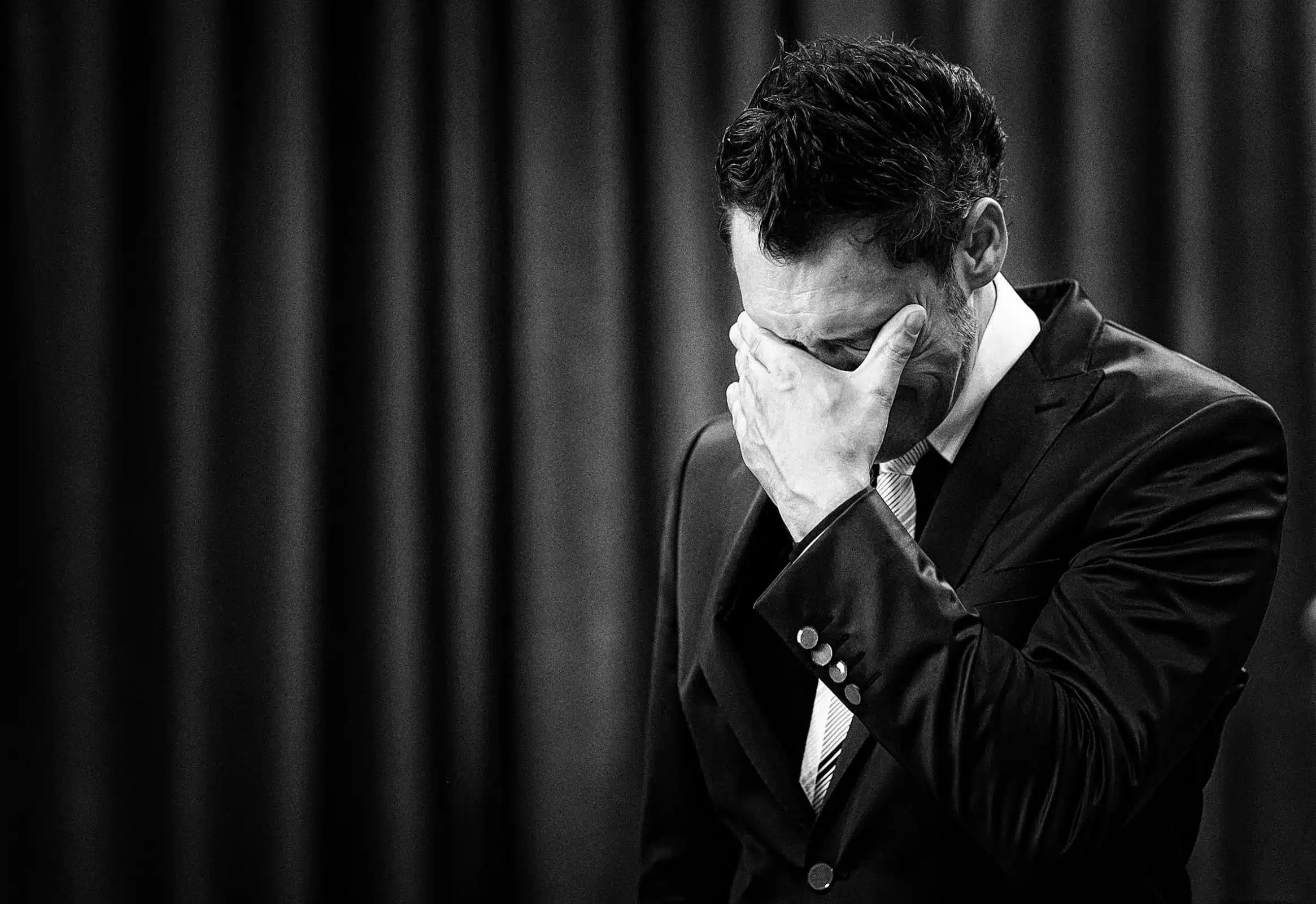
Black and white wedding photograph of an emotional groom covering his face with one hand

Your Wedding Day, As It Really Happened

Sometimes, the photograph you value most isn’t the one you expected. A planned portrait may become a favourite. So might a quiet image that, years later, brings back someone’s laugh or the way the room felt.

We can’t know which pictures will matter most. That’s why we pay attention beyond the highlights, without turning every second into a photograph. We want you to have a story worth returning to, including parts you didn’t think to ask us to capture.

Shall We Talk About Your Wedding?

If this approach feels right for you, we’d love to hear about the wedding you’re planning.

Enquire About Your Wedding

Read More
Janos Fazekas
Why Is Wedding Photography So Expensive? An Honest Photographer's Perspective

Why Is Wedding Photography So Expensive? An Honest Photographer’s Perspective

Why is wedding photography so expensive? It’s a fair question, especially when you’re planning a wedding and trying to understand why photographers can charge such different prices. At first glance, it might seem like you’re paying someone to take pictures for a few hours.

But there’s much more to wedding photography than what happens on the day. Preparation, experience, creative decisions, editing and responsibility all play a part. Still, spending more doesn’t automatically mean you’ll get better photographs.

After photographing more than 800 weddings, we’ve learned that the real value often lies in things couples don’t immediately notice: knowing when to step in, when to stay out of the way, and how to capture moments that might otherwise go unnoticed.

Here’s what we believe is genuinely worth paying for, and what isn’t.

Why Is Wedding Photography So Expensive?

So, why is wedding photography so expensive? The simple answer is that you’re paying for much more than the hours a photographer spends at your wedding. The price also reflects the preparation beforehand, the work that follows, professional equipment, experience and the responsibility of capturing moments that cannot be repeated.

Unlike a portrait session, a wedding doesn’t give us the chance to simply start again if something goes wrong. The light changes, the schedule sometimes runs late, and important moments can happen without warning. A good wedding photographer needs to recognise these situations, make quick decisions and keep working calmly without interrupting the natural flow of the day.

But there’s another side to this. A higher price doesn’t automatically mean better photographs. Two photographers might offer similar packages while producing very different results in terms of creativity, consistency and the way they capture genuine emotions.

So, when comparing wedding photography prices, we believe the most important question isn’t simply how much a photographer charges. It’s what their experience, approach and finished work will actually bring to your wedding.

What Are You Really Paying For When You Hire a Wedding Photographer?

When you hire a wedding photographer, you’re not just paying for someone to turn up with a camera. You’re paying for the work that happens before and after your wedding, and for the care taken to make sure nothing important is overlooked.

Before the Wedding: Planning and Preparation

Every wedding is different, so we like to understand how your day will unfold before we arrive. We talk through your plans, the different locations, the timing of important moments and anything that might need a little extra attention.

We also prepare our equipment and make sure we have backups ready. All this preparation means that on your wedding day, we can concentrate on what’s happening around us rather than worrying about what comes next. And if things don’t quite go to plan, we’re ready to adapt.

After the Wedding: Selection, Editing and Delivery

Our work doesn’t finish when we put our cameras away. First, we make sure your photographs are safely backed up. Then we carefully go through the images, selecting the ones that tell the story of your day.

Editing isn’t simply adding a filter. It’s about making sure the colours, light and overall look feel consistent, whether a photograph was taken in bright sunshine or during a candlelit evening. Finally, we prepare your gallery so you can enjoy and share your photographs.

We’re not the only photographers who see it this way. In The Knot’s explanation of wedding photography costs, several experienced wedding photographers describe the preparation, creative work and responsibilities that couples don’t always see.

Wondering What Your Wedding Photography Could Include?

Every wedding has its own plans and priorities. Explore our photography options and see what might suit your day. You can build a personalised quote without committing to a booking.

Why Is Wedding Photography So Expensive?

Why Does Experience Matter So Much in Wedding Photography?

When couples ask us, “Why is wedding photography so expensive?”, experience is one of the most important parts of our answer. It’s not simply about how many weddings someone has photographed. It’s about learning to recognise moments, adapt to unexpected situations and make good decisions without having to stop and think about every little detail.

When You Only Get One Chance to Capture a Moment

At a wedding, some of the most meaningful moments happen in just a few seconds. A parent’s reaction during the ceremony, a quiet smile between the couple or something funny happening in the background can easily go unnoticed.

Over the years, we’ve learned to pay attention not only to what’s happening in front of us, but also to what might happen next. We watch people’s expressions, anticipate reactions and look beyond the obvious moments. We can’t predict everything, of course, but experience helps us recognise those little opportunities before they’re gone.

Knowing When to Guide and When to Step Back

We also believe that experience is knowing when to get involved and when to leave things alone. Some moments need a little direction, especially during family photographs or creative portraits. Others are much better left to happen naturally.

We don’t want couples to spend their wedding day feeling like they’re constantly posing for photographs. Our approach is to offer calm guidance when it’s helpful, then step back and let everyone enjoy the day. That balance is something we’ve developed through years of working with real people in very different situations.

What Makes Wedding Photography Creative, Not Just Expensive?

Two photographers can stand in exactly the same place, looking at the same scene, and create completely different photographs. That’s because photography isn’t just about knowing how to use a camera. It’s also about how you see things.

Seeing Possibilities Others Might Miss

We love finding interesting light, unusual angles and little details that can turn an ordinary setting into something special. Sometimes it’s a reflection in a window, a beautiful shadow or a simple change in perspective.

We don’t believe you need a spectacular venue to create beautiful photographs. A good photographer should be able to work creatively with whatever surroundings are available, rather than relying on the location to do all the work. If you’re exploring different approaches, our guide to wedding photography styles in Ireland explains how those styles differ.

Creating Something Unique Without Making It Feel Staged

For us, creative wedding photography doesn’t mean asking couples to spend hours posing or repeating moments for the camera.

We enjoy creating distinctive portraits, but we also want our couples to feel comfortable and be themselves. Sometimes a small suggestion about where to stand or how to use the light is all that’s needed. The rest can happen naturally.

It’s this balance between creativity and genuine moments that gives wedding photographs their own character. The aim isn’t simply to produce impressive images, but photographs that feel like they belong to the people in them.

Is It Worth Having Two Wedding Photographers?

Having two wedding photographers can make a real difference, especially when there are several things happening at once. At Bluebird Studio, we work together as a team, so we’re used to looking at the same wedding from different perspectives without getting in each other’s way.

Two Perspectives on the Same Moment

Think about the moment you walk down the aisle. One of us might be photographing your expression, while the other captures your partner’s reaction or the emotions on your parents’ faces.

Neither photograph is necessarily more important. Together, they give you a fuller picture of what was happening, including moments you may not have noticed yourself.

When Important Moments Happen at the Same Time

Sometimes the couple gets ready in different locations. With two photographers, we can cover both preparations without rushing between places or asking anyone to change their plans.

During the rest of the day, one of us can focus on the main events while the other looks for the smaller, spontaneous moments happening around them. If you’re also planning a wedding film, our guide to wedding photography and videography from one team explains the separate benefits of coordinating photo and film coverage.

Of course, not every wedding needs two photographers. For a small, intimate celebration with a simple timeline, one experienced photographer may be perfectly sufficient. But for couples who want a more complete story of their day, having two photographers who know how to work together can be genuinely worthwhile.

Are Expensive Wedding Photographers Always Better?

Not necessarily. A higher price doesn’t automatically mean better photographs, just as a lower price doesn’t mean someone can’t do a wonderful job. Wedding photographers charge different amounts for many reasons, including experience, the services they offer and how they run their business.

What matters most is whether their work and approach are right for you.

Look Beyond the Highlights in a Portfolio

Almost every photographer can show you a collection of their favourite images. But a beautiful portfolio doesn’t always tell you what a complete wedding gallery will look like. You can explore our wedding photography portfolio to get a feel for our style, but we would still recommend asking any photographer to see a complete wedding.

Ask to see a full wedding, from the morning preparations to the evening celebrations. Look at the photographs taken in different lighting conditions, the natural moments between the main events and the consistency of the editing.

It’s also worth asking yourself whether you genuinely connect with their style, rather than simply choosing photographs that look impressive.

Compare What’s Included, Not Just the Price

Two photography packages might look similar at first, but one could include two photographers, longer coverage or additional products, while the other doesn’t. You can view our wedding photography packages as one example of how coverage and inclusions can vary.

Check exactly what’s included, when you’ll receive your photographs and whether there are any additional costs. Our guide to questions to ask a wedding photographer can help you compare your options.

Wondering What Wedding Photography Would Be Right for You?

Every wedding is different, and the most expensive package isn’t always the best fit. Explore our photography options and find the coverage that suits your plans and priorities.

How Can You Tell Whether a Wedding Photographer Is Worth the Price?

Once you’ve found a photographer whose work you love, it’s worth looking at what it might actually feel like to have them with you on your wedding day. Beautiful photographs matter, but so does the experience of having them taken.

Pay Attention to How They Make You Feel

Not everyone feels comfortable in front of a camera, and that’s completely normal. When you speak to a photographer, notice whether they listen to what you want, answer your questions clearly and make you feel at ease.

We believe couples should be able to enjoy their wedding without constantly thinking about photographs. A good photographer knows how to offer a little guidance when needed, while giving people the space to relax and be themselves.

Look for Confidence, Not Just Promises

Ask how your photographer handles unexpected changes, difficult lighting or a timeline that runs late. They should be able to explain their approach without making unrealistic promises.

It’s also worth discussing how you’ll receive your photographs and what happens if plans change. Clear answers and realistic expectations can tell you a lot about someone’s professionalism.

If you’d like more help making that decision, we’ve put together a guide on how to choose the best wedding photographer in Ireland.

Is Wedding Photography Worth the Money?

Understanding why wedding photography is so expensive is one thing, but deciding whether it’s worth the money is much more personal. We believe professional wedding photography is worth paying for when the photographs genuinely matter to you and you find someone whose work you love. That doesn’t mean spending more than you can comfortably afford.

The Photographs You’ll Appreciate Years Later

On your wedding day, you’ll be busy enjoying yourself, talking to guests and taking everything in. You simply can’t see everything that’s happening around you.

That’s one of the things we love most about photographing weddings. Sometimes the images that mean the most aren’t the ones couples expected. It might be a quiet moment between family members, a friend’s reaction during the speeches or something funny happening in the background.

Years later, those photographs can bring back people, expressions and little details you might otherwise have forgotten. They tell parts of the story you didn’t even realise were happening.

Spend on What Matters Most to You

Every couple has different priorities. Some want their entire day documented, from getting ready to the evening celebrations. Others may only need a few hours to capture the ceremony, family photographs and some relaxed portraits.

Neither choice is wrong. We’d always encourage couples to think about which parts of their wedding they most want to remember, then choose photography coverage that reflects those priorities. The best value isn’t necessarily the biggest package, but the one that feels right for you.

Frequently Asked Questions About Wedding Photography Costs

1. Why Do Wedding Photographers Charge So Much?

Wedding photographers charge for much more than the hours spent taking pictures. Their fees also cover planning, professional equipment, experience, editing, business expenses and the responsibility of capturing moments that cannot be repeated. The amount varies depending on the photographer and the services included.

2. How Much Does Wedding Photography Cost in Ireland?

Wedding photography prices in Ireland vary depending on coverage hours, experience, the number of photographers and what’s included in the package. For a more detailed explanation of prices and options, read our wedding photography cost guide for Ireland.

3. Why Does Editing Wedding Photos Take So Long?

Editing wedding photographs involves much more than applying a filter. Photographers need to review and select images, adjust exposure and colours, and create a consistent look across photographs taken in very different lighting conditions. Preparing and delivering the finished gallery also takes time.

4. Are Expensive Wedding Photographers Worth It?

They can be, but a higher price doesn’t automatically guarantee better photographs. What matters is the photographer’s experience, consistency, creative style and how well their approach suits you. Looking at complete wedding galleries can help you decide whether their work justifies the price.

5. What Is the Difference Between Cheap and Expensive Wedding Photographers?

The difference may involve experience, coverage hours, the number of photographers, editing, equipment and additional services. However, price alone doesn’t tell you how good someone is. Compare complete galleries, what’s included in each package and how comfortable you feel with the photographer.

6. Is a Second Wedding Photographer Worth the Money?

A second photographer can be valuable when important moments happen simultaneously or when the couple gets ready in different locations. Two photographers can also capture different perspectives during the ceremony. For smaller weddings with a simple timeline, one experienced photographer may be enough.

7. Can I Save Money by Booking a Wedding Photographer for Fewer Hours?

Yes. Choosing shorter photography coverage can reduce the cost without necessarily compromising the quality of the photographs. Think about which moments matter most to you, then discuss whether a half-day or shorter package would suit your wedding plans.

8. What Should Be Included in a Wedding Photography Package?

A wedding photography package should clearly explain the coverage hours, number of photographers, how the photographs will be delivered and when you can expect them. Check whether albums, travel, extra hours or other services cost more, so you know exactly what you’re paying for.

9. Is Professional Wedding Photography Worth It for a Small Wedding?

Yes, professional photography can be worthwhile for a small wedding too. An intimate celebration still has meaningful moments worth capturing. You may not need full-day coverage, so a shorter package with an experienced photographer could be a better fit for your plans and budget.

10. How Do I Know If a Wedding Photographer Is Overpriced?

Start by comparing what you’re actually getting rather than looking at the price alone. Review complete wedding galleries, check the photographer’s experience and make sure the package terms are clear. A photographer is worth considering when their work, service and price make sense for you.

Final Thoughts: What Makes Wedding Photography Worth the Price?

So, why is wedding photography so expensive? As we’ve explained, the answer goes far beyond the hours spent taking photographs or the equipment a photographer brings along. But what really matters is how those photographs turn out, what they mean to you and whether they reflect the day as you remember it.

For us, good wedding photography means finding that balance between creativity and real life. We want couples to enjoy their wedding, spend time with the people they love and feel comfortable being themselves, without constantly thinking about the camera.

In the end, the right photographer isn’t necessarily the most expensive one. It’s someone whose work you genuinely connect with and who you can trust to photograph your day in a way that feels right for you.

Looking for Wedding Photography That Feels Right for You?

If you love natural moments, creative photographs and a relaxed approach, we’d love to hear about your wedding. Explore our photography options and put together a quote that suits your plans.

Latest Posts
Read More
Janos Fazekas
Wedding Photography and Videography: 8 Great Benefits of One Team

Wedding Photography and Videography: 8 Great Benefits of One Team

Couples often spend a lot of time choosing the right photographer and videographer, but much less time thinking about how those two suppliers will actually work together once the wedding day begins.

During the ceremony, couple portraits, speeches and first dance, both photography and video often need the same space at the same moment. Without a shared plan, even experienced professionals can unintentionally slow things down, compete for an angle or ask the couple for extra time.

From our experience, wedding photography and videography works best when both sides understand each other’s timing, positions and priorities. That does not mean separate suppliers cannot work brilliantly together. It simply means coordination matters. In this guide, we will explain eight practical benefits of choosing one photo and video team, and what those benefits can mean for the flow, atmosphere and experience of your wedding day.

Wedding Photography and Videography

Can I Book a Wedding Photographer That Offers Both Photos and Video?

Yes. Many wedding photography companies also offer videography, allowing you to book both services through one supplier. This can make planning simpler and helps keep the photography and film consistent in style, timing and approach.

However, booking wedding photography and videography from the same company does not necessarily mean that one person should try to do both at the same time. Professional combined coverage usually involves dedicated photographers and videographers working together as one team, so each person can focus fully on their role while coordinating throughout the wedding day.

At Bluebird Studio, we offer wedding photography and videography together, with dedicated team members focusing on photography and film rather than one person trying to cover both at the same time.

What Does Wedding Photography and Videography From One Team Actually Mean?

Choosing one team does not mean asking one person to photograph and film every part of the wedding at the same time. Photography and filmmaking are different jobs, and both need their own attention, timing and positions throughout the day.

For us, a true photo and video team means photographers and filmmakers who already know how to work around each other. They share the same timeline, understand where the other person needs to be during important moments, and know when photography or video needs priority for a particular shot.

That familiarity can make a surprisingly big difference. The photographer does not have to negotiate positions with a videographer they have just met, and the couple is less likely to receive conflicting directions from two separate crews. Wedding photography and videography works most naturally when everyone behind the cameras is following the same plan while still concentrating on their own role.

8 Benefits of Choosing One Wedding Photography and Videography Team

The practical difference becomes most noticeable once the wedding day is moving. Photography and video often need the same moments, spaces and limited time, so the way the team works together can affect far more than the final images and film.

1. Better Coordination Between Photography and Videography

When photographers and filmmakers work together regularly, they do not need to figure out each other’s priorities while the wedding is already happening. They already understand how the other person approaches key moments, where they are likely to stand and when one side may need a little more space.

During a ceremony, for example, we already know which angles each of us needs before the aisle walk or first kiss begins. That means fewer last-minute decisions and less chance of one camera unintentionally affecting the other. For the couple, this usually means smoother coverage with less interruption, while both photography and video can concentrate on capturing the moment properly.

2. No Competing for the Same Shot

Photographers and videographers often need the best view of exactly the same moment. The first kiss is a good example: there is only one chance to capture it, and an unplanned position can easily place one camera in the other person’s frame.

When a photo and video team works together regularly, those positions are already understood. One person may take a closer angle while the other stays wider, giving both photography and film a clean view without blocking each other. The aim is not to capture the same shot twice, but to create two different perspectives of the same moment without either camera getting in the way.

3. Less Repeating, Posing and Performing for Cameras

When photographers and videographers have very different working methods, couples can sometimes receive the same direction twice. A simple walking shot, turn or veil movement may be photographed first and then repeated again for video.

With one established team, the same movement can usually work for both photography and film at the same time. We can guide a moment once, then capture it from different perspectives without asking the couple to keep recreating it. The result is less time feeling like you are performing for cameras and more space for natural reactions, conversation and the parts of the day that are actually happening around you.

4. A Smoother Timeline and More Time With Your Guests

One of the tightest resources on a wedding day is time. Couple portraits, family photos and the drinks reception often sit close together, so photography and video need to use that time efficiently.

With one photo and video team, the same portrait session can usually serve both without creating two separate shooting blocks. If the ceremony runs late, the weather changes or travel takes longer than expected, the team can adjust together rather than competing for extra time.

The result is simple: less of your wedding day is spent away from your guests, and more of it is spent enjoying the celebration with family and friends.

See How Photography and Film Work Together

Explore how we combine natural wedding photography and cinematic film while keeping the day relaxed, coordinated and focused on the moments that matter.

Explore Our Wedding Photography & Films

5. A More Relaxed, Less Intrusive Wedding Day

When a photo and video team already understands each other’s coverage, there is less need for both sides to keep stepping into the same moments or asking for the couple’s attention separately.

This matters most during the parts of the day that are best left to unfold naturally, such as the ceremony, drinks reception and speeches. One person can hold an angle while the other works around it, without creating unnecessary movement or interruption. The less the team needs to interfere, the easier it is for you and your guests to forget about the cameras and simply enjoy what is happening.

6. A Consistent Creative Style Across Photography and Film

Photography and film are different mediums, so they do not need to look identical. But they should still feel like they belong to the same wedding. The way moments are approached, the use of light, colour and the overall storytelling should work together rather than pulling in two different creative directions.

Photography can freeze a single expression or detail, while film adds movement, voices and atmosphere. When both are created with the same understanding of your day, the final gallery and film feel connected. If you are still deciding what visual approach suits you best, our guide to wedding photography styles explains the main options.

7. Simpler Planning Before the Wedding

Working with two separate suppliers can mean two planning processes, two sets of questions and two interpretations of the same wedding timeline.

With one coordinated photo and video team, you can explain your priorities once and build one shared plan around the ceremony, portraits, speeches and the other parts of the day that matter most to you. The photography and film requirements can then be worked out within the team rather than passed back to you to coordinate. It means less admin before the wedding and less chance of two different plans only meeting for the first time on the day itself.

8. Better Value From Combined Photography and Videography

Better value does not necessarily mean choosing the cheapest package. If you already want professional photography and film, a combined service can give you more value through coordinated coverage, less duplication and a more cohesive final result.

In some cases, booking photography and videography together may also cost less than arranging two separate suppliers, but we would treat that as an additional benefit rather than the main reason to choose a team. The better comparison is what you receive for the full investment: the coverage, experience, final photographs and films, and how well everything works together on the day.

One Team vs Booking Your Photographer and Videographer Separately

Booking your photographer and videographer separately can work extremely well. We have worked alongside excellent independent suppliers, and when everyone communicates clearly, respects the same timeline and understands each other’s priorities, the result can be just as smooth.

The main advantage of an established photo and video team is that this working relationship already exists before your wedding begins. The people behind the cameras already know how the other person moves, how much space they need, how they approach portraits and how they cover moments such as the ceremony, speeches and first dance. They do not need to learn those habits while the day is already happening.

When comparing options, it is therefore worth asking who will actually photograph and film your wedding and whether those people regularly work together. The company name matters less than the experience of the team that will be there on the day. Our guide to questions worth asking before booking can help you compare suppliers more carefully.

What to Look for in Wedding Photography and Videography Packages

When comparing wedding photography and videography packages, it is worth looking beyond the package name or headline price. Two offers can appear similar while including very different levels of coverage, different team sizes and very different final deliverables.

  • Coverage: Check exactly when coverage starts and finishes, and whether getting ready, the ceremony, speeches and first dance are included.
  • The team: Ask how many photographers and videographers will be there, who they are, and whether they regularly work together.
  • Photography: Look at how the edited images are delivered, whether they are high resolution, whether an online gallery is included, and if albums are part of the package or an extra.
  • Film: Check the length and type of film you will receive. A short highlight film is very different from full ceremony or speech coverage. It is also worth watching examples of our wedding films to see how the finished work feels.
  • Extras: Ask whether drone footage, second shooters, albums, additional hours, travel or full ceremony and speech edits are included or charged separately.
  • Delivery and flexibility: Check the expected turnaround time, how your photographs and films will be delivered, and whether the package can be adjusted if your plans change.

The best comparison is not simply which package costs less. It is which one gives you the coverage, team, photographs, films and flexibility that actually match the way you want your wedding documented.

Build a Photo and Video Package Around Your Wedding

Choose the photography and film options that suit your plans and see a personalised estimated total. It is an instant quote calculator, not a booking, so your date is only confirmed after availability has been checked.

Build Your Personalised Photo & Video Quote

How Much Does Wedding Photography and Videography Cost in Ireland?

For professional wedding photography and videography in Ireland, around €3,000 is a useful starting point, but prices can rise considerably from there. At the premium and luxury end of the Irish market, combined photography and videography bookings can reach €15,000–€20,000, depending on the team, coverage and level of service.

At the lower end, you are more likely to find newer or less established suppliers, shorter coverage, smaller teams or simpler deliverables. That does not automatically mean lower quality, but unusually low quotes are worth examining carefully. Higher prices often reflect greater experience, consistency, demand, longer coverage, larger teams and more extensive films or albums, although price alone never guarantees quality.

Rather than comparing the headline figure alone, look at the experience, coverage and final deliverables included. For a more detailed breakdown of wedding photography and videography costs in Ireland, see our dedicated pricing guide.

Can Separate Photography and Videography Teams Still Work Well Together?

Yes. If you book your photographer and videographer separately, a little coordination before the wedding can make a big difference.

Make sure both suppliers receive the same final timeline and introduce them to each other before the day. It is also useful for them to discuss ceremony positions, speeches, first dance coverage and any moments where both photography and video will need the same space at the same time.

The aim is simply to avoid surprises. When both suppliers understand the plan, know how the other person intends to work and have each other’s contact details, separate photography and videography teams can work together very smoothly.

Wedding Photography and Videography FAQs

Can I book a wedding photographer that offers both photos and video?

Yes. Many wedding photography companies also offer videography, so you can book both services through the same supplier. This usually means dedicated photographers and videographers working together as one team rather than one person trying to photograph and film the wedding at the same time.

Do we need both a wedding photographer and videographer?

Not necessarily, but they preserve different parts of the day. Photography captures individual moments in detail, while film adds movement, voices, music and atmosphere. If those elements matter to you, having both can give you a more complete record of the wedding.

Is it better to book your wedding photographer and videographer together?

It can be. An established photo and video team already understands each other’s workflow, positions and priorities. Separate suppliers can work just as well when they communicate properly and share the same plan.

Can one person photograph and film a wedding at the same time?

Hybrid coverage is possible, but professional photography and full wedding filmmaking both require constant attention. For complete coverage, we believe the stronger approach is to have dedicated people concentrating on each role rather than one person trying to do both simultaneously.

How far in advance should we book wedding photography and videography in Ireland?

Popular dates, particularly summer Saturdays, can book well in advance. Around 12–18 months is sensible if you have a specific team in mind, although it is always worth checking availability even if your wedding is much closer.

How much photography and videography coverage do we need?

That depends on which parts of the day you want documented. If you want morning preparations, ceremony, portraits, speeches and first dance, full-day coverage usually makes more sense than a shorter package.

How many photographers and videographers will be at our wedding?

This varies between suppliers and packages. Ask exactly how many people will attend, who they are and whether those photographers and filmmakers regularly work together.

What exactly should we receive from our wedding videography package?

Check the deliverables carefully. A package may include a teaser, highlight film, longer documentary edit, full ceremony or speeches, but these should never be assumed simply because “wedding video” is included.

What is the difference between a highlight film and a full wedding film?

A highlight film is a shorter, edited story using selected moments from the day. A longer wedding film can include much more of the ceremony, speeches and other events, while full ceremony or speech edits may also be supplied separately.

Can wedding photography and videography packages be customised?

Often, yes. Coverage time, albums, additional photographers or filmmakers and different film options may be adjustable. It is worth building the package around the parts of your wedding you actually want documented rather than paying for extras you do not need.

Can a wedding content creator replace a photographer or videographer?

No. A wedding content creator usually focuses on quick, behind-the-scenes and social-media-ready content, often captured on a phone and delivered rapidly. That can be a useful addition, but it is different from professionally photographed images or a wedding film created with dedicated cameras, audio recording and full post-production.

Choosing the Right Wedding Photography and Videography Team in Ireland

When comparing wedding photography and videography teams, look beyond a few favourite images or a short showreel. Ask to see photographs and film from the same complete wedding so you can judge how consistently the team works through different light, locations and parts of the day.

It is also worth finding out who will actually photograph and film your wedding and whether those people regularly work together. Experience and style matter, but so does feeling comfortable with the people who will be beside you for much of the day. Take time to explore both the wedding photography portfolio and wedding films. Ultimately, choose a team whose work you trust and whose approach feels right for the way you want to experience your wedding.

Planning Photography and Film for Your Wedding?

Tell us a little about your plans, choose the photography and video options that suit your day, and receive an instant personalised estimate. We will then check availability for your wedding date.

Check Availability & Get Your Instant Quote

Read More
Janos Fazekas
Questions to Ask a Wedding Photographer

24 Questions to Ask a Wedding Photographer – Wedding Photography FAQ

Choosing a wedding photographer can feel surprisingly difficult. Portfolios may look beautiful, packages can seem similar and almost every photographer describes their work as natural, relaxed or timeless. The right questions can help you look beyond the highlights and understand how someone will actually photograph your wedding day.

This wedding photography FAQ covers 24 practical questions to ask a wedding photographer before you book, from full galleries, style and experience to coverage, backup equipment, contracts, pricing and delivery. We will also explain why each question matters and what you should listen for in the answer.

After photographing weddings across Ireland for many years, we know that good photography is only part of the decision. Reliability, preparation, communication and how comfortable you feel with the people behind the cameras can matter just as much, especially on busy, unpredictable wedding days.

24 Questions to Ask a Wedding Photographer – Wedding Photography FAQ

How to Use This Wedding Photography FAQ

You do not need to turn your first meeting with a photographer into an interview. This wedding photography FAQ is here to help you compare photographers more confidently and understand what sits behind a beautiful portfolio.

Some answers are practical: who will photograph your wedding, how many hours are included, when your gallery will be delivered and what happens if something goes wrong. Others tell you much more about how the photographer works. Seeing full wedding galleries, for example, can show whether the quality stays consistent from morning preparations and a dark ceremony through to speeches, portraits and the dance floor.

Pay attention not only to the answer, but also to how clearly it is explained. A professional photographer should be able to discuss their process, limitations, backup plans and pricing without making you feel rushed or pressured.

You may not need to ask all 24 questions. Use the ones that matter most to your wedding, and treat the answers as a way to decide whether the photographer’s approach, experience and personality feel right for you.

Questions to Ask a Wedding Photographer Before You Book

How far in advance should we book our wedding photographer?

For popular Irish wedding dates, especially Fridays and Saturdays between May and September, it is sensible to start looking 12–18 months ahead. Some photographers will still have availability closer to the date, but waiting can leave you choosing from whoever is free rather than who genuinely suits you. Once your venue and date are confirmed, check availability with the photographers you like most.

Can we see two or three full wedding galleries?

Yes, and this is one of the most useful questions you can ask. A website portfolio shows selected highlights; a full gallery shows how consistently someone photographs an entire day. Look beyond the couple portraits. Check morning preparations, indoor ceremonies, family photos, speeches, low light and the dance floor. Two or three complete galleries give you a much better idea of what your own finished collection may feel like.

If your wedding is in Dublin, you can also read our guide on how to choose a wedding photographer in Dublin.

Who will actually photograph our wedding, and will there be a second photographer?

Do not assume the person whose portfolio you love will automatically be the person who arrives on the morning of your wedding. Ask who will photograph the day and whether a second photographer is included or charged separately.

At Bluebird Studio, Anna and Janos photograph weddings together, so couples know who will be behind the cameras before they book. Two photographers can also cover both preparations, different ceremony angles and guest reactions without constantly moving one photographer around.

What exactly is included in the package and contract?

Ask for the details in writing before paying a booking fee. The agreement should make clear the coverage hours, who is photographing the wedding, what you will receive, delivery expectations, optional extras, payment terms and what happens if plans change or the wedding is cancelled.

Do not compare packages only by price. Two offers that sound similar can include very different coverage, photographers, albums, delivery or additional costs. A clear contract protects both you and the photographer and means there should be far fewer surprises later.

If you are still building your shortlist, our guide to finding wedding photographers near you explains what to look for when comparing local photographers.

Wedding Photography Style and Experience Questions

How would you describe your wedding photography style?

Ask photographers to explain how they actually work, not just give you a few style labels. “Natural”, “documentary” and “editorial” can mean very different things from one photographer to another. Look at full galleries and notice how they photograph real moments, portraits, family groups, low light and the evening reception. Their description should match what you can actually see in the photographs. If you are comparing approaches, our guide to different wedding photography styles in Ireland explains the main differences.

How much direction or posing do you give couples?

This can shape how your wedding day feels. Some photographers direct almost every portrait, while others rarely intervene at all. Neither approach is automatically better; what matters is whether it suits you. We stay unobtrusive for most of the day, then give simple direction when it helps with couple portraits or family photographs. The aim is to make you look your best without turning the wedding into a long photo shoot. If you are nervous in front of the camera, ask how the photographer helps camera-shy couples.

How much wedding photography experience do you have?

Years alone do not tell the whole story. Ask how many complete weddings the photographer has covered and look for consistency across different parts of the day. Experience becomes especially valuable when the schedule changes, the ceremony is dark, the weather turns, or family photographs need to be organised quickly. A photographer should be able to adapt without making the couple feel something has gone wrong. Full galleries from different seasons are often more revealing than a number on an About page. They also show whether the photographer can maintain the same standard in bright summer light, dark winter interiors and fast-moving evening receptions.

Do you need to have photographed our wedding venue before?

No. Familiarity with a venue can help, but it should not be a requirement for an experienced wedding photographer. Every venue was new once.

What matters more is preparation and adaptability. A photographer working somewhere new should understand the timeline, check the available light and identify useful indoor and outdoor options. In Ireland, where weather and light can change quickly, being able to read a location and make decisions on the day is often more valuable than simply having photographed there before.

Still Deciding What Kind of Wedding Photography Feels Right for You?

Explore our photography and film options, see examples of different styles and find the coverage that could suit your wedding day.

Explore Our Photography & Film Options

Wedding Day Coverage and Planning Questions

How many hours of wedding photography do we really need?

Start with the moments you want photographed rather than choosing a number of hours because it sounds standard. A shorter wedding may only need the ceremony, portraits and part of the reception, while a full wedding story can run from morning preparations through speeches, the first dance and the start of the evening. Ask the photographer to work backwards from your timeline and explain what can realistically be covered. 

Can you photograph both of us getting ready?

Yes, but the logistics matter. If you are getting ready in different locations, one photographer may need to leave one side early or prioritise certain moments. Two photographers can cover both preparations at the same time. At Bluebird Studio, Anna and Janos photograph weddings together, so one of us can stay with one partner while the other follows what is happening elsewhere.

How do you organise family and group photographs?

Agree the important combinations before the wedding and keep the formal list focused. Immediate family groups usually matter most, and every extra combination takes time because people have to be found and brought together. We also recommend choosing one or two people who know the families well to help gather everyone. A well-organised list lets the formal photographs move quickly so you can get back to your guests instead of spending much of the drinks reception waiting for people.

Do we need to give you a wedding photo shot list?

For family groups and a few important requests, yes. For the rest of the day, a long checklist can work against natural wedding photography. A photographer who is constantly checking a list may be less free to notice reactions, interactions and unexpected moments.

Tell your photographer about people, details or traditions that are particularly important to you, but you should not need to provide a list of every standard moment from walking down the aisle to cutting the cake.

What happens if it rains on our wedding day?

Rain should change the plan, not ruin the photography. In Ireland, an experienced photographer should already be thinking about sheltered areas, indoor locations, window light and short gaps in the weather. Often ten or twenty dry minutes is enough for couple portraits.

Ask what the photographer would do at your venue if the weather stayed wet. The answer should involve a practical Plan B rather than simply hoping it will clear. Some of our favourite wedding photographs have been made by adapting to difficult weather instead of trying to force the original plan.

Backup, Insurance and Professional Safeguards

These questions are easy to overlook when a portfolio looks beautiful, but they reveal how seriously a photographer treats the responsibility of documenting a one-off event. Good answers should be specific, practical and easy to explain without hiding behind technical jargon.

Do you carry backup cameras, lenses and lighting?

Backup equipment should not mean one spare camera left in the car. Ask whether the photographer carries multiple camera bodies, lenses, batteries, memory cards and lighting that could keep the day moving if something fails. Professional wedding cameras can also record the same photograph to two memory cards at once, reducing the risk from a single card failure. You do not need to know every model number; you are listening for a clear, thought-through backup plan.

How are our wedding photos protected and backed up?

The backup process should continue after the wedding. Ask when the files are copied from the memory cards, how many copies are created and whether those copies are stored in more than one place. Keeping the original cards untouched until secure backups exist adds another layer of protection. No system can remove every possible risk, but “your photos are on my laptop” is not the kind of answer you want for images that cannot be recreated.

Are you professionally insured?

Yes. Public liability insurance is a basic professional safeguard and some venues may ask a photographer to provide proof of cover. Depending on the business, photographers may also hold equipment or professional indemnity insurance. You do not need to interrogate the policy wording, but a professional should be able to confirm that appropriate insurance is in place.

What happens if you are ill or cannot photograph our wedding?

This is uncomfortable to think about, which is exactly why it is worth asking before you book. Illness, injury, family emergencies and travel problems are rare, but weddings cannot simply be moved to another day.Ask what the photographer’s contingency plan is, whether they have trusted professional contacts who could step in and what the contract says if replacement coverage cannot be arranged. A confident answer should describe an actual process rather than “it has never happened”. The goal is not to expect the worst; it is to know that someone has already thought through what happens if the unexpected occurs.

It’s also worth understanding what makes wedding photography worth the price. The real difference is not always visible in the package list, especially when you’re comparing experience, creativity and the finished photographs.

Want to Know What Wedding Photography Coverage Would Suit You?

Tell us a little about your wedding plans and the services you are considering. You can create a personalised photo and film quote based on the coverage and options that actually fit your day.

Create My Personalised Quote

Wedding Photo Delivery, Pricing and Usage Rights

How many wedding photos will we receive?

There is no single number that makes one wedding package better than another. The final amount depends on the length of coverage, the number of photographers, the pace of the day and how carefully the images are selected. Some photographers promise a minimum; others give an approximate range. What matters more is whether the finished gallery tells the whole story consistently. Ask to see full weddings so you can judge the balance between key moments, portraits, guests, details and the smaller interactions that happen in between.

How long will it take to receive our wedding photographs?

Turnaround times vary, especially during the busiest part of the Irish wedding season. Ask for the normal delivery timeframe and check whether it is written into the agreement. It is also worth asking whether you will receive a small preview before the complete gallery.

Be cautious of comparing photographers purely on speed. Careful selection, colour work and individual editing take time, but the photographer should still be able to give you a clear and realistic expectation before you book.

How are the photographs edited and delivered?

Ask what “fully edited” actually means and how the finished images will reach you. Most professional photographers deliver selected, edited photographs as high-resolution JPEG files through an online gallery rather than handing over every frame taken on the day.

If having RAW files is important to you, ask before booking rather than assuming they are included. You should also understand what you are allowed to do with the finished photographs, such as downloading, printing and sharing them for personal use. The photographer should explain the usage rights clearly in the contract or terms.

Are there any extra costs, payment terms or cancellation conditions?

Look beyond the headline package price. Ask whether travel, additional hours, albums, a second photographer, express delivery or other extras are included or charged separately. Confirm the booking fee, when the remaining balance is due, and what happens if you postpone or cancel the wedding.

When comparing packages, make sure you are comparing like with like. Our guide to wedding photographer costs in Ireland explains what commonly influences pricing and why two apparently similar packages can have very different prices. The clearest photographers make these details easy to understand before you commit.

If you are also booking wedding film, ask whether the photographer and videographer regularly work together and how they coordinate important moments. We cover this in more detail in our guide to choosing your wedding photographer and videographer as one team.

Wedding Photography FAQ: Three Practical Questions Couples Still Ask

Do we need to provide a meal for our wedding photographers?

A meal is normally expected when photographers are working through the reception and into the evening. Wedding days can mean eight, ten or more hours on your feet, often with little opportunity to leave the venue. Ask your photographer what they require and include them in the supplier meal count if needed. It does not need to be the same meal as your guests; what matters is that there is time to eat before the next important part of the day.

Is an engagement or pre-wedding shoot worth doing?

An engagement or pre-wedding shoot is not essential, but it can be useful if you feel nervous in front of the camera or want to experience how your photographer gives direction before the wedding. It also gives you a set of relaxed photographs in a completely different setting.

Should we book wedding photography and videography with the same team?

Booking photography and videography with the same team can make planning simpler because both services are built around one timeline and one approach. The important question is whether the team has enough experienced people to cover both properly. Ask who will photograph, who will film, what each person is responsible for and how they work together without competing for the same moments.

Choosing the Right Wedding Photographer Comes Down to More Than the Portfolio

The best wedding photographer for you is not simply the person with the most dramatic images or the longest list of awards. You also need to understand how they work, how they prepare, what happens when plans change and whether you feel comfortable having them around you for one of the most personal days of your life.

Use these questions to look beyond the highlights and compare photographers properly. Clear answers, complete wedding galleries, realistic expectations and a well-organised backup plan can tell you just as much about a photographer as the images on their homepage.

Ready to Find the Right Photography and Film Coverage for Your Wedding?

Tell us about your plans, check your options and create a personalised quote for the photography, film or combined coverage that suits your wedding day.

Check Availability & Send My Quote Request

Read More
Janos Fazekas
Why Have a Post-Wedding Photoshoot? 9 Benefits of Taking Your Wedding Photos on Another Day

Why Have a Post-Wedding Photoshoot? 9 Benefits of Taking Your Wedding Photos on Another Day

Between the ceremony, family photographs, the drinks reception and dinner, the time available for relaxed couple portraits is often shorter than expected. Delays, changing weather or simply wanting to spend more time with guests can reduce it even further.

A post-wedding photoshoot gives you another option. By arranging the portraits on a separate day, you can choose the location, light and pace without working around the wedding timeline or keeping guests waiting.

This type of session is not necessary for every couple, and it cannot replace the genuine emotions and spontaneous moments captured during the wedding itself. However, it can provide more freedom for creative, relaxed and carefully planned portraits. Here are nine reasons why taking your wedding photographs on another day may be worth considering.

Bride and groom during a post-wedding photoshoot in Ireland

What Is a Post-Wedding Photoshoot?

A post-wedding photoshoot is a separate portrait session arranged after the wedding. The couple usually wears their wedding outfits again, but the session is planned independently from the ceremony, guests and reception schedule.

Its purpose is not to repeat the wedding. Instead, it provides more freedom to choose the location, time of day and style of the couple portraits. The session may take place a few days, several weeks or even months after the celebration. Watch an example of a post-wedding photoshoot.

When

Any suitable date after the wedding, not necessarily the following day.

What You Wear

Usually the original wedding outfits, with styling adapted if preferred.

Main Purpose

To create relaxed and creative couple portraits without the wedding-day timeline.

Is It the Same as a Day-After or Trash-the-Dress Shoot?

A day-after wedding photoshoot is generally the same type of session, although the name suggests that it happens immediately after the wedding. In practice, the date can be chosen around the couple, location, season and weather.

A trash-the-dress shoot is a more adventurous variation in which the outfit may become wet, sandy or dirty. A normal post-wedding photoshoot does not require this. It can be elegant, understated or carefully planned without damaging the wedding clothes.

You can see how we balance real wedding moments with more creative portraits in our wedding photography portfolio.

Would you like to see how we balance real moments with creative wedding portraits?

Explore our natural, documentary-led photography style and see how artistic portraits can fit around the real flow of your wedding day.

Explore Our Wedding Photography Style

The 9 Biggest Benefits of Taking Your Wedding Photos on Another Day

A separate portrait session can give you more freedom without taking anything away from the real wedding day. These are the nine main reasons couples may choose to arrange their creative wedding portraits on another date.

1. Spend More of Your Wedding Day With Your Guests

The drinks reception is often used for family photographs and couple portraits, even though it may be one of the few times when all your friends and relatives are together.

A post-wedding photoshoot allows you to keep the wedding-day portrait session shorter and return to your guests sooner. We would still recommend taking some couple photographs on the day, as the real atmosphere and emotions cannot be recreated later. The separate session simply means that every creative idea does not have to fit into the same limited window.

2. Create Couple Portraits Without a Rushed Timeline

Wedding schedules can change. A ceremony may run late, family photographs may take longer than expected, or dinner may need to begin earlier. When this happens, couple portraits are often the first part of the timeline to become shorter.

On another day, there is no reception schedule waiting in the background. You have more time to move naturally, settle into the session and explore ideas without constantly checking the clock. This does not guarantee better photographs, but it creates more space for genuine reactions and carefully considered portraits.

3. Choose a Location That Would Not Fit the Wedding-Day Schedule

Your preferred portrait location may be too far from the ceremony or reception venue. Travelling to a beach, dramatic coastline, castle ruin, city centre or meaningful personal location could take too much time while guests are waiting.

A separate session removes many of these logistical restrictions. The aim is not to replace the wedding venue with somewhere more impressive, but to add a setting and visual atmosphere that could not realistically be included in the wedding-day schedule.

4. Plan the Session Around the Light You Want

On the wedding day, couple portraits must fit around the ceremony, travel, family photographs, dinner and the venue schedule. This means the timing may be determined by the programme rather than the visual atmosphere you prefer.

A separate session can be planned for soft evening light, dramatic clouds, sunset, blue hour or a more cinematic look using creative lighting. No particular weather or sunset can be guaranteed, but you have greater freedom to choose the time of day that best supports the style of photographs you want.

5. Get Another Opportunity After Rain, Delays or Limited Portrait Time

Rain does not prevent meaningful or creative wedding photographs. However, persistent rain, strong wind or unsafe ground may make a planned coastline, garden or exposed outdoor location impractical.

The same can happen when the ceremony runs late, family photographs take longer than expected or the reception schedule changes. A post-wedding photoshoot does not redo or replace the original photographs. It simply provides another opportunity to explore a location or creative idea that could not be completed safely or comfortably on the wedding day.

6. Create More Artistic and Adventurous Wedding Portraits

The wedding day should not be interrupted simply to create every possible portrait idea. Real conversations, reactions and spontaneous moments continue while the photographer is working, and these are an essential part of the final gallery.

A separate session provides more time for thoughtful compositions, longer walks, creative lighting and locations that require additional planning. This may mean dramatic coastal portraits, an evening city session or a quieter landscape-focused series.

These photographs are not necessarily better than the wedding-day images. They reflect a different side of wedding photography. Our guide to wedding photography styles in Ireland explains how documentary, candid, editorial and cinematic approaches can create very different visual results.

7. Feel More at Ease in Front of the Camera

By the time a post-wedding photoshoot takes place, you have already spent a full wedding day working with your photographer. You know how they guide you, what kind of direction they give and what the experience feels like.

This familiarity, together with the absence of guests and wedding-day time pressure, can make it easier to settle into the session. Your photographer also already understands how you move together and how much guidance helps you feel natural.

If camera confidence is one of your main concerns, our guide to choosing the right wedding photographer explains why communication, trust and working style matter.

8. Wear Your Wedding Outfits Again With Fewer Restrictions

During the wedding, your outfits may need to remain clean and presentable for dinner, the first dance and evening photographs. This can make wet grass, muddy ground, rocks or the edge of the sea feel unnecessarily risky.

On a separate day, you can wear your wedding outfits again without protecting them for the next part of the celebration. This does not mean they must be deliberately damaged or dirtied. It simply allows greater freedom when choosing terrain, movement and location.

9. Add a Different Visual Chapter to Your Wedding Story

Your wedding-day gallery already tells the complete story of the celebration, including the preparations, ceremony, guests, speeches and spontaneous moments.

A post-wedding session can add a visually different chapter. It may be quieter, more landscape-focused, more cinematic or more deliberately artistic than the photographs created during the wedding itself.

The value is not simply receiving more images. It is creating a distinct portrait series that complements the real wedding story without attempting to replace it.

Post-Wedding Photoshoot

Engagement Shoot or Post-Wedding Portraits: What Is the Difference?

An engagement shoot and a post-wedding photoshoot both take place separately from the wedding day, but they serve different purposes. In Ireland, the terms engagement shoot and pre-wedding photoshoot are often used for the same type of session.

Engagement / Pre-Wedding Photoshoot

When: Before the wedding

What you wear: Usually everyday, smart-casual or formal clothing

Main purpose: To become familiar with the photographer and feel more confident in front of the camera

Post-Wedding Photoshoot

When: After the wedding

What you wear: Usually your wedding outfits

Main purpose: To create additional wedding portraits with greater freedom over location, timing and style

A pre-wedding session mainly helps you prepare for the wedding day. You can learn how your photographer works, discover how much direction feels comfortable and create relaxed couple photographs for invitations, a wedding website or personal use.

A post-wedding session focuses on creative freedom rather than preparation. By this stage, you have already worked with the photographer, and the aim is to create wedding portraits that may not have fitted into the original location or timeline.

The two sessions can complement each other, but neither is essential and neither replaces the real events and spontaneous photographs captured during the wedding.

What a Separate Wedding Portrait Session Cannot Replace

A post-wedding photoshoot can provide more time, location freedom and creative control, but it serves a different purpose from wedding-day photography. It should complement the original gallery rather than attempt to recreate the celebration.

What It Adds

More time for couple portraits, different locations and greater freedom with light and creative ideas.

What Belongs to the Wedding Day

The ceremony, genuine emotions, guest reactions, spontaneous interactions and the atmosphere of the celebration.

How to View It

As an additional portrait experience, not a replacement, recreation or correction of the original wedding photographs.

The anticipation before the ceremony, the emotion of the vows and the reactions of family and friends belong to a particular moment. They cannot be staged again later with the same meaning.

For this reason, we still recommend creating at least a short series of couple portraits during the wedding. Those photographs carry the real energy and atmosphere of the day, while a separate session offers space for more deliberately planned and artistic images.

The two approaches work best together: wedding-day photography preserves the story as it naturally unfolds, while the post-wedding session adds a different creative dimension. 

Planning a Separate Wedding Portrait Session in Ireland

A post-wedding photoshoot offers more flexibility than wedding-day portraits, but the location, light, access, weather and condition of your outfits still require advance planning. The aim is not to control every detail or wait indefinitely for perfect conditions. It is to create a practical plan that supports the photographs you want.

Timing and Light

Choose the season and time of day according to the atmosphere you want to create.

Location and Access

Confirm permission, opening hours, travel time and any restrictions before fixing the date.

Outfits and Weather

Check your wedding clothes, prepare for the terrain and agree on a backup plan.

When Should You Arrange the Session?

The photoshoot does not have to take place immediately after the wedding. Some couples arrange it within a few days, while others wait until after their honeymoon or choose another season entirely.

An earlier date may make it easier to create a look similar to the wedding day. Waiting longer provides more time to prepare the outfits, secure location permission and plan a deliberately different atmosphere. The best timing depends on the season, the chosen location and how closely you want the photographs to match the original gallery.

Choose the Location Before the Exact Time

A beach, forest, city street, castle ruin or country estate will work differently depending on the light, public access and walking distance. Begin by choosing the atmosphere that suits you, then plan the time of day around that location.

The most suitable place is not necessarily the most famous one. It should fit your personalities, clothing, mobility and the type of portraits you want to create. For more location inspiration, you can explore our guide to castle wedding venues in Ireland.

Check Permission, Access, Weather and Tides

A location being open to visitors does not always mean professional photography is automatically permitted. Historic sites, private estates, gardens and hotels may require advance approval, a photography fee or proof of insurance.

Before confirming the date, check permission, opening hours, parking, walking distance and any access restrictions. Coastal sessions also require attention to tide times, wind and safe routes. A beach or rocky area that is accessible earlier in the day may become unsafe as the tide rises.

Irish weather can change quickly, so the plan should define which conditions are suitable and which would require another location or date. Couples planning locally can also explore our approach to wedding photography in Meath.

Prepare Your Wedding Outfits

Check the wedding clothes for marks, damaged hems, loose buttons or anything that may need professional cleaning or repair. Delicate fabrics and embellishments should be handled carefully rather than treated with unsuitable products at home.

Useful items may include comfortable walking shoes, formal shoes for the photographs, a warm or waterproof layer, a clean towel, umbrellas, a garment bag, hairpins and a small sewing kit.

For uneven, wet or muddy ground, it is usually easier to walk in practical footwear and change into formal shoes when required.

Do You Need the Same Hair, Makeup and Flowers?

No. Similar styling can help the new photographs blend with the original wedding gallery, but recreating every detail is not necessary.

You may choose a more relaxed hairstyle, different makeup, another bouquet or no flowers at all. The styling should feel consistent within the new portrait series rather than attempting to copy the wedding day exactly.

How Long Should the Photoshoot Take?

There is no single ideal duration. A simple session at one accessible location may require only a relatively short window, while a plan involving travel, walking, changing light or several settings will take longer.

The timeframe should be based on the agreed creative plan, with travel and walking time considered separately wherever possible.

Agree on a Weather Backup Plan

Decide in advance when the final weather decision will be made and what conditions are acceptable for the chosen location. The alternative may be a sheltered setting, a different start time, a shorter session or another date.

Location fees, permits, accommodation and styling appointments should also be considered when agreeing how rescheduling will work. A clear backup plan prevents rushed decisions if conditions change.

Would a post-wedding photoshoot give you more creative freedom?

See how a separate portrait session could fit your wedding plans and explore photography options shaped around the location, timing and style you have in mind.

Explore Your Photography Options

Post-Wedding Photoshoot

Is a Post-Wedding Photoshoot Worth It?

A post-wedding photoshoot can be worthwhile when it provides something specific that would be difficult to achieve during the wedding itself. This may be a distant location, more time with your guests, a particular visual atmosphere or greater freedom for creative portraits.It is not essential for every couple. The decision should depend on whether the additional session supports the experience and photographs you genuinely want, rather than simply increasing the number of images in your gallery.

It May Be Worth It If…

  • Creative couple portraits are a high priority.
  • Your preferred location is too far from the wedding venue.
  • You want to spend more of the drinks reception with your guests.
  • The wedding timeline allows only a short portrait session.
  • Weather or delays prevent a planned outdoor idea.
  • You would enjoy wearing your wedding outfits again.

You May Not Need It If…

  • Your venue already provides the locations and variety you want.
  • Enough portrait time is included in the wedding schedule.
  • Documentary moments matter more to you than extended creative portraits.
  • The additional organisation would create more stress than enjoyment.
  • You do not want to prepare or wear the outfits again.
  • Your existing portrait plan already reflects your priorities.
You can have a complete and meaningful wedding gallery without booking a separate session. It becomes valuable when it removes a genuine limitation rather than adding another task to the wedding process.The complete cost may include more than the photography itself. Depending on the plan, you may also need to consider travel, accommodation, outfit cleaning or repairs, hair and makeup, flowers, location fees or permits. For wider budget context, read our guide to wedding photography costs in Ireland.You can also compare our current wedding photography packages when deciding which type of coverage and portrait time best suits your wedding.The session is most worthwhile when you are genuinely excited about the location, experience and final photographs. For some couples, the wedding-day portrait session already provides everything they need. For others, another day offers exactly the creative freedom they were missing.

Final Thoughts: More Freedom, Not More Pressure

A post-wedding photoshoot is not a necessary part of every wedding photography plan. A complete and meaningful gallery can be created on the wedding day, combining real moments, family photographs and couple portraits.

A separate session becomes valuable when it provides something the original timeline cannot comfortably offer, such as a distant location, more time with guests or greater freedom for artistic portraits.

The right decision depends on your priorities. When planned for a clear reason, a post-wedding session can add a visually different chapter to the wedding gallery without trying to replace the genuine emotions and spontaneous moments of the celebration itself.

Could a separate wedding portrait session fit your plans?

Tell us your wedding date, venue and the kind of photographs you have in mind. We will check our availability and help you explore the most suitable options.

Check Availability & Get Your Quote

Post-Wedding Photoshoot

Frequently Asked Questions About Post-Wedding Photoshoots

It may also be called an after-wedding session, day-after wedding photoshoot or wedding portrait session. A trash-the-dress shoot is a more adventurous variation in which the wedding outfit may become wet, sandy or dirty, but this is not required for a normal post-wedding session.

No. The session can take place a few days, several weeks or even months after the wedding. The best date depends on the condition of your outfits, the location, the season and whether you want the photographs to resemble the original wedding day.

No, although wearing the wedding outfits again is what usually distinguishes a post-wedding session from an ordinary couple photoshoot. You can wear the original outfits, change some accessories or adapt the styling to suit the location and season.

The duration depends on the location, travel, walking distance and creative plan. A simple session at one accessible setting may be relatively short, while several locations, changing light or more adventurous terrain will require additional time.

No. An engagement or pre-wedding photoshoot takes place before the wedding and often helps the couple become familiar with the photographer and camera. A post-wedding photoshoot happens afterwards, usually in the wedding outfits, and focuses on additional creative portraits.

No. We still recommend creating at least a short series of portraits during the wedding. The real emotions, atmosphere and energy of the celebration cannot be reproduced later. A separate session should complement the wedding-day gallery rather than replace it.

A weather backup plan should be agreed in advance. Depending on the conditions, the session may continue in light rain, move to a sheltered location, begin at another time or be transferred to a different date. Safety should always take priority.

Yes. This is one of the main benefits of arranging the portraits on another day. You can choose a coastline, city setting, countryside location or somewhere personally meaningful, provided access, photography permission, opening hours and any applicable fees are confirmed in advance.

No. Similar styling can help the new photographs match the original wedding gallery, but an exact recreation is unnecessary. You can choose different hair, makeup, accessories or flowers, provided the overall look suits the new session.

Read More
Janos Fazekas
Destination Wedding in Ireland from abroad

Destination Wedding in Ireland: How to Plan It from Abroad

Planning a destination wedding in Ireland from abroad often begins with the easy part: finding a castle, country house or coastal venue you love. The harder questions arrive afterwards. How will your guests get there? Can you complete the legal paperwork in time? Which suppliers can you trust without meeting them in person, and what happens if rain, travel delays or an early winter sunset changes the plan?

The good news is that an Irish wedding does not need to feel complicated simply because you are organising it from another country. It does, however, help to make the decisions in the right order. Before you book around a beautiful set of venue photographs, you need to look at access, accommodation, ceremony options, realistic travel times and how the day itself will flow.

As an Ireland-based husband-and-wife photography and film team, we have seen how these choices affect much more than the schedule. They shape the atmosphere, the time you have with your guests and the photographs and film you take home.

This guide will walk you through the practical side of planning a destination wedding in Ireland, from legal requirements and venue selection to guest travel, weather, local suppliers and creating a wedding weekend that is worth the journey.

Planning your destination wedding in Ireland from abroad?

See how our photography and film coverage can be shaped around your venue, travel plans and the kind of wedding weekend you are creating.

Explore Our Photography & Film Options

Destination Wedding in Ireland

Why Choose Ireland for Your Destination Wedding?

A destination wedding asks a lot of the people closest to you. They need to book flights, arrange accommodation and set aside several days to travel. Ireland makes that journey feel like part of the celebration rather than simply the route to the wedding venue.

The country offers an unusual variety of settings within a relatively small area. You might choose a private country estate where everyone stays together, a centuries-old castle surrounded by woodland, an elegant Dublin hotel or a venue close to the Atlantic coast. Each creates a very different wedding, but all allow the location itself to become part of the experience rather than just a backdrop.

What often stays with overseas guests, however, is not only the scenery. It is the atmosphere around the wedding: conversations that continue long after dinner, live music that draws people onto the dance floor and the kind of warm, informal hospitality that helps two groups of families quickly feel comfortable together. Tourism Ireland also identifies local hospitality, music and the welcome given to travelling guests as important parts of an Irish wedding experience.

Because guests have already travelled, the celebration can naturally extend beyond one day. Welcome drinks, a relaxed gathering the evening before or a brunch the following morning give everyone more time together without placing every expectation on the wedding day itself. The result can feel less like a single formal event and more like a shared trip centred around your marriage.

That is what can make a destination wedding in Ireland worth the journey: not simply the photographs of a castle or coastline, but the chance to bring the people you love together somewhere that gives them a story of their own to take home.

How to Choose the Right Irish Wedding Venue

A venue can look perfect in photographs and still create problems for a couple planning from overseas. Before paying a deposit, look beyond the ceremony room, gardens and bedroom styling. Think through how your guests will arrive, where they will stay and how many separate journeys the wedding day will require.

A useful way to test any destination wedding venue in Ireland is to follow the same journey your guests will make. Start at the airport, continue to their accommodation, then trace the route to the ceremony, reception and back again at the end of the night. This often reveals practical issues that aren’t obvious during a virtual tour.

Check Airport Access and Guest Transfer Options

Ask where most of your guests are likely to land. Dublin Airport may be the easiest choice for international flights, but that doesn’t automatically make every venue near Dublin convenient. Travel times can increase quickly during weekday traffic, and a rural route that looks short on a map may involve slower roads than your guests expect.

For venues farther west or south, Shannon or Cork Airport may provide a better route for some travellers. It is worth checking actual flight options from the cities your guests will be leaving from, rather than choosing an airport based only on distance.

Also decide whether guests can travel together. A private coach or organised transfer is often easier than asking everyone to hire a car, particularly for older relatives, guests travelling with children or anyone unfamiliar with driving on the left. Ask the venue whether they regularly work with local bus, taxi or shuttle companies and how late those services operate.

Compare On-Site Accommodation with Nearby Hotels

“Accommodation available” can mean anything from ten bedrooms to enough space for almost the entire guest list. Confirm the exact number of rooms, how many people each room sleeps and whether the rooms are automatically reserved for your wedding.

If some guests need to stay elsewhere, check more than the distance between the venue and the hotel. Find out whether taxis are easy to book locally, whether the hotel accepts late arrivals and whether one shared transfer can collect several guests at the same time.

On-site accommodation can make the wedding feel more relaxed because guests don’t need to think about transport once they arrive. It also makes welcome drinks or a next-morning brunch easier to organise. However, a venue with fewer bedrooms can still work well when there is a reliable hotel nearby and transport is planned in advance.

If you are still comparing locations, our guide to castle wedding venues in Ireland can help you explore different settings and venue styles.

Reduce Wedding-Day Travel Between Locations

It is common for the couple to prepare in separate locations, travel to a church, stop somewhere for portraits and then continue to the reception. Each journey may seem manageable on its own, but together they can take a large part of the day.

Long transfers also leave less flexibility when preparations run late, traffic builds up or the weather gives you only a short dry window for photographs. From a photography and film point of view, time spent travelling is time that cannot be used to capture the atmosphere around your guests.

If one partner is preparing far from the venue, you may also need an earlier start, longer coverage or a second photographer. These are not reasons to reject a venue, but they should be understood before you finalise the timeline and supplier bookings.

A Quick Venue Logistics Check

Airport Access

Which airport offers the most practical flights for your guests, and how long will the transfer really take at the expected arrival time?

Guest Accommodation

How many guests can stay on-site, where will everyone else sleep, and how will they travel safely between the hotel and venue?

Wedding-Day Travel

How much time will be spent moving between preparations, the ceremony, portrait locations and the reception?

The strongest venue choice is not always the one with the most dramatic photographs. It is the one that gives you the setting you love without turning the wedding day into a sequence of transfers, delays and people waiting for transport.

Destination Wedding in Ireland

Legal Requirements for a Destination Wedding in Ireland

If you want your destination wedding in Ireland to create a legally recognised marriage, the paperwork needs to be treated as an early planning task. It is not something to leave until flights and accommodation have already been booked.

The requirements can vary depending on your citizenship, immigration status, previous marriages and the type of ceremony you choose. Always confirm the details directly with the Irish civil registration service rather than relying only on advice from a venue, planner or wedding blog.

How to Make Your Marriage Legal in Ireland

For a civil, religious or secular marriage in Ireland, you need a Marriage Registration Form. To receive it, you must attend a marriage notification appointment and give at least three months’ notice of your intention to marry.

The three-month notice period begins on the date of this appointment, not when you first contact the office. Waiting times can also vary, so the HSE recommends booking as early as possible rather than aiming for the minimum deadline.

Both of you normally need to attend the appointment. The current notification fee is €200, and if at least one of you is a foreign national, an additional interview with the registrar is required.

You will generally need valid photographic identification, birth certificates, recent proof of address and information about your ceremony, venue, witnesses and solemniser. Documents that are not in English or Irish need to be translated. A previous marriage, divorce, civil partnership or immigration matter may require additional paperwork.

Your ceremony must be performed by someone listed on the official Register of Solemnisers for the marriage to be legally valid in Ireland. This may be an HSE registrar or an approved member of a recognised religious or secular body.

Can You Arrange the Marriage Paperwork from Abroad?

Can You Arrange the Marriage Paperwork from Abroad?

Couples who do not live in Ireland can contact the relevant civil registration service about giving notice by post. The three-month notice period still applies, and both partners must meet the registrar at least five days before the ceremony to sign the required declaration and receive the Marriage Registration Form.

Ask the registrar responsible for your wedding area to confirm the exact procedure, required original documents, translations and any additional interview requirements before you finalise your travel dates.

Legal Wedding or Symbolic Ceremony in Ireland?

Some overseas couples complete the legal marriage in their home country and hold a symbolic ceremony in Ireland. This can reduce the amount of international paperwork and may give you more freedom when choosing the ceremony wording, location and celebrant.

A symbolic ceremony is not legally binding by itself, but it does not need to feel less meaningful. Your vows, readings, music and the moment shared with your guests can still form the emotional centre of the wedding day.

A legal Irish ceremony may be right for you when being officially married in Ireland is important and you can meet the notification and document requirements. A symbolic ceremony may be more practical when you want to complete the legal process at home or work with a celebrant who is not registered to solemnise marriages in Ireland.

This information is intended as general planning guidance, not legal advice. Always check the current requirements for your circumstances directly with the HSE civil registration service before making final arrangements.

How to Choose Wedding Suppliers from Abroad

Choosing wedding suppliers is often one of the hardest parts of planning from another country. You may be comparing businesses you have never met, working across different time zones and trying to judge an entire service from a website, a few reviews and carefully selected social media posts.

A strong local team can make the distance feel much less important, but “local” and “experienced” are not enough on their own. You need to understand how each supplier works, what is included and how they respond when plans change.

Do You Need a Destination Wedding Planner in Ireland?

Not every couple needs a full destination wedding planner in Ireland. A planner can be especially useful, however, when you are coordinating a large guest list, several venues, multiple days of events or suppliers based in different parts of the country.

They may help with venue research, supplier recommendations, budgets, contracts, transport, styling and the wedding-day timeline. They can also attend meetings locally when you cannot travel to Ireland yourself.

For a smaller wedding held entirely at one experienced venue, you may feel comfortable managing the planning directly with the venue team. Before deciding, think honestly about the amount of time you have, how many separate suppliers need to be coordinated and whether you want one person overseeing the entire plan.

Know the Difference Between a Planner and a Venue Coordinator

A venue coordinator and an independent wedding planner may sound similar, but their responsibilities are not always the same.

The venue coordinator usually looks after the parts of the wedding connected directly to the property. This may include bedrooms, food, table layouts, ceremony spaces, the venue staff and the timing of services included in your venue package.

An independent planner may have a wider role. They can coordinate outside suppliers, guest transport, styling, schedules, welcome events and practical details that continue beyond the venue itself.

There is no universal rule, and some venue coordinators offer far more support than others. Ask for a written explanation of what they will manage, what remains your responsibility and whether they will be present throughout the wedding day.

How to Check Irish Wedding Suppliers from Abroad

Do not make a decision based only on Instagram. Social media usually shows a small selection of the easiest or most visually impressive parts of a supplier’s work.

Look for recent reviews across more than one independent platform. Ask for a clear contract, a complete package breakdown, payment dates, cancellation terms and information about what happens if the supplier becomes ill or cannot attend.

For photography and film, ask to see complete weddings rather than only highlights. A full gallery or longer wedding film shows how the supplier works through an entire day, including morning preparations, darker ceremony spaces, family photographs, changing weather, reception lighting and the dance floor.

Our guide on how to choose a wedding photographer in Ireland explains more of the details worth checking before making a booking.

A video call is also valuable. It gives you a chance to see whether communication feels easy, whether the supplier listens properly and whether their working style suits the atmosphere you want for the wedding.

A simple way to compare suppliers is to use five checks:

  • Proof: Can you see complete, consistent examples of their work?
  • People: Is their communication clear, responsive and comfortable?
  • Process: Do you understand what happens after booking and before the wedding?
  • Paperwork: Are the price, package, payment terms and responsibilities clearly written?
  • Plan B: What happens if there is illness, a delay, bad weather or a technical problem?

A beautiful portfolio may catch your attention first, but the process behind the work matters just as much when you are planning from overseas. The right suppliers should make their service easier to understand, not leave you relying on assumptions from a distance.

Destination Wedding in Ireland

How Much Does a Destination Wedding in Ireland Cost?

There is no single reliable price for a destination wedding in Ireland. A ceremony for two people on the coast, a private dinner for 20 guests and a three-day castle wedding for 100 people may all be described as destination weddings, but their budgets have very little in common.As a general Irish benchmark, a recent weddingsonline survey of more than 1,000 couples reported an average wedding cost of €36,641, excluding the honeymoon. The average celebration in that survey had 141 guests, so the figure is more representative of a larger traditional Irish wedding than a small overseas celebration.Your own budget will depend far more on the number of guests, the type of venue and how much of the wider trip you choose to organise for everyone.

Start with the Guest Count, Venue and Wedding Format

Guest numbers affect far more than the meal. They can change the venue you need, the number of bedrooms, transport capacity, ceremony seating, drinks, stationery and the size of the supplier team.A restaurant or private dining room may suit an intimate wedding, while a larger guest list may require a hotel, country house or exclusive-use estate. A full wedding weekend with welcome drinks and a day-two gathering will naturally cost more than one ceremony and reception, even when the main wedding-day package looks similar.When comparing venues, look at the complete package rather than only the price per person. Check room hire, minimum guest numbers, service charges, drinks, evening food, accommodation, ceremony fees and whether exclusive use carries a separate charge.

Include the Extra Costs of Planning from Abroad

The wedding package is only one part of an overseas budget. Flights, additional accommodation and transfers can quietly become substantial expenses, particularly when you make one or two planning trips before the wedding.

Wedding Budget

Venue, food, ceremony, entertainment, photography, film, flowers, styling and the suppliers working on the wedding itself.

Couple Travel Budget

Flights, car hire, accommodation, planning visits, baggage, document costs and any international payment or currency exchange charges.

Guest Hospitality Budget

Transfers, welcome drinks, a rehearsal dinner, morning-after brunch or any rooms and activities you decide to cover for your guests.
Keeping these three budgets separate makes it easier to see where the money is going. It also prevents travel and guest hospitality costs from appearing unexpectedly after the venue and main suppliers have already been booked.

Decide What You Will Pay for Your Guests

Guests normally expect to pay for their own flights and accommodation when attending a destination wedding. You are not required to fund the entire trip, but it should be clear from the invitation or wedding website what you are providing.Some couples cover organised transport between the hotel and venue. Others host welcome drinks, breakfast the following morning or accommodation for immediate family. There is no single correct arrangement. Choose the parts that make the journey easier without committing to costs that place the wedding under unnecessary financial pressure.Photography and film pricing can also change with the structure of the day. Separate preparation locations, long transfers, a second photographer, extended coverage or welcome and day-two events may affect the final quote. Our guide to wedding photography costs in Ireland explains the main pricing factors in more detail.A destination wedding is not automatically cheaper or more expensive than a wedding at home. A smaller guest list may reduce venue and catering costs, while flights, transport and a longer celebration may add them back elsewhere. A realistic comparison needs to include the entire trip, not only the venue package.

Would You Like a Clear Price for Wedding Photography and Film in Ireland?

You can explore our photography and film options, see examples of our work, and create a personalised quote based on your wedding plans.

Create Your Personalised Quote

Best Time of Year for a Wedding in Ireland

There is no month in Ireland that guarantees dry weather. A summer wedding can bring rain, while a spring or autumn date may give you a calm, bright afternoon. It is more useful to choose a season for its overall atmosphere, daylight and venue options than to search for a date with a supposedly reliable forecast.

What Is the Weather Like for an Irish Wedding?

Met Éireann’s long-term climate records show that April and May are generally among Ireland’s driest months, while late autumn and winter tend to receive more rainfall. May and June also bring the highest average sunshine levels. These are useful patterns, but they cannot predict the weather on one particular wedding day.

Spring

Longer days, fresh gardens and some of the year’s lower average rainfall. Temperatures can still change quickly, especially early in the season.

Summer

Very long evenings and more flexibility for outdoor plans. It is also peak wedding season, and rain remains possible.

Autumn

Rich colours and softer light, particularly around country estates. The days shorten quickly and wetter conditions become more likely later in the season.

Winter

A strong indoor atmosphere and possible off-season advantages. Early darkness leaves much less time for outdoor photographs after the ceremony.

Plan the Wedding Timeline Around Daylight

Daylight can affect the wedding more than temperature. Around mid-winter, sunset in Dublin is close to 4pm. In early summer, daylight can continue beyond 9pm.A 3pm winter ceremony may leave very little natural light for congratulations, family photographs and portraits. An earlier ceremony usually gives the day more breathing room. During summer, you can often leave some couple portraits until later in the evening instead of fitting everything into the drinks reception.The biggest mistake is not choosing a rainy month. It is building a timeline that works only in perfect weather. Leave enough flexibility to use a short dry spell, and avoid placing every outdoor photograph into one fixed twenty-minute window.

Choose an Indoor Backup You Would Be Happy to Use

When a venue mentions a weather backup, ask to see the actual room. Check whether it fits the full guest list, has usable natural light and will also be needed for dinner or another part of the day.You should also know where welcome drinks, family photographs and couple portraits can happen if the grounds are wet. A covered entrance, bright hallway, conservatory or quiet reception room can be more useful than a large but windowless backup space.Irish weather does not need to control the wedding. A flexible timeline, a venue with genuine indoor options and a team used to working quickly in changing light will matter far more than a long-range forecast checked months in advance.

Destination Wedding Photography and Videography in Ireland

Booking photography and film from another country involves more than finding a portfolio with a few images you love. You need to know how the team handles a complete wedding day, changing Irish weather, difficult indoor light and the moments that cannot be repeated.

Words such as candid, documentary and cinematic appear on many wedding websites, but they can describe very different styles. Look beyond the labels and examine what the finished work actually feels like from morning preparations through to the evening celebration.

Review Complete Wedding Galleries and Films

A photographer’s homepage and social media feed usually show a carefully selected collection of standout photographs. These images can help you understand the overall style, but they do not show whether the same quality continues through an entire wedding.

Ask to see full galleries from real weddings, ideally including conditions similar to your own plans. A complete gallery should show preparations, the ceremony, family photographs, portraits, candid moments, the reception room, speeches and the dance floor.

For videography, watch more than a short highlight trailer. A longer film will reveal how the story is structured, how natural the editing feels and whether the emotional moments have enough space to breathe.

Full Gallery

Shows whether the photography remains consistent throughout the entire day, not only during the couple portraits.

Complete Film

Reveals the storytelling, pacing and emotional flow beyond a short collection of cinematic highlights.

Sound Quality

Check whether vows, readings, speeches and the ceremony can be heard clearly without distracting background noise.

Real Conditions

Look for examples created in rain, darker churches, winter daylight and evening reception lighting.

Should You Book Photography and Film with the Same Team?

Booking photography and videography together can reduce the number of separate conversations, contracts and timelines you need to manage from abroad. A team that regularly works together should understand how to share space, coordinate portraits and cover the ceremony without competing for the same position.

It can also make the wedding day feel less like two separate productions. Photography and film can be planned around one timeline, with both sides working towards the same relaxed atmosphere.

This is only an advantage when both portfolios are equally strong. Review the photography and films separately, confirm who will attend the wedding and ask how responsibilities are divided between the team members.

Plan Coverage Around the Whole Wedding Story

For many overseas couples, the celebration begins before the wedding morning. Welcome drinks, a family dinner or a relaxed gathering the evening before may be the first time everyone has been together in years.

You do not need to document every part of the trip. Decide which moments genuinely belong to the story you want to keep. That might include a welcome dinner, preparations in two locations, the full ceremony and speeches, a day-two brunch or a short portrait session somewhere meaningful after the wedding.

Long transfers and separate preparation locations may also affect the number of hours or photographers required. Our wedding photography packages provide a starting point, but destination coverage should ultimately be planned around the real structure of your day rather than a standard timetable.

With photography and film, consistency matters more than a handful of dramatic images. The strongest choice is a team whose complete work, communication and approach still feel right after the first impression has passed.

Destination Wedding in Ireland

Planning Your Irish Wedding Weekend from Abroad

When guests have travelled to Ireland from different countries, it makes sense to create more than a few hours together. That does not mean every part of the weekend needs a formal programme. The aim should be to give people time to meet, celebrate and enjoy the trip without filling every available hour.

Keep the Wedding Weekend Simple

A relaxed welcome gathering, the wedding itself and an informal farewell brunch are often enough. Welcome drinks give the two families time to meet before the ceremony, while a day-two gathering lets everyone talk properly after the pace of the wedding day has slowed down.Optional activities such as sightseeing, golf, spa treatments or a local pub visit can be useful for guests staying longer, but they do not need to become compulsory group events. People may also want time to recover from travelling, explore independently or spend time with relatives they rarely see.

Give Overseas Guests Time and Clear Information

Send save-the-date information early enough for guests to arrange annual leave, flights and accommodation. For popular summer weekends, providing approximately 12 months’ notice can make the journey considerably easier to organise.A practical wedding website should include the nearest suitable airport, realistic transfer information, accommodation options, booking deadlines, dress guidance and a clear explanation of which events are included. It should also state what you are providing and which travel or accommodation costs guests need to cover themselves.

Consider a Separate-Day Creative Photo or Film Session

For destination weddings, we particularly recommend considering a creative session on another day. The wedding schedule does not then need to accommodate a long journey to a second location, and you can spend more of the wedding day with your guests.A separate session also gives you the opportunity to choose another part of Ireland that feels special to you. This could be a dramatic coastal setting, historic streets, castle grounds, woodland or another location that would be difficult to reach within the wedding-day timeline.

Why Plan the Creative Session for Another Day?

  • You can choose a more distant or iconic location without keeping your guests waiting.
  • The photography can feel calmer because there is no ceremony or dinner timeline behind you.
  • There is more time for artistic portraits, different settings and less rushed movement.
  • For wedding films, the session can include more carefully planned cinematic scenes and landscape footage.
  • If the weather is unsuitable, there may be more flexibility than during the fixed wedding-day schedule.
This can take place before or after the wedding, depending on your travel plans, clothing and preferred location. It may also work well as a short post-wedding adventure rather than another formal event for the full guest list.Not every couple needs an additional session, but it can be especially valuable when the venue is far from the Irish scenery or city setting you originally imagined for your photographs and film.

A Realistic Destination Wedding Planning Timeline

12–18 Months Before

Set the approximate guest count and budget, choose the date and venue, decide between a legal or symbolic ceremony, and book key services such as planning, photography and film.

9–12 Months Before

Send save-the-dates, create the wedding website, secure accommodation options and book the celebrant, entertainment, florist and guest transport where required.

6–9 Months Before

Send invitations, plan the ceremony, menu and styling, confirm travel documents and begin deciding whether to include welcome, day-two or separate creative sessions.

3–6 Months Before

Complete the legal arrangements, review contracts and payment schedules, build the wedding-day timeline and confirm photography, film and poor-weather plans.

Final Month and Arrival

Confirm guest numbers, rooms, transfers and suppliers. Bring essential documents and clothing with you, allow time for travel delays and complete any final venue or registrar meetings.
A wedding weekend should create more time together, not make everyone follow a packed itinerary. Plan the important shared moments, leave room for people to enjoy Ireland in their own way and decide whether a separate creative session would give you the photographs or film setting that the wedding day itself cannot realistically provide.

Common Mistakes When Planning a Wedding in Ireland from Abroad

Most destination wedding problems begin with a reasonable decision made without one piece of local information. Checking these points early can prevent unnecessary travel, extra costs and a wedding timeline that feels more rushed than expected.

Choosing the Venue Before Testing the Guest Journey

Why it causes problems: Guests may face difficult transfers, limited accommodation or the need to hire cars.

A better approach: Follow the full journey from the airport to the venue, accommodation and return transport before paying the deposit.

Waiting Too Long to Book the Important Parts

Why it causes problems: Popular venues and experienced suppliers may already be unavailable, especially for summer weekends.

A better approach: Secure the date, venue, ceremony plan and key suppliers early, ideally around 12–18 months ahead when possible.

Assuming the Venue Coordinator Manages Everything

Why it causes problems: Guest transport, outside suppliers and weekend events may remain uncoordinated.

A better approach: Ask for a written breakdown of what the venue manages and what remains the responsibility of you or your planner.

Giving Guests Too Little Information

Why it causes problems: Guests may book unsuitable flights, miss accommodation deadlines or misunderstand which costs they need to cover.

A better approach: Send information early and use a practical wedding website for travel, rooms, transfers and weekend plans.

Building a Timeline That Needs Perfect Weather

Why it causes problems: One shower, delay or earlier sunset can affect the ceremony, portraits and drinks reception.

A better approach: Choose a usable indoor alternative and leave several flexible opportunities for outdoor photographs.

Trying to Fit Every Photograph into the Wedding Day

Why it causes problems: Travelling to a distant coast, castle or city location can keep you away from your guests and place pressure on the reception timeline.

A better approach: Consider a separate-day creative photo or film session at another iconic Irish location.

Good planning does not remove every surprise from an Irish wedding. It gives you enough flexibility that a delay, a weather change or a travel issue does not take control of the day.

Final Thoughts on Planning Your Wedding in Ireland

Planning a destination wedding in Ireland from abroad becomes much easier when the decisions are made in the right order. Start with the guest journey and venue logistics, confirm the legal or symbolic ceremony route, and then build a local team that communicates clearly and understands the full structure of your plans.

Allow room in the budget for travel, transfers and the events surrounding the wedding itself. Choose the season with daylight and realistic indoor options in mind, rather than expecting any particular month to guarantee perfect weather.

Most importantly, do not let the schedule become so full that you spend the wedding moving between locations or worrying about the next deadline. Give yourselves time with the people who travelled to celebrate with you. When another Irish landscape or iconic location matters to your photographs and film, a separate-day creative session can provide that experience without taking you away from your guests.

An Irish destination wedding does not need to follow one fixed format. It may be an intimate ceremony by the coast, a castle celebration, a country house weekend or a relaxed gathering that brings families together from several countries. The strongest plan is the one that works practically for your guests while still feeling personal to both of you.

Ready to Plan Your Wedding Photography and Film in Ireland?

Tell us about your venue, date and plans, and explore photography and film options shaped around your destination wedding. You can also create an instant personalised quote through our dedicated enquiry page.

Check Availability for Your Destination Wedding Date

Frequently Asked Questions About Getting Married in Ireland

Start with the decisions that affect everything else: your approximate guest count, venue location, ceremony type and realistic budget. Once these are clear, book the key Irish suppliers, organise accommodation and transport, and give overseas guests enough notice to arrange flights. Keep one shared timeline for contracts, payments, legal appointments and travel details.

Yes. Foreign couples can legally marry in Ireland when they meet the required conditions. You need at least three months’ notice, a Marriage Registration Form and a ceremony performed by a registered solemniser. Couples living abroad can ask the relevant civil registration service about giving notice by post, but they must meet the registrar at least five days before the ceremony. The current notification fee is €200, and an additional interview may be required when one or both partners are foreign nationals.

The total depends on the guest count, venue, season and whether you are planning one wedding day or a longer celebration. Include the venue and suppliers, but also flights, accommodation, transport, planning visits and any welcome or day-two events. Our guide to wedding photography costs in Ireland explains the main photography pricing factors.

For a popular castle, country house or summer Saturday, beginning around 12–18 months ahead is sensible. Some venues and experienced suppliers are reserved even earlier. A shorter timeline may still work when you are flexible about the date, choose a weekday or plan an off-season wedding.

There is no season that guarantees dry weather. Spring brings growing gardens and longer days, summer provides late evenings, autumn offers richer colours, and winter suits atmospheric indoor celebrations. Met Éireann’s long-term averages show that April and May are generally among the drier months, while May and June receive the most sunshine on average.

For a symbolic ceremony, arriving several days early gives you time to recover from travelling, inspect your clothing and attend final venue meetings. A legal ceremony must be planned around the appointments required by your registrar. Avoid relying on a late flight the evening before the wedding, particularly when bringing important documents or clothing.

A planner can be particularly useful for a multi-day celebration, several venues, a large international guest list or many independent suppliers. A smaller wedding held entirely at one experienced venue may be manageable with the venue coordinator. Ask exactly what the coordinator covers before deciding that a separate planner is unnecessary.

No. Couples are not normally expected to pay for every guest’s flights and hotel room. You may decide to provide venue transport, welcome drinks, a morning-after brunch or rooms for close family members. Explain clearly on the invitation or wedding website what is included and what guests need to arrange themselves.

A combined photo-and-film team can simplify communication, contracts and timeline planning. A team that regularly works together should also coordinate positions and important moments without competing for space. This is only an advantage when both portfolios are strong, so review complete galleries and films separately before booking. You can also compare our wedding photography packages and coverage options.

Yes, and we particularly recommend considering it for a destination wedding. A separate session allows you to visit another iconic coastline, castle, woodland or city location without leaving your guests waiting on the wedding day. It also gives photography more time and allows carefully planned cinematic scenes to be created for your wedding film.

Read More
Janos Fazekas
10 Wedding Photography Styles Explained: How to Choose the Right Style for Your Wedding

10 Wedding Photography Styles Explained: How to Choose the Right Style for Your Wedding

Choosing your wedding photographer is not only about finding beautiful photos.
It is about finding the right feeling.

When you start searching for wedding photography styles, you will see so many words. Documentary, Candid, Editorial, Fine art, Traditional, Natural, Cinematic, Light and airy, Dark and moody.

Most couples start with a feeling, not a photography term.
They might show us a few images and say, “This feels natural,” or “We love this one, but we do not want to pose like that all day.” Then come the labels.

Here are the main wedding photography styles you are likely to come across while planning your wedding in Ireland:

The tricky part is that these words can mean slightly different things from one photographer to another.
That is why we wanted to write this guide: to make wedding photography styles easier to understand when you are planning a real wedding in Ireland.

Before We Start: Wedding Photography Style Means Two Different Things

Before we look at the different wedding photography styles, there is one thing worth clearing up.
When couples talk about “style”, they usually mean one of two things.

  1. The first is how the photographer works on the day. Do they mostly watch and capture what happens? Do they guide you a little? Do they pose you carefully? Do they step in during portraits, but stay quiet during emotional moments?
  2. The second is how the finished photos look. Bright and airy. Dark and moody. Warm and cinematic. Natural and true-to-colour.

Both matter.

You might love a photographer’s documentary way of working, but not love a very dark edit. Or you might love someone’s colours, but realise their approach would feel too directed for you on the day.

That is why full wedding galleries are so important. A full gallery shows the real style, from the ceremony and speeches to family photos, portraits, rain, low light and the dance floor.

Documentary Wedding Photography Style

Documentary wedding photography is for couples who want the day captured as it really happened.
Not staged. Not repeated. Not turned into something it was not.

The photographer watches for real moments: your dad taking a breath before the ceremony, your mum fixing your dress, your guests laughing at the bar, your partner’s face during the vows.

These are the photos you cannot plan, and often the ones you value most later.

This style works well if you do not want the wedding day interrupted too much. It lets the story unfold naturally, while the photographer quietly follows the emotion, movement and atmosphere.

For most Irish weddings, we think the best version is documentary-led, with gentle guidance when it helps. Family photos still need organising. Couple portraits still need a little direction.

Documentary wedding photography = an observational, reportage-style way of telling the story of the whole day.
It is not only about individual natural moments, but about the full flow of the day: the morning preparations, the waiting, the ceremony, the guests, the details, the transitions, the atmosphere, and the way one moment leads into the next.

Want to explore this approach in more detail? Read our guide to documentary style wedding photography to see how natural moments, family photographs and creative portraits can work together throughout your wedding day.

Candid Wedding Photography Style

Some of our favourite wedding photos are often the ones nobody planned.

Don’t get us wrong, we love a beautiful portrait. A few relaxed couple photos are always worth making time for. But the photos that bring people straight back to the day are often the candid ones.

Candid photography is often part of a documentary approach, but it is not exactly the same thing. Candid is about natural, unposed moments. Documentary is about the wider story of the day.

Your friends laughing during cocktail hour. A child doing something completely honest and funny. The rush of the dress going on. Your dad seeing you ready for the first time. The speeches, when people are trying not to cry. The dance floor, when everyone finally lets go.

That is where candid wedding photography really matters. We still make time for portraits, of course. Just not at the cost of everything else happening around you.

A groom seeing the bride for the first time can be a candid photo, because the reaction is real and unposed.
But it can also be part of documentary wedding photography, because it belongs to the wider story of the day.

Our Barberstown Castle wedding photography shows how documentary moments, gentle direction and more creative couple portraits can all form part of one consistent wedding story.

If you are also having your wedding filmed, it is worth considering how the photography style will work alongside the film. A coordinated wedding photography and videography team can help both feel part of the same story.

Editorial Wedding Photography Style

Editorial wedding photography is the style people often notice first because it looks polished.

A little more fashion. A little more direction. A little more “magazine”, if that makes sense.
This can be beautiful, especially if you love elegant portraits, strong light, stylish movement and a more refined look. Some couples really enjoy that time together, stepping away for a few minutes and creating something a bit more dramatic.

But it does need the right balance.
When portraits take over, you feel it straight away.
The dress gets adjusted again. Someone tells you where to look. Then where to put your hands. Then the moment is not really a moment anymore.

A little bit of that is fine. Sometimes it is exactly what a portrait needs.
We just would not want the whole day to feel like that.

Give us a few minutes for something beautiful, then let’s get you back to the drinks, the speeches, the hugs, the people laughing too loudly in the corner. That is usually where the best part of the story is happening anyway.

Traditional Wedding Photography Style

Traditional wedding photography is easy to misunderstand.

Some couples hear the word “traditional” and immediately think of stiff poses, formal smiles and old-fashioned wedding albums. But that is only one version of it. At its best, traditional photography gives you the photographs that become part of your family history.

Your parents beside you. Your grandparents. Your siblings. The wedding party. The ceremony kiss. The first dance. The people who may not all be in the same room again for a very long time.
These images are not always the most spontaneous photos of the day, but they are often the ones families ask for, print, frame and keep.

That is why we think traditional wedding photography still matters.
The problem only starts when it takes over.

If the day becomes too focused on formal groupings and posed portraits, it can start to feel more like a schedule of photographs than a wedding. The natural moments get squeezed. The couple disappear from their guests. The atmosphere waits.

So for us, traditional photography works best in small, well-planned doses.
Enough structure to make sure the important people are photographed properly. Enough calm direction so nobody feels lost. But not so much that the real life of the day gets pushed aside.

Fine Art Wedding Photography Style

Fine art wedding photography is usually the soft, romantic one.
Beautiful light. Gentle colours. Carefully framed portraits.
The dress, the flowers, the little details you spent months choosing.

It can look stunning. But for us, the important question is always the same: does it still feel like the couple?

A wedding is not a styled shoot. There is weather, noise, family, nerves, laughter, late speeches, children running around, and someone probably looking for the rings at the worst possible moment.

That is part of the day too.
Fine art photography works best when the beauty does not take over completely. The images can be elegant and artistic, but they should still feel personal.

Lifestyle Wedding Photography Style

Most couples do not want to be posed all day.
But they also do not want to stand there feeling awkward, with no idea what to do next.

That is where lifestyle wedding photography can be helpful.
It is a small bit of direction, without making the photo feel staged.

Move closer. Walk slowly. Hold hands for a second. Stay in that light. Forget the camera for a minute. Nothing dramatic.
Just enough to take the pressure off.
You still get photos that feel natural, but they usually look a little more polished than a completely candid moment.

For us, this works best during the couple portraits. Especially when the weather changes quickly, or when we only have a few quiet minutes before you go back to your guests.

Cinematic Wedding Photography Style

Cinematic wedding photography is a style many couples love, even if they do not always know how to describe it.
It does not mean your photos look like video stills.
It means the images have a sense of atmosphere, movement and story.

The light coming through a window. A veil moving in the wind. Guests walking into a candlelit room. Your dress catching the last bit of evening light before it disappears.
Ireland gives you a lot of this naturally.
Soft clouds. Old stone. Dark wood. Windy coastlines. Country houses. Cosy rooms when the rain starts again.

A cinematic photo should still feel real. It can be dramatic, but it should not feel forced.
The best version is simple: real moments, photographed with a little more attention to light, movement and mood.

Not Sure Which Wedding Photography Style Feels Right for You?

Every wedding is different, and most couples do not fit into just one photography style. If you like natural moments, a cinematic feel and a little gentle guidance when needed, our approach may be a good fit for your day.

You can view our photography and film options, explore our style, and send us your wedding details through our dedicated quote page.

Check Availability & Get Your Personalised Quote

Wedding Photography Editing Styles: How the Final Gallery Looks

So far, we have looked at wedding photography styles that describe how the photographer works on the day.
Now let’s look at editing styles, because colour, contrast, light and mood can completely change how your final wedding gallery feels.

Light and Airy Wedding Photography Editing Style

Light and airy wedding photography is easy to love.
Bright rooms. Soft colours. Pale flowers. Summer gardens. A dress catching beautiful window light.
It can feel fresh, romantic and very gentle.

But it does need the right kind of light.
And in Ireland, that is not something you can always order for 2 o’clock.
A sunny garden is one thing. A dark church in January is another.
So is a hotel ballroom, a rainy drinks reception, or portraits moved indoors because the weather changed in five minutes.

That does not mean this style cannot work here.
It just means you should look past the prettiest outdoor portraits.

Dark and Moody Wedding Photography Editing Style

Dark and moody wedding photography can be beautiful.
Not because everything is dark.
Because the light has somewhere to go.

A candlelit room. A winter window. A speech in a darker hall. A couple standing near old stone, with just a little light on their faces.
That kind of mood can feel intimate and very romantic.

But it is easy to push too far.
If every photo is heavy, brown, orange or almost black, the wedding can start to disappear under the edit. The flowers lose their colour. The room loses its detail. Skin tones stop looking natural.

Then it is not mood anymore. It is just a filter.
The best dark and moody work still feels like the real day. Deeper, maybe. More dramatic, yes. But still yours.

True-to-Colour Wedding Photography Editing Style

True-to-colour wedding photography is the quiet one. The bouquet still looks like the bouquet. The trees still look like Ireland, not a preset. Your dress is not suddenly grey, yellow or blue. People’s faces still look like people you know.

That sounds obvious. A strong edit can be beautiful, but it can also take over. After a while, every wedding starts to look like it happened in the same light, in the same season, with the same colours.

A bit of warmth is fine. A little polish is fine.

10 Wedding Photography Styles Explained: How to Choose the Right Style for Your Wedding

Black and White Wedding Photography Editing Style

Black and white wedding photography is not really a full style on its own.
It is more of a choice.
And we like them really.

Some moments simply work better without colour. A parent trying not to cry. A hand on a shoulder. The quiet seconds before walking down the aisle. The shape of the light during the first dance.
A strong black and white photo pulls you straight to the feeling of the moment. The face. The gesture. The light. The thing that actually matters.
The flowers, the dresses, the room, the season, the small details, they all deserve to be seen too.

But used in the right places, black and white can make certain photos feel quieter, stronger and more timeless.

Which Wedding Photography Style Works Best in Ireland?

For most Irish weddings, we would not choose one label.

Not just documentary.
Not just editorial.
Not only light and airy, or dark and moody.

A real wedding keeps changing.
Morning prep might need a calm voice. The ceremony needs quiet. Family photos need someone to take charge for a few minutes. Couple portraits need a little help, especially if the weather gives you one dry gap and then changes its mind.
Later, during speeches or dancing, the best thing a photographer can usually do is stop directing and watch.

That is why a mixed approach works so well here.

A bit of documentary. A bit of candid. A little lifestyle guidance. A few classic family photos. A natural edit that still feels like the day.
What matters is whether the photographer can read the room, the light, the people and the weather, then change approach without making the day feel like a photoshoot.

How to Know Which Wedding Photography Style Fits You

Before choosing a photographer, ask yourselves a few simple questions.

Do we want to spend a lot of time posing?

Some couples love being photographed. They enjoy direction, styling and portraits.
Others feel awkward and want the photos to feel natural.
Neither answer is wrong.

But it matters.

If you hate posing, a strongly editorial photographer may not be the best fit. If you love fashion-inspired portraits, a pure documentary photographer may not give you enough direction.

Do we care more about perfect portraits or real moments?

Most couples want both.
But which one matters more?
Do you imagine your album full of polished couple portraits?
Or do you imagine emotional reactions, family moments, laughter, movement and atmosphere?

Your answer will help guide your style choice.

Are family photos important to us?

For many Irish weddings, family photos are very important.
Even if you love documentary photography, you may still want clear, well-organised family portraits.
Ask photographers how they handle this.

A good documentary-led photographer will not ignore family photos. They will simply do them efficiently so you can get back to your guests.

Are we camera-shy?

Many couples say, “We hate having our photo taken.”
That does not mean you cannot have beautiful wedding photos.
It means you need the right photographer.

Look for someone calm, friendly and experienced. Someone who gives gentle direction without making things feel awkward. Someone who helps you relax rather than perform.

What do we want to feel when we look at the photos in 20 years?

This may be the most important question.

Do you want to remember how everything looked?
How it felt?
Who was there?
What made people laugh?
The nervous moments?
The chaos?
The quiet emotion?
The party?

The best wedding photography does not only show what happened. It brings you back to it.

Bluebird Studio’s Approach to Wedding Photography

At Bluebird Studio, our wedding photography style is best described as candid, cinematic and documentary-led, with gentle guidance when it truly helps.

We believe your wedding day should feel like your wedding day, not a full-day photoshoot.
That means we watch for real moments. We look for emotion, movement, atmosphere and connection. We love the small things that often become the biggest memories later.

Moments like:

  • A hand squeeze before the ceremony.
  • Your parents looking at each other during the vows.
  • Your best friend laughing before the speeches.
  • The quiet breath before walking down the aisle.
  • The chaos of the dance floor.
  • The tiny moment you did not even notice at the time.

But we also know that most couples need a little guidance at certain points.
Family photos need calm organisation. Couple portraits need gentle direction. A camera-shy bride or groom may need reassurance. A windy Irish afternoon may need quick decisions. A dark room may need technical confidence.

That is why our approach is not about disappearing completely, and it is not about taking over your day.
It is about knowing when to step back and when to help.

Anna and Janos have more than 15 years of experience photographing weddings, with 800+ weddings behind them. As an award-winning Irish wedding photography team, we bring a calm, friendly and experienced presence to the day.
Our goal is simple. We want you to feel relaxed while we create wedding photos that are natural, emotional, cinematic and true to you.

Helpful Bluebird Studio Guides

If you are still researching your wedding photographer, these guides may also help:

Knowing which photography style you prefer is an important starting point, but the label alone does not tell you how a photographer will work with you on the wedding day. Our guide to the questions to ask when choosing your photographer explains what to ask about posing, full galleries, experience, coverage and the way a photographer handles changing light, weather and unexpected situations.

Looking for Natural, Candid and Cinematic Wedding Photography in Ireland?

You can explore our photography and film options, check the style of our work, and send us your wedding details through our dedicated enquiry page.

Check Availability & Get Your Personalised Quote

FAQ: Wedding Photography Styles

The main wedding photography styles include documentary, candid, editorial, traditional, fine art, lifestyle, cinematic, light and airy, dark and moody, true-to-colour and black and white photography. Many photographers combine several of these styles rather than working in only one category.

Candid photography usually refers to natural, unposed moments. Documentary wedding photography is a fuller storytelling approach where the photographer captures the wedding day as it naturally unfolds. Candid images can be part of a documentary style, but documentary photography is more about the complete story of the day.

Editorial wedding photography is inspired by fashion and magazine photography. It usually involves more direction, posing, styling and careful composition. It can create polished, high-end images, but it may require more time and guidance during the wedding day.

Camera-shy couples usually feel most comfortable with a candid, documentary-led or lifestyle approach. These styles focus on natural moments and relaxed guidance instead of stiff posing. The most important thing is choosing a photographer who makes you feel calm and comfortable.

A flexible hybrid style often works best for weddings in Ireland. The weather, light and venue conditions can change quickly, so it helps to have a photographer who can capture natural moments, guide portraits when needed, organise family photos calmly and handle dark indoor spaces confidently.

Yes. Many modern wedding photographers mix several styles. For example, a photographer may use a documentary approach for most of the day, give gentle lifestyle direction for couple portraits, take traditional family photos, and edit the gallery with a cinematic or true-to-colour look.

You should consider both. Editing style affects how your final photos look, while shooting approach affects how your wedding day feels. A photographer may have beautiful colours, but if their approach feels too posed or too hands-off for you, they may not be the right fit.

Look at full wedding galleries, not only social media highlights. Check indoor photos, outdoor photos, speeches, dancing, family portraits, emotional guest moments and couple portraits. Most importantly, ask yourself whether the people in the photos look relaxed and whether the gallery feels like the kind of wedding memory you want.

Read More
Janos Fazekas
The Best Wedding Photographers Near Me: How to Choose the Right One

The Best Wedding Photographers Near Me: How to Choose Someone

It usually starts with a simple search.

You type the best wedding photographers near me, open a few tabs, and for a short while it feels easy enough. There are names, maps, stars, nice photos, maybe a few prices if you’re lucky.

Then it gets blurry.

One photographer is close to your venue. Another has softer colours. Someone else offers photography and video together. One has hundreds of Instagram posts, but no full galleries. Another looks lovely, but you can’t tell if they’ve photographed a dark church, a wet garden, or a hotel reception room with warm yellow lights.

We see this a lot with couples. The search starts local, but the real question is not only “Who is near me?” It becomes, “Who do we trust to be with us for the whole day?”

That matters.

A recent weddingsonline survey found that 54% of couples chose suppliers because of reviews and recommendations, while only 12% said the lowest price was the deciding factor. That feels very close to what we hear from real couples too. Price matters, of course. But confidence matters more.

A few searches couples often use around this stage are:

  • local wedding photographer Ireland
  • wedding photographer Dublin
  • wedding photographer Meath
  • wedding photography packages Ireland
  • wedding photographer and videographer near me

They are all really asking the same thing in different ways.

Can we find someone close enough, experienced enough, and calm enough to trust with our wedding day?

Bride and groom during a post-wedding photoshoot in Ireland

The closest photographer is not always the right photographer

Being local helps. We wouldn’t pretend it doesn’t.

A photographer who knows Irish venues, roads, weather and timings can often make the day run more smoothly. They may know that one hotel room gets lovely light in the morning, or that the garden is windy even when it looks calm, or that a drive between a church and a reception venue always takes longer than Google Maps says on a Friday.

Still, “near me” is only one part of the decision.

A photographer can be five minutes away and still not be right for your day. Their editing might not suit you. Their way of working might feel too posed. Their package might be unclear. Or maybe they are good, but not the kind of person you’d feel relaxed around during morning prep.

And that’s a big thing.

Your photographer is there when the house is busy, when someone can’t find cufflinks, when the ceremony is about to start, when family photos need organising, when the timeline slips a little, and when the dance floor finally gets going.

Being local can be useful, but availability and distance should never be the only reasons for choosing someone. There are several questions worth asking before you choose a photographer, including who will actually photograph your wedding, whether you can see full galleries, how backup equipment is handled and what is included in the contract.

So yes, search locally. But choose personally.

What a good local wedding photographer should understand

Irish wedding days have their own little habits.

The weather changes. Churches can be darker than expected. Country house gardens look beautiful, but the wind can do whatever it wants with veils and hair. Hotel ballrooms often have warm light that can be lovely in person, but tricky on camera if the photographer doesn’t know how to handle it.

A good local photographer should not panic about any of that.

They should know how to work quickly when the rain breaks for ten minutes. They should be able to guide family photos without making everyone feel like they’re in school. They should understand that not every couple wants a long portrait session away from guests.

Sometimes the best part of the day is not a big posed moment. It’s your granny laughing during the drinks reception. Your friend fixing your dress. Your dad trying not to cry. Your guests hugging each other in a hotel lobby while the rain taps against the windows.

That’s why experience matters. Not just camera experience. Wedding-day experience.

If you’re planning in Meath or nearby, our page for a wedding photographer in Meath gives a better sense of how we approach local venues, countryside weddings and full-day coverage.

Ireland wedding photography Wedding Photographers Near Me, , Artistic post-wedding portraits at an Irish location

Don’t choose from the first page of photos only

This is one of the biggest things we’d say to any couple.

Look past the homepage.

A photographer’s main page or Instagram grid usually shows the strongest images. That’s normal. We all show the work we’re proud of. But a wedding is not 20 perfect portraits in perfect light. It’s a whole day.

Ask to see a full gallery if you can.

That’s where you see the truth a bit more:

  • morning prep in a normal room
  • ceremony photos in darker light
  • family groups
  • portraits if the weather is bad
  • speeches
  • first dance
  • dance floor moments
  • small details
  • real emotions between guests

A full gallery shows consistency. It shows how the photographer handles the middle parts of the day, not just the golden-hour portraits.

This is especially useful if you’re nervous in front of the camera. Many couples are. You want to see whether people look relaxed in the photos, not stiff or overly directed.

For a deeper look at what to check before booking, our guide on choosing the best wedding photographer goes through style, galleries, questions and common worries.

Reviews matter, but read them properly

Reviews are useful. Recommendations are even better when they come from someone you trust.

But don’t just count stars.

Read what people actually say. Did the couple feel comfortable? Was the photographer calm? Did they help with the timeline? Were they good with family? Did they handle rain or delays well? Did the final gallery feel like the real day?

A review that says “the photos were amazing” is lovely. But a review that says “they made us feel relaxed even though we hate being photographed” tells you something more practical.

That is especially important for weddings. You’re not booking someone for a quick portrait session. You’re inviting them into one of the busiest, most emotional days of your life.

The latest local search research also shows why trust signals matter. BrightLocal found that local search is a regular part of consumer behaviour, with many people searching directly through map platforms. For wedding photographers, that means your Google presence may help people find you, but your work, reviews and communication still need to earn the booking.

Planning your wedding in Ireland?
If you’re comparing local photographers and still not sure what you need, we’d be happy to hear about your venue, date and rough plan.

Contact today

Dublin, Meath or nationwide: how local is local enough?

This depends on the wedding.

If your wedding is in Dublin city, a photographer who understands traffic, parking, hotel prep rooms and quick movement between locations can be helpful.

If your wedding is in Meath, Kildare, Louth, Wicklow or a country venue, local knowledge can help in a different way. It might be about light, gardens, rural churches, long driveways, wet grass, or the best place to take portraits without pulling you away from your guests for too long.

But you don’t always need someone from the exact town.

You need someone who can travel comfortably, arrive early, understand the venue type, and plan around the day properly.

Some photographers work mostly within one county. Others travel all over Ireland. Neither is wrong.

The better question is this:

Have they photographed weddings like yours before?

A small Dublin civil ceremony feels different from a full-day castle wedding. A winter hotel wedding feels different from an outdoor summer drinks reception. A church ceremony with a large family list needs a different rhythm from a relaxed humanist ceremony in one venue.

You’re not just hiring a postcode. You’re hiring judgement.

When couples search for the best wedding photographers near me, they usually want more than a short travel distance. They want someone who understands the area, the kind of venues nearby, and the small timing issues that can affect a real wedding day. A photographer who has worked in Irish hotels, churches, country houses and castles will usually have a better sense of what can happen when the weather changes or the schedule moves a little.

That is why a local wedding photography search should always be followed by a proper look at the photographer’s work. Check if they show full galleries, not just a few perfect portraits. Look at how they photograph indoor ceremonies, family groups, speeches and evening moments. The right wedding photographers should feel local, but also experienced enough to handle the whole day calmly.

Think about style before you think about packages

Packages matter, but style should come first.

If you don’t like the way the photos feel, it doesn’t really matter how many hours are included.

Some couples love soft, romantic images. Some want clean, natural colours. Some like darker, moodier edits. Some want almost everything candid. Others want a little more guidance because they don’t know what to do with their hands, which is most people, honestly.

At Bluebird Studio, we like a mix. We enjoy natural moments and real expressions, but we also guide couples gently when it helps. Most wedding days need both.

During prep, ceremony, speeches and dancing, quiet documentary coverage usually works best. During portraits or family photos, a little direction can make everything easier and quicker.

The style should still feel like you. Not a fashion shoot that swallowed your wedding. Not a stiff album where everyone looks slightly trapped. Just your day, photographed with care.

If details are important to you, rings, flowers, dresses, table settings, letters, shoes, little things your family helped with, our wedding details photography page may give you ideas for what can be included.

wedding photography Ireland 008

How much should you expect to pay?

This part can be awkward because photography prices are not always easy to compare.

One photographer includes eight hours. Another includes full-day coverage. Some include an album. Some include a second photographer. Some include video. Some charge separately for travel. Some show starting prices, and some only send a guide after you enquire.

So when couples ask how much the best wedding photographers near me costs, the honest answer is that it depends on what “photographer” means in that package.

The weddingsonline 2026 cost guide lists average Irish wedding spend of €2,276 for a photographer and €1,841 for a videographer. That’s a useful benchmark, but it is not a rule. A smaller weekday wedding may need less. A full-day wedding with two photographers, albums and film will usually cost more.

When comparing prices, check:

  • how many hours are included
  • whether there is one photographer or two
  • whether travel is included
  • how many edited images you receive
  • whether an album is included
  • whether video can be added
  • how long delivery usually takes
  • whether VAT is included or added

A cheaper quote is not always wrong. It may suit a smaller wedding. But make sure you know what is missing before you compare it with a full-day package.

For more detail, our guides to wedding photography cost in Ireland and average wedding photographer cost in Ireland are useful next reads.

Two photographers can offer similar hours and very different results. If you’re trying to understand why wedding photographers charge different prices, it helps to look beyond the headline quote and consider the work and experience behind it.

Not sure what kind of coverage you need?
Tell us your venue, ceremony time and rough plan. We can help you work out whether shorter coverage, full-day photography, or photo and film together makes more sense.

Request a price guide

Should you book photo and video together?

Some couples search for a wedding photographer first, then later realise they also want film.

There’s nothing wrong with booking separately. Good photographers and videographers can work well together even if they’ve never met before.

But booking one team for photography and film can make the day feel smoother.

The photographer and videographer already understand each other’s rhythm. They know who stands where during the ceremony. They know how to share portrait time without making you feel like you’re being pulled around. They can plan speeches, first dance and evening moments together.

That helps.

It can also make the finished gallery and film feel more connected. Similar tone. Similar pacing. Similar understanding of what mattered on the day.

Still, don’t book photo and video together just because it’s convenient. Look at both. Ask to see full galleries and wedding films. You need to like the photography and the film, not just the package.

If you are considering both, you can see more about our wedding photography and film work.

A few questions worth asking before you book

You don’t need a huge interrogation list. A few simple questions will tell you a lot.

Ask these:

  1. Can we see a full wedding gallery?
  2. Have you photographed weddings like ours before?
  3. How do you work with couples who feel awkward in photos?
  4. What happens if it rains?
  5. How do you handle dark churches or indoor rooms?
  6. Do you bring backup cameras and lenses?
  7. Is travel included?
  8. How many edited images are usually delivered?
  9. Can we add video, albums or extra hours later?
  10. What is the booking process?

The way the photographer answers is part of the decision.

If they explain things clearly, that’s good. If they make you feel rushed, confused or silly for asking, that’s not ideal.

You should feel calmer after speaking with them.


Wedding Photographers Near Me: How to Choose

Common mistakes couples make when searching locally

The first mistake is choosing only by distance.

The second is choosing only by price.

The third is choosing from Instagram alone.

Instagram is useful, but it is not a full wedding day. It does not always show difficult light, family photos, rainy portraits, long ceremonies, speeches or dance floors.

Another mistake is waiting too long, especially for popular dates. CSO data shows Friday was the most popular day to get married in Ireland in 2024, with August the most popular month for opposite-sex marriages. So if you are planning a summer Friday or Saturday, it’s worth enquiring earlier rather than later.

Couples also sometimes forget personality. That one matters more than people expect.

Your photographer will be there during quiet moments, busy moments and emotional ones. If you feel comfortable with them, the photos usually feel better too.

A simple booking timeline

You don’t need every detail sorted before contacting a photographer.

Usually, these are enough to start:

  • your date
  • your venue
  • whether you want photography only or photo and video
  • a rough idea of the coverage you need

A simple timeline might look like this.

12 to 18 months before

Start searching if you have a popular date, especially summer Fridays and Saturdays.

9 to 12 months before

Look at full galleries, reviews and packages. Have a quick call if you can.

6 to 9 months before

Confirm whether you want one photographer, two photographers, film, albums or extra coverage.

2 to 3 months before

Start shaping the photography timeline. Family photo lists can come later.

Final month

Send final timings, addresses, supplier details and anything we should know about family or logistics.

The plan does not have to be perfect. It just needs to be clear enough that the day can move without stress.

How to find wedding photographers near me

Real venue experience can make a difference

A photographer does not have to know your exact venue to do a good job. Experienced photographers can work well in new places.

But real venue experience can help.

If we’ve photographed a venue before, we may already know where the light works, where guests naturally gather, where family photos can happen quickly, and where to go if the weather turns.

For winter weddings, indoor options matter a lot. Our Orlagh House wedding photography page shows how warm indoor light, Christmas décor and quick outdoor portraits can still create a rich gallery without keeping the couple away from guests for too long.

For a castle wedding example, you can also explore a real wedding at Barberstown Castle, including the morning preparations, garden ceremony, indoor reception and creative couple portraits.


For hotel weddings, timing and room light can shape the whole feel. That’s why examples from real venues are useful when you’re comparing photographers.

You’re not only looking for pretty photos. You’re looking for proof that the photographer can handle a real day.

Conclusion

Searching for the best wedding photographers near me is a sensible place to begin.

It helps you find people who are close, available, and maybe already familiar with your area or venue. But it should not be the only thing that decides it.

Look at full galleries. Read the reviews properly. Ask simple questions. Think about style, not just packages. Check how the photographer talks to you. Do they make things clearer? Do you feel comfortable? Can you imagine them being around your family all day?

That feeling matters.

A good wedding photographer is not just nearby. They are steady, kind, prepared and able to see the real story of the day, even when the light is tricky, the weather changes, or the timeline slips a little.

That’s the person you’re really looking for.

So if you arrived here after searching for the best wedding photographers near me, take your time before choosing from the first few results. A nearby photographer can be a great option, especially if they know your area or your type of venue, but the real decision should come from trust. Look at the photographs, read the reviews, ask the simple questions and notice how you feel when they reply.

Your wedding photographer will be with you through quiet moments, busy rooms, family photos, speeches, rain plans and the first dance. That person should not only be close on a map. They should feel right for the way you want your wedding day to be remembered.

Looking for a local wedding photographer in Ireland?
We’d be happy to hear about your wedding plans, even if you’re still at the comparing stage.

Contact Today

FAQ – How to find the best wedding photographers near me

Start local, but don’t stop at the map results. Look at full galleries, reviews, style, package clarity and how the photographer communicates. The best fit is usually someone who feels calm, experienced and easy to trust, not just the person closest to your venue.

Often, yes. A local photographer may understand Irish venues, weather, roads and timings better. That can help on the day. But local should still come with strong work, clear communication and a style you actually like.

It depends on the hours, location, number of photographers, albums, travel and whether video is included. Irish market averages can be helpful, but your own quote may be lower or higher depending on the coverage you need.

Choose based on the wedding, not just the county. A Dublin wedding may need someone used to city timing and traffic. A Meath wedding may need countryside or hotel experience. Many photographers travel, so ask about travel, timing and similar weddings.

Look at the whole day. Morning prep, ceremony, family photos, indoor moments, speeches, dancing and rainy bits. A few beautiful portraits are nice, but a full gallery shows whether the photographer can handle everything consistently.

For summer Fridays and Saturdays, 12 to 18 months ahead is common. Winter, midweek or smaller weddings may have more flexibility. Still, if you find someone whose work you really like, it’s better not to leave the enquiry too long.

Not always. One experienced photographer can cover many weddings well, especially if everything is in one venue. Two photographers help with separate morning prep locations, larger guest lists, tight timelines or when photo and video are both important.

It can make the day smoother. One team usually works with the same rhythm and knows how to share key moments without crowding you. Just make sure you like both the photo galleries and the wedding films before booking.

That’s very normal. Most couples tell us this at some point. A good photographer won’t expect you to perform. Gentle direction, simple movement and a calm pace usually work much better than stiff posing.

Yes. We photograph weddings across Ireland, including hotels, churches, country houses and castles. Meath and Dublin are close to us, but we travel when our style is the right fit for the couple and the day.

Ireland wedding photography 2
Read More
Janos Fazekas
12 Castle Wedding Venues in Ireland for Beautiful Weddings

12 Castle Wedding Venues in Ireland

Choosing between castle wedding venues in Ireland can feel exciting at first. Then the tabs start piling up. One castle looks grand and formal. Another feels romantic and private. One has acres of gardens. Another has dramatic stone walls, warm rooms and a real old-Ireland feeling.

If you’re searching for 12 Castle Wedding Venues in Ireland, this guide is meant to help you compare the feel of each place, not just the name or the county.

We’ve photographed enough Irish weddings to know that a venue is never just the building. It’s the light in the ceremony room. It’s where your guests stand if rain comes in sideways. It’s whether there’s a quiet staircase for portraits, a warm lounge for family photos, and a garden that still works when the wind is doing its own thing.

Couples often search around phrases like:

  • best castle wedding venues in Ireland
  • most luxurious castle wedding venues in Ireland
  • castle wedding venues near Dublin
  • exclusive use castle wedding venues Ireland
  • best castles for wedding photography in Ireland

This guide is not ranked by how many weddings each venue holds. That number doesn’t tell you enough. Instead, we’ve looked at castle character, beauty, luxury feel, setting, accommodation, privacy and how strong each venue can be from a wedding photography point of view.

We chose these castle wedding venues in Ireland because each one has a clear reason to be here, whether that is luxury, privacy, history, scenery, guest comfort or strong photo potential.

Quick Guide to the 12 Castle Wedding Venues in Ireland

If you’re comparing castle wedding venues in Ireland for style, luxury feel, guest comfort and photography potential, these quick links will take you straight to the places and planning notes that matter most. We’ve included famous luxury estates, romantic private castles, venues near Dublin and castles that can work especially well for wedding photography in Irish weather.

Ireland still has a busy wedding market, with 19,898 registered marriages in 2025 according to the latest CSO marriage release. That means the best venues, especially Fridays, summer dates and long-weekend style castle weddings, are worth planning early.

Planning a castle wedding in Ireland and trying to choose the right photographer for it? We’d be happy to hear about your venue, your date and the kind of day you’re imagining.

Check Availability

12 Castle Wedding Venues in Ireland

12 Castle Wedding Venues in Ireland Worth Considering

This list mixes famous luxury castles, exclusive-use wedding venues, photogenic estates and smaller romantic castle settings. Some feel like a full destination wedding world. Some are easier for Dublin guests. Some are stronger for intimate weddings. The right choice depends on the atmosphere you want.

Some castle wedding venues in Ireland suit a grand black-tie celebration. Others feel better for a slower weekend with close family, soft light and a more private house-party mood.

1. Ashford Castle, Co. Mayo

Best for: pure luxury, destination weddings and a full castle experience.

Ashford Castle is one of the names that comes up again and again when couples dream about a luxury castle wedding in Ireland. It has that big, cinematic feel straight away. The castle, the lake, the old stone, the gardens and the sense of arrival all make it feel less like a hotel and more like a private world for the day.

From a photography point of view, Ashford is powerful because you don’t have to force drama. It’s already there. The outside of the castle gives you strong hero shots. The interiors can give a warmer, old-world feeling. The grounds allow quieter portraits if the timeline gives enough room.

For couples planning a high-end destination wedding in Ireland, Ashford is likely to sit near the top of the luxury market. Its official wedding page notes exclusive hire with 83 rooms and suites and The Boathouse for up to 160 guests, which explains why it feels so complete for a private wedding weekend.

Small note: if you book a venue like this, protect time in the schedule for portraits. You don’t need hours, but you do need breathing room.

2. Dromoland Castle, Co. Clare

Best for: grand estate photography and classic five-star castle style.

Dromoland Castle has a very polished, grand Irish castle feeling. It suits couples who want luxury, but also want gardens, estate views and a strong sense of place. It’s not just the building. The setting matters here.

The official wedding page highlights 500 acres on the estate, with ceremony options including Kincora Hall, the Walled Gardens, Temple of Mercury and lakeside ceremonies. That kind of variety can be brilliant for photos because the day doesn’t have to look the same from start to finish.

As photographers, we’d look at Dromoland as a venue where planning the light would matter. A lakeside ceremony, garden portraits, drinks reception and indoor reception could each have a different mood. That’s a good thing, but only if the timeline is realistic.

It’s one of the most beautiful castle wedding venues in Ireland for couples who want scale without losing softness. The estate gives space, and space can make a wedding gallery feel calm.

Small note: ask where family photos usually happen if it rains. At a large venue, having a clear indoor plan saves time.

3. Luttrellstown Castle, Co. Dublin

Best for: luxury castle weddings close to Dublin.

Luttrellstown Castle is a strong option for couples who want the private castle feeling without sending every guest across the country. It has that rare mix of being close to Dublin but still feeling removed from normal life once you’re there.

The venue describes itself as an exclusive hire wedding setting on a 560-acre estate, with the historic castle, Gardener’s Cottage and Salon available for weddings. Its official wedding page also mentions the Van Stry ballroom for up to 120 guests and the Kentian Room for an additional 60 guests.

This is one of the best castle wedding venues near Dublin for couples who care about elegance, privacy and travel convenience. For photos, the steps, gardens, rooms and estate setting can all help create a very refined gallery.

It’s also a venue where styling matters. Black tie, elegant florals, candlelight and a strong evening look can work very well here.

Small note: because it’s close to Dublin, it may suit overseas guests who don’t want a long transfer after flying in.

4. Castle Leslie Estate, Co. Monaghan

Best for: romantic old-world Irish character.

Castle Leslie Estate has a different feeling from the very polished luxury castles. It feels romantic, historic and a little more storybook. That can be a lovely fit for couples who want character rather than just grandeur.

The estate’s own website describes it as set on 1,000 acres of Irish countryside, with ancient woodlands and lakes. It also notes that the estate is still in the hands of its founding family and is full of history and character.

For photography, Castle Leslie gives you texture. Old rooms, estate paths, woodland, lake views and quiet corners can make a wedding gallery feel rich and personal. It’s also the kind of place where imperfect weather can still suit the mood. A grey sky over an old estate isn’t always a problem. Sometimes it adds to it.

This is a strong choice for couples who want an Irish castle wedding venue with personality and depth.

Small note: if you love natural, slightly moody portraits, this kind of venue can work beautifully.

5. Kilkea Castle, Co. Kildare

Best for: classic castle style with strong guest facilities.

Kilkea Castle is a practical and elegant choice for couples who want the castle feeling but also need a venue that can handle real wedding logistics. It’s in Kildare, so it’s reachable for many guests travelling from Dublin, Meath, Wicklow, Laois or Carlow.

The official Kilkea Castle wedding page says wedding packages start at €135 per person, which is useful because many high-end castle venues don’t show clear public pricing. It also mentions a wide choice of wedding venues across the castle.

From a photography point of view, Kilkea can work well because it gives you variety without needing to leave the estate. Castle exteriors, gardens, reception spaces and guest accommodation all help the day flow in one place.

It may be one of the more approachable luxury castle wedding venues in Ireland for couples who want a grand look, but still want clearer package information before enquiring.

Small note: when a venue has public package pricing, use it as a starting point, not the final wedding cost. Upgrades, drinks, rooms and guest count can change things quickly.

6. Markree Castle, Co. Sligo

Best for: exclusive-use wedding photography in the west of Ireland.

Markree Castle has a strong west of Ireland feeling, with the kind of old castle mood that can photograph beautifully. It suits couples who want privacy, drama and a venue that doesn’t feel too polished or generic.

The venue’s own site describes Markree as a 17th-century authentic Irish castle in County Sligo on the Wild Atlantic Way. That alone gives it a different pull from venues near Dublin or in the east.

Markree is also often discussed as an exclusive-use style castle venue, and its wedding material highlights reception rooms, bars, an onsite chapel, terrace, gardens and forest ceremony options.

For photos, that mix is very strong. An onsite chapel or gallery can help if the weather turns. Gardens and forest options can give softer portraits. Castle rooms and staircases can carry the story indoors.

Small note: west of Ireland weather can change quickly, so a flexible photo plan is your friend.

7. Bellingham Castle, Co. Louth

Best for: private exclusive-hire atmosphere.

Bellingham Castle is one of the strongest options for couples who want privacy without losing warmth. It has a polished but welcoming feeling, and it works especially well for couples who want the whole wedding to feel gathered in one place.

The official Bellingham Castle website describes it as predominantly an exclusive hire venue for castle weddings and events. Its wedding page says the venue offers complete privacy, with ceremony locations, lounges, the Bute Suite and 28 Castle and Boathouse bedrooms.

That makes it a very practical option for a wedding weekend. Guests can settle in, and the day does not feel scattered between locations.

For photography, Bellingham has the kind of scale that works for elegant portraits without feeling cold. The castle, grounds and indoor spaces can all support the gallery, especially if the couple wants a private-house feeling.

Small note: ask early about bedroom allocation, because exclusive-use venues often have clear room booking rules.

8. Barberstown Castle, Co. Kildare

Best for: romantic castle charm close to Dublin.

Barberstown Castle is a lovely choice for couples who want historic character, but still want easy access from Dublin and the wider Leinster region. It feels romantic without being too overwhelming.

The official Barberstown Castle wedding page highlights a one-wedding-per-day promise, a 16th-century banquet hall, wedding garden and private courtyard.

This venue also has a special connection for us at Bluebird Studio because we have photographed weddings there. Our own Barberstown Castle wedding photography page talks about the stone walls, grounds and medieval charm that make the venue feel warm and intimate.

From a photography point of view, Barberstown is strong because it doesn’t rely only on one big castle shot. The textures, courtyard, stone and softer garden areas can all help tell the story. It’s also a good venue for couples who like a more relaxed Irish country house mood.

For a complete real wedding story, explore our Barberstown Castle wedding photography page, featuring Fiona and Michael’s day from the morning preparations to the evening celebration.

Small note: this is a very useful option if you want a castle venue but don’t want guests travelling too far from Dublin.

9. Cabra Castle, Co. Cavan

Best for: classic fairytale castle atmosphere.

Cabra Castle is one of those venues that really looks like what many people imagine when they think of a castle wedding. It has towers, stone, old-world character and a strong sense of arrival.

The official Cabra Castle site presents it as an Irish castle wedding venue in Cavan, while WeddingsOnline notes accommodation across 105 bedrooms, including castle suites, courtyard rooms, cottages and gate lodge accommodation.

That can be very useful for larger weddings where guests are travelling. From a photo point of view, Cabra offers plenty of recognisable castle features. The trick is to balance those bigger shots with natural moments, so the gallery doesn’t become only about the building.

Cabra can suit couples who want a real castle look, lots of guest accommodation and a venue that feels like a complete wedding setting.

Small note: for larger weddings, ask where the best quiet portrait spots are. Big venues can get busy around drinks reception.

10. Ballyseede Castle, Co. Kerry

Best for: romantic Kerry countryside and intimate castle feeling.

Ballyseede Castle has a softer, more intimate feel than some of the larger luxury estates. It works well for couples who love Kerry and want a castle wedding with warmth, character and countryside around them.

The venue’s official wedding page describes Ballyseede as Kerry’s only castle hotel and mentions The Belfry, a custom-built church-style ceremony space.

WeddingsOnline also describes Ballyseede as set on a 30-acre estate with manicured gardens and ancient woodlands, with 45 en-suite bedrooms.

For photography, Ballyseede can be strong because it has that romantic, slightly tucked-away atmosphere. It’s not only about huge scale. It’s about warmth, gardens, interiors and the feeling of a private celebration in Kerry.

Small note: Kerry weddings often have beautiful scenery nearby, but don’t overfill the timeline. Castle venues already give you plenty to work with.

11. Darver Castle, Co. Louth

Best for: private castle weddings between Dublin and Belfast.

Darver Castle is a practical and popular choice for couples who want a private castle estate with good access. Its own website describes it as one of Ireland’s sought-after castle wedding venues, located in the County Louth countryside, about one hour from Dublin and Belfast.

The venue also notes 50 guest rooms across the Main Castle, Courtyard and Stables, which can make the wedding feel more settled and less rushed.

For couples planning between families in Dublin, Meath, Louth, Monaghan, Cavan or Northern Ireland, that location can make a lot of sense.

From a photography view, Darver’s strength is the mix of old castle setting and wedding-focused flow. Some venues are beautiful but awkward. Wedding-only or wedding-focused venues often understand timing, suppliers and guest movement better.

Small note: this could be a very strong option for couples who want privacy, accommodation and less travel pressure.

12. Wilton Castle, Co. Wexford

Best for: intimate, private castle weddings with a restored-ruin feel.

Wilton Castle is different from many venues on this list. It has a more private, self-hire feeling and can suit couples who want something smaller, slower and more personal.

The official Wilton Castle wedding page says the castle has been lovingly restored and can be booked as a wedding venue, with an impressive driveway through open parkland.

Celtic Castles describes a Wilton wedding package for 14 to 80 guests, including two nights of self-catering accommodation for 14 overnight guests, exclusive use for the stay and one wedding per day.

From a photography point of view, Wilton’s appeal is atmosphere. The restored castle look, driveway, grounds and private feel can make the wedding look very personal. It may not suit every couple, especially if they want a large staffed hotel-style wedding, but for the right couple it could be beautiful.

Small note: this is one to consider if you want a slower wedding weekend rather than a big hotel wedding.

Which Castle Wedding Venues in Ireland Feel the Most Luxurious?

Luxury can mean different things. For some couples, it means five-star service and a famous name. For others, it means privacy, a full estate, beautiful rooms and no other wedding happening beside yours.

Among castle wedding venues in Ireland, the most luxurious choices usually combine privacy, strong accommodation, beautiful grounds and a venue team used to high-end weddings.

If we were grouping by luxury feel, Ashford Castle, Dromoland Castle and Luttrellstown Castle would sit very high. Ashford offers an exclusive full-castle experience with 83 rooms and suites, Dromoland brings five-star estate scale and ceremony variety, and Luttrellstown gives couples an exclusive private castle setting close to Dublin.

Castle Leslie, Markree and Bellingham also belong in the premium conversation, but in a slightly different way. They feel more private, romantic or old-world. That can be just as special, depending on your taste.

A useful way to think about it is this:

  • Most grand and famous: Ashford Castle
  • Most estate-like: Dromoland Castle
  • Best luxury near Dublin: Luttrellstown Castle
  • Most romantic old-Irish feel: Castle Leslie Estate
  • Strong private wedding weekend feel: Bellingham Castle or Markree Castle

No venue is “best” for everyone. The best one is the one that fits your guest list, budget, style and the feeling you want in the photos.

Most Beautiful Castle Wedding Venues in Ireland for Photography

For us, a beautiful castle wedding venue is not just about the front of the building. It needs layers.

The most beautiful castle wedding venues in Ireland usually give you more than one look: a strong exterior, warm interiors, quiet corners and somewhere sheltered when the weather turns.

A good photography venue usually has:

  • a strong exterior shot
  • sheltered indoor portrait areas
  • natural light somewhere useful
  • gardens or grounds close to the reception space
  • a room that still looks good after dark
  • a wet-weather plan that doesn’t feel like a compromise

Ashford Castle and Dromoland Castle are very strong for scale and scenery. Luttrellstown is excellent for elegant private-estate portraits near Dublin. Castle Leslie and Markree can bring more romantic mood. Barberstown is lovely for stone, courtyard and warm character. Wilton can feel very personal and atmospheric.

If you’re still early in your planning, it may help to read our guide on choosing the right wedding photographer. A castle venue gives you a lot, but the photographer still needs to know how to work with dark rooms, rain, winter light and fast timelines.

Castle Wedding Venues Near Dublin

Not every couple wants guests travelling across the country. If Dublin access matters, these venues are worth shortlisting first:

For couples comparing castle wedding venues in Ireland from abroad, distance from Dublin Airport can also become a very real part of the decision.

  • Luttrellstown Castle, Co. Dublin
  • Barberstown Castle, Co. Kildare
  • Kilkea Castle, Co. Kildare
  • Bellingham Castle, Co. Louth
  • Darver Castle, Co. Louth
  • Wilton Castle, Co. Wexford

Luttrellstown is the strongest option if you want a luxury castle venue very close to Dublin. Barberstown and Kilkea are very useful Kildare choices. Bellingham and Darver work well for couples with guests split between Dublin, Meath, Louth and Northern Ireland.

If you’re looking around Meath, Kildare, Louth or Dublin, our wedding photographer in Meath page may also be helpful.

What to Check Before Booking a Castle Wedding Venue

Castle venues can be stunning, but they need practical questions too. The prettiest room in the world won’t help if the day feels rushed or your guests are walking across wet grass in February.

Before booking castle wedding venues in Ireland, it is worth thinking about the less glamorous details as well as the beautiful driveway and the main reception room.

Before booking, ask:

  1. Is the venue exclusive use or shared?
  2. How many bedrooms are available on site?
  3. Is there a minimum bedroom booking?
  4. Where do ceremonies happen if it rains?
  5. Where do family photos happen in winter?
  6. How long is the walk between ceremony, drinks and dinner?
  7. Can suppliers access the venue easily?
  8. Are there restrictions on fireworks, drones, music or late bars?
  9. What time can you access rooms for morning preparations?
  10. Where are the best photo locations after dark?

This is also where budget starts to become real. A castle venue may have a package price, but final cost can change with guest numbers, accommodation, drinks, day-two plans and styling. For photography planning, our guide to average wedding photographer cost in Ireland may help you compare what is included.

If you already have a castle venue in mind, we can help you think through photography timing, light, travel and whether one or two photographers would suit your day better.

Contact today

Castle Wedding Photography Tips for Irish Weather

Irish weather is part of the story. You can plan a July wedding and still get rain. You can plan a December wedding and get soft, beautiful light. A good castle venue should work either way.

Good castle wedding venues in Ireland should still feel strong on a wet day. That is why indoor photo spaces, covered entrances and warm rooms matter so much.

For castle weddings, we usually think about three photo plans:

Plan A: outdoors
Gardens, gates, driveways, steps, lake views, woodland or courtyard portraits.

Plan B: sheltered outdoors
Archways, covered entrances, doorways, cloisters, courtyards and stone walls.

Plan C: indoors
Staircases, lounges, windows, reception rooms, fireplaces and candlelit evening portraits.

This is where castle venues can be excellent. Many have strong interiors, which means rain does not have to ruin the look of the gallery. It just changes the plan.

Winter weddings need extra care. Daylight is short, and castle interiors can be dark. That does not mean the photos will be weak. It just means timing and lighting matter more. Our winter wedding photography in Dublin article shows how indoor atmosphere can still feel warm and personal when the day is planned well.

For couples who want both stills and motion, castle venues can also work beautifully for wedding films. Movement through long rooms, candlelight, speeches, dancing and evening shots can all add to the final film.

Conclusion

There are many beautiful castle wedding venues in Ireland, but the right one depends on more than looks. Think about how the venue feels in person. Think about rain. Think about guest travel. Think about whether you want a grand luxury castle, a private estate, a romantic old-world setting or something smaller and more personal.

When you compare these 12 Castle Wedding Venues in Ireland, try to picture the whole day, not only the hero photo outside the front door.

Ashford Castle, Dromoland Castle and Luttrellstown Castle feel like the strongest luxury names. Castle Leslie, Markree and Bellingham bring privacy and character. Barberstown, Kilkea, Cabra, Ballyseede, Darver and Wilton each offer a different kind of Irish castle wedding atmosphere.

From a photography point of view, the best castle is the one that gives you beauty, comfort and enough time to enjoy the day.

If you’re planning a castle wedding in Ireland, we’d love to hear where you’re getting married and what kind of photos you want from the day.

Contact today

FAQ Section

1. What are the best castle wedding venues in Ireland?

Some of the best castle wedding venues in Ireland include Ashford Castle, Dromoland Castle, Luttrellstown Castle, Castle Leslie Estate, Kilkea Castle, Markree Castle, Bellingham Castle, Barberstown Castle, Cabra Castle, Ballyseede Castle, Darver Castle and Wilton Castle. The best choice depends on your budget, guest list and the style of wedding you want.

2. Which castle wedding venue in Ireland feels the most luxurious?

Ashford Castle, Dromoland Castle and Luttrellstown Castle are often strong choices for couples looking for a luxury castle wedding feel. Ashford has a famous destination-wedding atmosphere, Dromoland has a grand estate setting, and Luttrellstown gives a private castle experience close to Dublin.

3. Are castle wedding venues in Ireland expensive?

Many castle wedding venues sit in the premium or higher-end market, especially if they offer exclusive use, accommodation and weekend packages. Costs can change a lot depending on guest numbers, season, bedrooms, food, drinks and day-two plans. It’s always worth asking for a full written estimate.

4. Which castle wedding venues are closest to Dublin?

Luttrellstown Castle is one of the strongest luxury castle options close to Dublin. Barberstown Castle and Kilkea Castle in Kildare are also useful for Dublin-based couples. Bellingham Castle and Darver Castle in Louth can work well if guests are travelling from Dublin, Meath, Louth or Northern Ireland.

5. Are castle wedding venues good for photography?

Yes, castle wedding venues can be brilliant for photography if the timeline is planned properly. The best ones have strong exteriors, gardens, indoor rooms, window light, staircases and sheltered spots for rain. The building gives atmosphere, but good timing and light still matter.

6. What should we ask before booking a castle wedding venue?

Ask about exclusive use, bedroom requirements, ceremony backup plans, indoor photo locations, supplier access, late bar rules and where family photos happen if it rains. Also ask what time you can access prep rooms, especially if both partners are getting ready on site.

7. Is a castle wedding better in summer or winter?

Both can work. Summer gives longer daylight and more garden time. Winter can feel warm, candlelit and atmospheric, especially in old rooms with fireplaces and rich interiors. For winter weddings, the main thing is planning portraits earlier in the day before the light disappears.

8. Do we need two photographers for a castle wedding?

Not always, but two photographers can help for larger castle weddings. Castle venues often have separate prep spaces, big grounds, long guest walks and lots happening at once. A second photographer can cover more angles, especially during morning prep, ceremony arrivals and drinks reception.

9. Are exclusive-use castle wedding venues worth it?

For many couples, yes. Exclusive use can make the day feel calmer and more private because there are no other hotel guests or events crossing through your wedding. It can also help with photos, guest flow and the feeling that the castle is truly yours for the day.

10. How early should we book a castle wedding photographer in Ireland?

For popular castle venues, especially summer Fridays and Saturdays, it’s wise to enquire as early as possible. Many couples book 12 to 24 months ahead. If your date is off-season or midweek, you may have more flexibility, but the best photographers can still book up quickly.

We hope our guide to 12 Castle Wedding Venues in Ireland has helped you narrow down your options and feel a little more confident about choosing the right castle venue for your wedding day.

Some of the best castle wedding venues in Ireland include Ashford Castle, Dromoland Castle, Luttrellstown Castle, Castle Leslie Estate, Kilkea Castle, Markree Castle, Bellingham Castle, Barberstown Castle, Cabra Castle, Ballyseede Castle, Darver Castle and Wilton Castle. The best choice depends on your budget, guest list and the style of wedding you want.

Ashford Castle, Dromoland Castle and Luttrellstown Castle are often strong choices for couples looking for a luxury castle wedding feel. Ashford has a famous destination-wedding atmosphere, Dromoland has a grand estate setting, and Luttrellstown gives a private castle experience close to Dublin.

Many castle wedding venues sit in the premium or higher-end market, especially if they offer exclusive use, accommodation and weekend packages. Costs can change a lot depending on guest numbers, season, bedrooms, food, drinks and day-two plans. It’s always worth asking for a full written estimate.

Luttrellstown Castle is one of the strongest luxury castle options close to Dublin. Barberstown Castle and Kilkea Castle in Kildare are also useful for Dublin-based couples. Bellingham Castle and Darver Castle in Louth can work well if guests are travelling from Dublin, Meath, Louth or Northern Ireland.

Yes, castle wedding venues can be brilliant for photography if the timeline is planned properly. The best ones have strong exteriors, gardens, indoor rooms, window light, staircases and sheltered spots for rain. The building gives atmosphere, but good timing and light still matter.

Ask about exclusive use, bedroom requirements, ceremony backup plans, indoor photo locations, supplier access, late bar rules and where family photos happen if it rains. Also ask what time you can access prep rooms, especially if both partners are getting ready on site.

Both can work. Summer gives longer daylight and more garden time. Winter can feel warm, candlelit and atmospheric, especially in old rooms with fireplaces and rich interiors. For winter weddings, the main thing is planning portraits earlier in the day before the light disappears.

Not always, but two photographers can help for larger castle weddings. Castle venues often have separate prep spaces, big grounds, long guest walks and lots happening at once. A second photographer can cover more angles, especially during morning prep, ceremony arrivals and drinks reception.

For many couples, yes. Exclusive use can make the day feel calmer and more private because there are no other hotel guests or events crossing through your wedding. It can also help with photos, guest flow and the feeling that the castle is truly yours for the day.

For popular castle venues, especially summer Fridays and Saturdays, it’s wise to enquire as early as possible. Many couples book 12 to 24 months ahead. If your date is off-season or midweek, you may have more flexibility, but the best photographers can still book up quickly.

Read More
Janos Fazekas
Average Wedding Photographer Cost in Ireland 2026

Average Wedding Photographer Cost in Ireland 2026

Average Wedding Photographer Cost in Ireland 2026 is one of those searches that looks simple at first. Then you start opening tabs, and suddenly every photographer seems to offer something different.

One package has six hours. Another includes two photographers. Someone else adds an album, a highlight film, drone footage, or a same-day slideshow. After a while, it’s hard to know whether you’re comparing the same thing at all.

We’ve heard this from many couples in Ireland. Not panic, exactly. More like, “Are we paying too much, or is this just what good wedding photography costs now?”

That’s a fair question.

Current Irish wedding cost research suggests that photography is often one of the bigger supplier investments for couples. For many weddings, couples seem to spend somewhere around the low-to-mid €2,000 range on photography, although the final price can move quite a lot depending on coverage, location, albums, number of photographers and whether video is included.

The Irish wedding calendar also matters. Summer dates, especially Fridays and Saturdays, tend to book quickly. August, July, September, June and October are often strong wedding months, so photographers with experience can be booked well ahead for those dates.

For this guide, the main keyword areas are:

  • wedding photographer prices Ireland
  • wedding photography cost Ireland
  • wedding photography packages Ireland
  • full day wedding photography cost
  • photo and video wedding packages Ireland

So let’s go through it calmly. No scare tactics. No polished sales talk. Just a useful look at what couples usually pay, what changes the price, and how to decide what makes sense for your own wedding.

Planning your 2026 wedding and unsure what coverage you need?
Tell us your date, venue and rough timeline. We can help you work out whether short coverage, full-day photography or photo and film makes the most sense.

Average Wedding Photographer Cost in Ireland 2026

Wedding Photographer Prices Ireland: What Most Couples Actually Pay

There isn’t one neat price for wedding photography in Ireland. A quiet weekday civil ceremony and a full Saturday wedding in a castle are not the same job.

For 2026, many couples will probably see full-day wedding photography quotes somewhere between €1,800 and €3,500. Some shorter coverage options may sit lower. More complete packages with two photographers, albums, travel, longer hours, or film can go higher.

This broad range makes sense when you start looking at what each package includes. A shorter digital-only package is not the same as a full-day package with two photographers, a large edited gallery, an album and careful timeline support.

At Bluebird Studio, our own wedding photography packages show how coverage changes price. A shorter 6-hour package is different from full-day coverage with two photographers, a larger edited gallery and an album included.

Typical 2026 wedding photography price ranges

A simple way to think about the market:

  • Short coverage: often best for civil ceremonies, elopements, smaller weekday weddings or shorter hotel weddings.
  • Full-day coverage: usually best for morning preparations, ceremony, family photos, couple portraits, speeches, first dance and a little dancing.
  • Premium coverage: often includes two photographers, albums, more edited images, longer hours, or photo and film together.

The most important thing is not just the number. It’s what sits behind it.

Does the photographer include editing? How many images are delivered? Is there a second photographer? Is an album included? Are they insured? Do they know how to work in dark churches, tight hotel rooms and rainy gardens?

That’s where the real comparison starts.

Price only becomes meaningful when you understand exactly what is included. Before comparing two offers purely by the final figure, look at the coverage hours, number of photographers, delivery, albums, additional charges and payment terms. These questions to ask when comparing wedding photography packages can help you see whether two apparently similar quotes are actually offering the same level of service.

Wedding Photography Cost Ireland: What Affects The Price?

Wedding photography cost Ireland searches often bring up a mix of prices, and that can be confusing. The reason is simple: photographers are not all pricing the same job.

These are the things that usually change the quote.

Hours of coverage

The longer we stay, the more we photograph. That also means more sorting, editing, backup work and gallery preparation after the wedding. An extra hour on the day might look small, but it can add a lot more work later.

A 6-hour wedding may cover ceremony, portraits, family photos and part of the reception. A 12-hour day can include morning prep, first look, ceremony, drinks reception, dinner room, speeches, sunset portraits, first dance and dancing.

That full story matters for some couples. For others, it doesn’t. Both are fine.

One photographer or two photographers

Two photographers can make a big difference when the day is busy. One can stay with the bride or groom during prep while the other covers the second location. During the ceremony, one can photograph the couple while the other catches parents, guests and wider moments.

This helps a lot in dark churches too. Sometimes we cannot move much during the ceremony, so having two angles is useful.

It also helps during family photos. One photographer can organise the next group while the other keeps shooting. It sounds small, but on a windy afternoon in Meath or a tight hotel timeline in Dublin, small things save time.

Experience and consistency

Experience is not just about taking pretty portraits. It is about staying calm when the timeline slips, the church is darker than expected, the garden is too windy, or the rain arrives right when the couple portraits were planned.

A consistent photographer can still make the day work. They know where to stand, how to read light quickly, and how to keep nervous couples relaxed without making everything feel staged.

That is part of what you pay for.

Travel and location

Most local weddings are simple enough. But travel can affect cost if the venue is far away, if an overnight stay is needed, or if the wedding runs across multiple locations.

A Dublin city wedding with prep nearby is one type of day. A country house wedding with prep in two cottages, ceremony in a chapel, portraits in gardens and dancing in a ballroom is another. For example, a venue like Moyvalley Hotel wedding photography can work beautifully because so much of the story happens on-site, but the timeline still needs careful planning.

Looking beyond the numbers can make the decision easier. Our guide to what goes into the cost of professional wedding photography explains the work behind the finished images and why a higher price does not always mean better photographs.

Wedding Photographer The Keadeen Hotel Average Wedding Photographer Cost in Ireland 2026

Wedding Photography Packages Ireland: What Is Usually Included?

When you compare wedding photography packages Ireland, start with what you actually need from the day.

A good package should make the timeline easier, not more confusing. For many Irish weddings, the main question is whether you want the story from morning prep to dancing, or just the main part of the day.

A useful package should clearly show:

  • hours of coverage
  • number of photographers
  • rough number of edited images
  • delivery method
  • album or no album
  • travel terms
  • extra hour cost
  • delivery timeframe
  • whether VAT is included or added
  • whether video can be added

If something is unclear, ask. A good photographer won’t mind.

At Bluebird Studio, we usually explain coverage in plain language because couples don’t always know what six hours or twelve hours looks like in real life. Six hours might suit a shorter day. Full-day coverage is often better when there are two morning prep locations, a church drive, a hotel reception, speeches, first dance and a busy evening.

A package is not just a list. It should fit the actual rhythm of your wedding.

Full Day Wedding Photography Cost: Is It Worth It?

Full day wedding photography cost is one of the biggest questions for 2026 couples.

In many Irish weddings, full-day coverage means starting during morning preparations and staying until the first dance or a little after. That usually gives a complete story of the day.

You get:

  • dress, shoes, rings and small details
  • morning prep with family or friends
  • ceremony moments
  • hugs outside the church or ceremony room
  • family photos
  • couple portraits
  • reception details
  • speeches
  • cake cutting, if planned
  • first dance
  • some dance floor photos

For a relaxed wedding in Meath, Dublin, Kildare or a country house venue, full-day coverage often makes sense because the day moves quickly. Morning prep runs late. Cars arrive. Someone needs help with a buttonhole. The hotel coordinator is trying to keep the drinks reception on time. The weather changes. Then, suddenly, speeches are about to start.

That’s normal.

If you only book short coverage, you may save money, but you may also lose parts of the day that matter later. Not always, but often.

Full-day coverage is not necessary for every couple. For a small civil ceremony and dinner, shorter coverage may be perfect. But for a classic Irish wedding with prep, ceremony, reception, speeches and dancing, full-day photography usually gives a safer record.

Wedding Photographer Prices Dublin: Are Dublin Weddings More Expensive?

Wedding photographer prices Dublin can be a little higher, but not always. It depends on the photographer, the venue, the date and the package.

Dublin weddings often bring extra planning details. Traffic can affect timing. Prep may happen in two separate locations. Some churches and city venues are dark inside. Hotel rooms can have warm yellow light. Outdoor portraits may need to be done quickly if the weather changes or the venue has a tight drinks reception schedule.

That does not mean Dublin is a problem. We love photographing Dublin weddings. It just means the photographer needs to be calm and prepared.

A good Dublin wedding photographer should know how to work fast when needed, use available light well, handle flash without making the room feel harsh, and help the couple stay relaxed when the timeline shifts.

If you’re comparing Dublin and countryside quotes, look at what is included rather than assuming one is automatically better value.

A countryside wedding may involve more travel. A Dublin wedding may involve parking, traffic and tighter venue schedules. Both can be easy with the right plan.

Photo and Video Wedding Packages Ireland

Photo and video wedding packages Ireland are becoming more popular because couples often want the full feeling of the day.

Photography freezes moments. Film brings back voices, movement and sound.

You might remember the look on your dad’s face during prep from a photo. But video may bring back his voice during the speech. Photos can show the first dance beautifully. Film can bring back the music, the room, the nervous laugh just before you walked in.

Neither is better. They do different things.

If you’re already considering both, it can be easier to book a team that works together. That way, the photographer and videographer understand each other’s rhythm. They won’t block each other at the ceremony. They’ll plan couple portraits together. They’ll know who needs which shot during speeches.

Bluebird Studio offers both photography and wedding cinematography options, which can help if you want one team handling the visual side of the day.

The cost will be higher than photo-only, of course. But it can be more efficient than booking two separate suppliers who have never worked together.

Not sure whether to book photo only or photo plus film?
Send us your venue, guest count and rough timeline. We can tell you honestly whether film would add value for your day.

Average Wedding Photographer Cost in Ireland 2026

Wedding Photography Budget Ireland: How Much Should You Set Aside?

A realistic wedding photography budget in Ireland depends on what matters most to you.

If photography is one of your top priorities, it makes sense to protect that part of the budget early. If your main focus is food, band, décor or guest experience, you may choose simpler coverage. That is fine too. The important thing is to decide honestly.

For many couples, a sensible 2026 planning range might look like this:

  • Smaller or shorter coverage: around €1,200 to €1,800
  • Full-day professional coverage: around €2,000 to €3,500
  • Premium two-photographer or album-based packages: around €3,000 to €4,500+
  • Photo and video together: often higher, depending on hours and film length

These are not rules. They are working ranges. Some photographers will sit below them. Some will sit far above them. What matters is whether the style, service, coverage and delivery match the price.

Also think about extras. A selfie mirror, slideshow, album, engagement session or extra hour can all be worth it, but they should be planned. For evening entertainment, something like a selfie mirror for the evening party is a separate budget choice, not part of standard photography coverage.

Two Photographers Wedding Cost Ireland

Two photographers can make a big difference, especially for larger weddings or days with two prep locations.

With two photographers, one can stay with one partner while the other covers the second prep location. During the ceremony, one can photograph the aisle and wide room views while the other catches reactions. During family photos, one can help organise groups while the other watches for candid moments.

This is one reason our full-day Bluebird packages include two photographers. It gives a fuller view of the day and helps the timeline feel less rushed.

Two photographers may cost more than one, but the value is not only “more photos”. It’s better coverage, fewer missed angles and less pressure on one person to be everywhere at once.

For weddings at places like Orlagh House, Ardboyne Hotel or Moyvalley Hotel, having two photographers can be useful because the day often moves between rooms, gardens, ceremony spaces and reception areas.

It’s not essential for every wedding. But for a full Irish wedding day, it can be a very good choice.

Wedding Album Cost Ireland

Wedding album cost Ireland is often forgotten at the start. Couples may focus on digital files first, then realise later they would love a proper printed album.

Albums vary a lot. A simple parent album is not the same as a large fine art album with heavier paper, better cover materials and custom design.

Some photographers include an album. Some offer it as an extra. Some only deliver digital galleries.

There is no right or wrong answer, but it should be clear before you book.

We still think printed albums matter. Phones get changed. Links get forgotten. Hard drives sit in drawers. But a proper album can sit in your home and be picked up easily by family, children and friends.

It also changes how you experience the photos. A digital gallery is quick and useful. An album feels slower. You sit with it. You turn pages. You notice small things again.

That might be the flowers, the rings, the table detail, the hand-written card, or the way the room looked before guests came in. If those small pieces matter to you, wedding details photography and album planning are worth thinking about early.

Common Mistakes Couples Make When Comparing Prices

A few simple mistakes can make wedding photography prices feel more confusing than they need to be.

Comparing only the headline price

A €1,800 package and a €2,950 package may not include the same things. Check hours, photographers, albums and delivery.

Forgetting about the album

If an album matters to you, price it early. Adding it later may change the real cost.

Booking too little coverage

Short coverage can work beautifully for small weddings. But if your day has prep, ceremony, reception, speeches and dancing, short coverage may feel tight.

Not checking full galleries

A homepage only shows the best images. A full gallery shows how the photographer handles the whole day.

Ignoring the timeline

A package has to fit the wedding day. If the ceremony is far from the reception, or prep is in two places, allow time.

Choosing only by style words

Fine art, documentary, candid, cinematic and natural can mean different things to different photographers. Look at real weddings.

Leaving it too late

Peak dates go quickly. Summer Fridays and Saturdays are often booked well ahead.

Not asking what happens after the wedding

Delivery time, gallery access, album design and backup all matter.

Timeline Example For A Typical Irish Wedding Day

Here is a simple example for a full-day photography timeline.

  • 10:00 Morning prep starts
  • 11:30 Details, dress, suits, family moments
  • 12:30 Final prep and leaving for ceremony
  • 13:00 Ceremony
  • 14:00 Hugs, confetti, family photos
  • 14:45 Couple portraits
  • 15:30 Drinks reception and candid guest photos
  • 17:00 Reception room details
  • 17:30 Dinner call
  • 19:30 Speeches, depending on venue schedule
  • 21:30 Cake cutting and first dance
  • 22:00 A few dance floor photos

Irish wedding timelines rarely run perfectly. Rain comes in. A speech goes long. A button breaks. A bus is late. Someone disappears before family photos.

That is why a little breathing room helps. It also means your photographer is not constantly rushing you from one thing to the next.

For local weddings, our Meath wedding photographer page gives a good sense of how we approach country houses, hotels and relaxed Irish wedding days.

So, What Is The Average Wedding Photographer Cost In Ireland 2026?

A fair answer is this:
For many couples, the average wedding photographer cost in Ireland 2026 will sit around the low-to-mid €2,000s, with full-day professional coverage often landing somewhere between €1,800 and €3,500 depending on what is included.
That does not mean every couple should spend that exact amount. A shorter weekday ceremony may not need full-day coverage. A large Saturday wedding with two prep locations, a church ceremony, hotel reception and a packed dance floor may need more.

The better question is not “What is the cheapest?” or even “What is the average?”
The better question is:
What do we want covered, who do we trust to handle it, and what will we still care about ten years from now?
That answer will be different for every couple.

Conclusion

Average Wedding Photographer Cost in Ireland 2026 is useful as a starting point, but it should not be the only thing you look at.

Look at the full package. Check the hours. Ask if there are one or two photographers. Think about albums, editing, delivery and whether the photographer understands your venue and timeline.

Most of all, look at full galleries. That’s where you see the real work. Morning prep, dark ceremony rooms, windy gardens, family photos, speeches, dancing, tired children, nervous smiles and the little in-between moments.

A good wedding photographer should make the day feel calmer, not more complicated.

Would you like help choosing the right coverage?
Send us your date, venue and a few details about the day. We’ll help you work out what fits without pushing you into more than you need.

FAQ: Average Wedding Photographer Cost in Ireland 2026

For many couples, the average sits around the low-to-mid €2,000s. In real quotes, full-day wedding photography in Ireland often falls between €1,800 and €3,500. Shorter coverage can be less, while two photographers, albums or photo and film together can cost more.

Because the packages are not always the same. One quote might include 6 hours and one photographer. Another might include 12 hours, two photographers, an album and a bigger gallery. The price only makes sense when you check what is actually included.

Not always. For a small ceremony, shorter coverage may be enough. But if you want morning prep, ceremony, drinks reception, speeches, first dance and dancing, full-day coverage gives a much fuller story. It is especially useful when the timeline is busy.

Dublin prices can be a little higher because of demand, traffic, parking and busy venues. A full-day professional package often sits somewhere around €2,000 to €3,500, depending on the photographer and what is included. Always check hours, number of photographers and delivery.

Maybe. Not always. Two photographers help when prep happens in two locations, the guest list is large, or the ceremony space is tight. In a dark church, it can also help because we can cover different angles without moving around too much.

Most packages include coverage on the day, editing, high-resolution images and an online gallery. Some include an album, engagement session or second photographer. The important thing is to ask clearly, because “full day” can mean different things from one photographer to another.

Sometimes, but not always. Some photographers include a parent album or starter album. Others offer albums as an upgrade. If you know you want one, ask about it early. It is better than finding out after the wedding that it adds more than expected.

For a summer Friday or Saturday, earlier than you think. A year ahead is normal. Sometimes more. Winter, weekday or off-season dates can be easier, but if you find someone you really trust, don’t leave the enquiry sitting there too long.

It can be. One team can work more smoothly on the day, and the final style often feels more connected. But it depends on your budget. If speeches, vows and voices matter a lot to you, video is worth considering alongside photography.

Start with a full gallery, not just Instagram or the homepage. Look at family photos, rainy moments, speeches, dark rooms and dancing. That sounds strange, but it helps. Anyone can show one lovely portrait. A full gallery shows how the whole day was handled.

Read More
This website uses cookies to improve your experience. Cookie Policy
error: Content is protected !!